
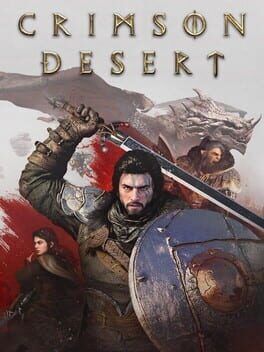

Pearl Abyss is very careful not to call Crimson Desert an RPG, yet it is filled with RPG‑style systems. Here is how the studio defines it, how difficulty and progression actually work, why there are no microtransactions, and what each edition includes before launch.
Crimson Desert has been marketed as a “premium” open world adventure with no microtransactions, but most of the conversation around it right now is about labels. Is it secretly an RPG, a Soulslike, or something closer to Zelda? Pearl Abyss is walking a fine line with how it talks about the game, and that has created a lot of confusion.
Here is how the studio itself frames Crimson Desert, how progression and difficulty really work once you dig into the latest interviews, and what that one‑and‑done monetization promise actually means in practice.
So… is Crimson Desert an RPG or not?
Pearl Abyss’s line is clear: Crimson Desert is an open world action adventure first. The studio consciously avoids calling it an RPG, even though it borrows heavily from RPG toolsets and systems.
Marketing director Will Powers has explained on multiple podcasts and in recent coverage that the “RPG” label comes with specific expectations. When players hear that word they expect a full character creator, explicit XP and leveling, and branching dialogue or build‑defining choices. Crimson Desert does not tick those boxes in the traditional way.
There is no raw XP bar you grind to fill. There is no “Level 42 Kliff” number sitting at the top of your menu. And there is no dialogue wheel that lets you steer the story down different narrative branches. The story is authored and the protagonist, Kliff, is a set character rather than a blank slate you invent from scratch.
At the same time, it would be misleading to pretend Crimson Desert is not deeply influenced by RPG design. Instead of XP levels you grow through items and discoveries. Abyss artifacts you find by exploring the world plug into a skill grid for Kliff and his companions, giving you new moves and passive bonuses. Gear, blueprints, and crafting materials all feed into a familiar loop of “do tough content, earn better tools, unlock more options” that will feel immediately recognizable to RPG fans.
So the compromise description looks like this: it is an open world action adventure with heavy RPG DNA, but without the classic XP grind, character creator, or branching story structure people associate with a big budget RPG.
How progression works without classic leveling
Removing visible levels does not mean removing progression. It just pushes it into systems that better match what Pearl Abyss wants Crimson Desert to be about: exploration, preparation, and creative combat.
The backbone of your power curve is the artifact‑driven skill tree. Abyss artifacts are special items that unlock nodes for Kliff and his two main allies. Each node can represent a new ability, a modifier to an existing combo, or a stat‑style enhancement that reshapes how you fight. These artifacts are not handed out from a tidy checklist of story quests. They are hidden in the world, dropped by dangerous enemies, or locked behind exploration challenges.
On top of that sits gear. Weapons and armor matter a lot, just not as linear “+3 more damage than your last sword.” Blueprints give you access to new crafting paths, while materials gathered from the environment or pried out of bosses let you upgrade and specialize your favorite tools. Most of your raw survivability and DPS gains come from this gear plus the attention you pay to crafting.
Put together, those systems give you the same feeling of “I went away, got stronger, and came back to smash that thing that was demolishing me an hour ago,” but without a number on your character sheet telling you that you are now level 28 instead of 17.
One difficulty, many ways to tune the challenge
If the game does not have levels, what happens to difficulty? This is where Crimson Desert is most experimental, and it is also where a lot of the misunderstanding comes from.
There is no classic difficulty menu. You do not pick Easy, Normal, or Hard at the start, and you do not unlock a New Game+ slider that bumps enemy HP. Crimson Desert has a single, intended baseline difficulty curve. What changes is how you approach it.
The developers talk about “accessibility through preparation.” In practice that means the game becomes as hard or as forgiving as the amount of homework you are willing to do in the open world.
Charge straight from story beat to story beat and you will regularly run into what feel like Soulslike brick walls. Bosses hit hard, punishes are severe, and your incomplete kit will leave you scrambling. But that is not the game asking you to drop to “Easy.” It is the game nudging you to step away and engage with its systems.
Explore Pywel, chase side content, and you start accumulating artifacts, crafting recipes, consumables, and upgraded gear. All of that collectively levels you up without calling it leveling. A tough encounter you bounced off three times an hour ago can melt once you come back with a few more tools, better weapons, or just new knowledge about a weakness you can exploit.
There is also a safety net in the form of crafted revival items. If you invest time into gathering resources you can enter a fight with several extra chances baked in. That lets players who might not have razor sharp reflexes still see late game content on the baseline difficulty by leaning into preparation, planning, and resource management instead of pure mechanical skill.
The important distinction is that the game is not scaling itself down behind the scenes. You are scaling yourself up. The same boss is always the same boss, but the version of Kliff that walks into that arena can be wildly different depending on how much of the world you have chosen to engage with.
Why Pearl Abyss refuses the “Soulslike” tag
Given the lack of explicit difficulty modes and the emphasis on punishing combat, some early chatter tried to fold Crimson Desert into the Soulslike bucket. Pearl Abyss has pushed back on that just as firmly as it has on the RPG label.
Crimson Desert’s fights are weighty, reactive, and positionally demanding. Timing matters. Reading enemy animations and managing stamina‑style resources matters. But the studio does not want people to expect FromSoftware’s particular flavor of repetition and learned precision.
Instead, the challenge is framed as a puzzle of readiness. If Elden Ring’s big insight was that you can walk away from a boss and come back whenever you want, Crimson Desert doubles down on that idea. If you are getting wrecked, it is not always because you need to “git gud” so much as you need to change where and how you spend your time.
That angle is also where the game’s accessibility aspirations sit. It does not do a toggleable “Story Mode,” but it gives less twitchy players ways to smooth the curve by exploiting its systems. Preparation, not sliders, is the accessibility lever.
A premium, one‑and‑done game with no microtransactions
Beyond genre debates, the loudest promise Pearl Abyss has made is about money. Crimson Desert is sold as a one‑time purchase with no microtransactions. No cosmetic cash shop, no booster packs, no battle pass, no gacha‑style gumball machine hiding in a camp somewhere.
Powers has been explicit that there is no monetization model built into the design. The “transaction” the team talks about is the box price and that is it. The game is pitched as a premium experience in a very old school sense: you buy it, you get the whole thing.
That stance lands a little differently coming from the studio behind Black Desert Online, which is directly built on recurring revenue and optional cosmetics. Crimson Desert started life years ago as an MMO concept before pivoting hard into a single player adventure, and you can feel that in the scope of its sandbox. What you cannot feel, at least based on everything shown and said so far, is the ghost of a missing cash shop.
For players burned out on live service hooks, that alone is a major part of Crimson Desert’s appeal. The promise is simple: no XP boosters, no costume FOMO, no store‑exclusive mounts. If you see an overpowered looking set of armor, you will find it in the world, not in a storefront.
Editions and what you actually get for your money
Crimson Desert follows a fairly standard three‑tier launch: Standard, Digital Deluxe, and Physical Deluxe. All versions share the same core game and the same overall design philosophy. What changes is how many cosmetic extras and physical collectibles you want.
The Standard Edition is the basic package. On consoles and PC it gets you the game itself and a preorder bonus shield, without any additional digital packs layered on top. If you just want to play Crimson Desert without thinking about cosmetics or tchotchkes, this is the cleanest way in.
The Digital Deluxe Edition layers on a bundle of in‑game items themed around a particular armor identity. You get a full plate armor set that covers helm, chest, gloves, boots, and cloak, a themed shield to match, and an upgraded horse equipment set that dresses your mount in matching barding, champron, saddle, and stirrups. None of this adds new mechanics, but it lets you start the game in a more curated aesthetic rather than piecing together a look from early loot drops.
The Physical Deluxe Edition mirrors those digital bonuses while adding a small pile of tangible goodies for collectors. The game comes in a larger deluxe box with a steelbook case, a letter from the developers, a Greymane brooch pin, photo cards and patches featuring central characters, and a printed map of Pywel. It is the classic “premium box” approach aimed at fans who want something on the shelf to mark what Pearl Abyss clearly hopes will be a tentpole release.
PlayStation players also get an extra preorder armor set themed specifically for that platform, but beyond that all content is shared. No edition gates off missions, regions, or systems. The only real decision is whether you care enough about cosmetics and physical memorabilia to pay more than the standard asking price.
Accessibility through systems instead of menus
When people hear “no difficulty modes,” there is often an immediate anxiety that the game will be hostile to anyone outside a narrow skill bracket. Crimson Desert’s approach is more nuanced than that knee‑jerk reaction suggests.
Because there are no traditional levels, nothing in the world scales up behind you. Areas do not quietly bump their numbers to keep pace with your gear, and bosses do not rubber‑band based on how long you have been playing. That gives you real flexibility in how you carve a path across the map. Stuck in one region? Head somewhere else, gather artifacts, upgrade your tools, and come back later.
That freedom also means you can self‑select a tougher experience if you want to. If you love the idea of white‑knuckle fights you can deliberately ignore side content and charge the main quest under‑prepared. The game will not stop you from making your life harder.
On the flip side, if your reflexes are not what they used to be, you can comb every valley and ruin you find, max out your crafting options, and go into bosses with a full toolkit, stocked revives, and defensive setups that dramatically soften the blows. In other words, what looks like “no options” on a settings screen actually hides a wide range of lived difficulty, driven by your choices.
It is not a perfect substitute for remappable controls, assist toggles, or other explicit accessibility features, which will still rise or fall on how well the final game handles them. But within the combat and progression framework, Pearl Abyss is clearly trying to square the circle of a challenging, confident action game that also lets more players see its story without having to brute force a rigid Hard mode.
The bottom line: how to think about Crimson Desert
If you strip away the marketing language, Crimson Desert looks like a vast open world action adventure that borrows most of what people enjoy about RPGs while sidestepping the strictness of the label. You get stats, builds, and loot progression, but you do not get a character creator. You get a dense skill tree, but you do not get an XP bar. You get tough bosses that can feel Souls‑adjacent, but you do not get a dedicated Soulslike structure.
Most importantly, you get a promise that what you buy on day one is the game, not a front end for a store. In a release calendar stuffed with live service hooks and battle passes, Pearl Abyss’s insistence on selling Crimson Desert as a single purchase premium adventure is as much a statement of identity as its refusal to pin the experience under a single genre label.
Whether players end up calling it an action RPG, an open world adventure, or something in between, the contours are now clear. Crimson Desert is a game about preparation, exploration, and commitment, both in how you build Kliff and in how Pearl Abyss is choosing to sell you the ride through Pywel.