
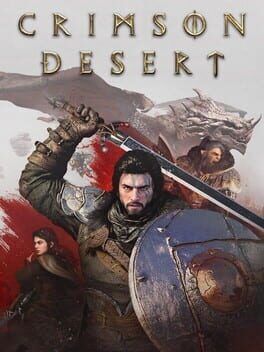
How the Black Desert Online studio is repositioning itself with Crimson Desert as a premium, single‑purchase open‑world RPG, why there is no demo, and what this strategy means for players in a crowded market.
Pearl Abyss is trying to rewrite its own reputation with Crimson Desert. This is the studio that built Black Desert Online into one of the most monetised MMOs around, yet its next big project is being sold as a straight premium RPG: one purchase, no microtransactions at launch, no cosmetic cash shop quietly sitting in a menu.
For players used to scanning every new open world for battle passes, XP boosts, and store tabs, Crimson Desert’s pitch is almost startlingly simple. As Pearl Abyss PR and marketing director Will Powers put it on the Dropped Frames podcast, “This is a premium experience. That is the transaction. Full stop.”
From cash shop to clean slate
The “no microtransactions” stance lands differently when it comes from Pearl Abyss. Black Desert Online is famous for its sprawling cash shop, selling everything from costumes to pets and convenience items. For some, that history raised a red flag the moment Crimson Desert resurfaced with its anything‑goes gameplay trailers and MMO‑adjacent combat.
The reality is that Crimson Desert itself has gone through a pivot. It started life as an online project spun out of Black Desert’s tech and know‑how, but over several years it shifted toward a predominantly single player, narrative‑driven open‑world structure. In that context, the team now talks very deliberately about separating Crimson Desert from the microtransaction‑heavy design philosophies that defined its MMO.
Powers’ explanation on Dropped Frames is telling. He framed microtransactions as tools that belong to free‑to‑play or service‑style titles, where the initial barrier to entry is low and ongoing monetisation keeps the game solvent. Crimson Desert, by contrast, is being treated as a traditional boxed product: you pay once for the experience, and that payment is meant to cover the entire adventure.
That stance is not only a response to Pearl Abyss’s own legacy but also to wider industry skepticism. Players have watched series like Assassin’s Creed, Far Cry, and even single player JRPGs drift toward cosmetic and convenience stores even at full price. A developer explicitly ruling out XP boosters and cosmetic shops at launch is making a statement about how it wants its game to feel the moment you load in.
The pre‑order catch: editions without a store
Of course, the picture is not completely transaction‑free. Crimson Desert launches with multiple editions, each bundled with different goodies. There are pre‑order bonuses and cosmetic items tucked into higher tiers, and that has already sparked questions about whether Pearl Abyss is simply front‑loading what would have otherwise been cash‑shop cosmetics.
The key distinction is where and how those extras live. Instead of building an in‑game storefront and designing progression around nudging you there, Pearl Abyss is using more traditional edition splits. You pick your version at the time of purchase, and that is it. Powers has been clear that the studio is not carving up “actual content” to sell piecemeal, stressing that the core experience is complete in the standard edition.
From a consumer angle, that matters. Most players have long since accepted that deluxe and collector’s editions will exist. What rankles is when the standard purchase feels like a demo of a fuller experience that is locked behind microtransactions. Pearl Abyss is betting that players will tolerate, or even expect, edition differences as long as there is no persistent store trying to upsell them throughout a 60‑plus‑hour RPG.
There is a note of caution, though. Powers has also admitted that decisions made “above his pay grade” could theoretically adjust the strategy post‑launch. That is corporate reality in 2026, but it also underlines why the messaging has been so direct about launch: the studio knows that any backpedaling later would come under intense scrutiny precisely because it has leaned so hard into the premium, no‑MTX pitch.
Why there is no standalone demo
Alongside the microtransaction questions, some players have been asking a different one. If Crimson Desert is such a confident, premium experience, why is there no talk of a traditional free demo, especially when so many big RPGs now put multi‑hour slices on storefronts ahead of release?
Pearl Abyss’s answer folds back into the same strategy. The studio is positioning Crimson Desert as something you either commit to or you do not, instead of a game you nibble at through a chopped‑up early section. Demos take time and resources, and building a polished, representative vertical slice of a sprawling open world is its own mini‑project. For a developer already trying to wrangle a feature‑stuffed RPG into shape, that effort can siphon focus away from final optimisation and content.
There is also the issue of first impressions. Crimson Desert’s latest showings are dense to the point of being chaotic: monster hunts, physics‑driven brawling, flying mounts, stealth, minigames, cinematic setpieces, and more. Choosing a single chunk of that experience that communicates its strengths without overwhelming newcomers is tricky. One poorly judged demo can lock in a narrative that the full release never quite escapes.
Instead of a demo, Pearl Abyss is leaning on longform previews, extended gameplay showings, and direct messaging about what you are buying. From a consumer rights perspective, that is less ideal than going hands‑on for free. But from the studio’s perspective, especially one trying to convey a premium identity after years of MMO monetisation, it is cleaner to say: here is the game, fully featured, take it or leave it.
Competing in a crowded open‑world market
All of this is happening against a backdrop of saturation. The open‑world action RPG space is stacked with heavy hitters, from Elden Ring and The Witcher 3 to Assassin’s Creed, Starfield, and a dozen more. Simply being big, pretty, and full of icons is no longer enough.
Pearl Abyss is trying to stand out on two fronts. The first is spectacle and systemic chaos. Every new look at Crimson Desert piles on more interactions: wrestling enemies off rooftops, leaping between wagons in motion, physics‑laden tavern brawls where furniture explodes into splinters, flying on the backs of huge creatures, and taking on towering fantasy bosses. It is almost overdesigned, but that maximalism is part of the pitch. This is not a restrained, slow‑burn epic; it is a rollercoaster that happens to stretch across a massive landscape.
The second front is trust. For years, Black Desert’s business model has made some players wary of Pearl Abyss projects on sight. By committing to a one‑and‑done purchase for Crimson Desert and explicitly ruling out microtransactions at launch, the studio is trying to convince skeptical players to give it a second look.
In a market where many premium games still layer in cosmetic shops, season passes, and paid boosters, being the game that does not can become a marketing edge in itself. The pitch becomes simple and attractive: here is a huge open world, you pay once, and every mount, outfit, and weapon you see exists to be found or earned through play rather than bought with real money.
What this means for players
For players who bounced off Black Desert’s monetisation but admired its combat and visuals, Crimson Desert is essentially Pearl Abyss saying, “What if we took that tech and artistry and built a self‑contained adventure instead?” You get the fluid combat, lavish character models, detailed environments, and bombastic encounters, but the economic layer sitting on top is stripped back to a single transaction.
If Pearl Abyss sticks to its stance beyond launch, Crimson Desert could signal a meaningful shift in how the studio approaches its big projects. It will still have Black Desert Online as a service game with a cash shop, but it would also have a flagship single player RPG that lives or dies on the strength of its design, performance, and word of mouth rather than long‑tail monetisation.
That, ultimately, is why the “no microtransactions” message is resonating. It is not just about the absence of a store. It is about a developer best known for selling costumes and pets asking players to judge its new game on a different scale. In a genre crowded with massive worlds that keep asking for more of your money, Crimson Desert is staking its future on being the one that only asks for your time and a single up‑front purchase.