
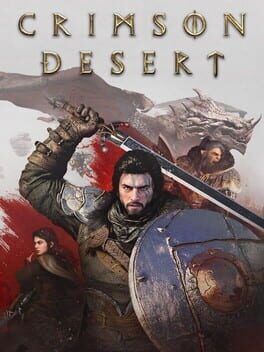
Pearl Abyss says Crimson Desert’s world is larger than Red Dead Redemption 2 and roughly twice Skyrim’s playable area. Here’s what that really means, how dense Pywel actually looks, and what those numbers suggest for pacing and travel ahead of launch.
Crimson Desert has barely finished introducing itself and it is already being sold with one of the boldest elevator pitches in modern open worlds: a map at least twice Skyrim’s playable area and larger overall than Red Dead Redemption 2.
On paper that sounds like pure marketing bravado. In practice, it tells us a lot about how Pearl Abyss is thinking about scale, density, and how players will actually move through Pywel ahead of launch.
What “twice Skyrim and bigger than Red Dead 2” actually means
The headline figure comes from Pearl Abyss PR director Will Powers, who has repeated across multiple interviews that Crimson Desert’s playable landmass is about two times Skyrim’s and larger overall than Red Dead Redemption 2’s map.
Those comparisons are deliberately chosen because they speak to different things players remember. Skyrim evokes a dense, highly curated fantasy wilderness with a dungeon or cave seemingly every few steps. Red Dead 2 conjures the feeling of crossing an entire country, with long horseback rides between frontier towns and a lot of breathing room between hotspots.
Pearl Abyss is essentially saying that Pywel aims to be both: continent scale like Rockstar’s America, with at least as much authored content as Bethesda’s fantasy sandbox and then some. The stated focus is on the playable area, not just a zoomed out world texture packed full of unreachable mountains.
Crucially, the studio keeps pairing the size claim with a disclaimer that “size doesn’t really matter if there’s nothing to do.” That mantra crops up in the IGN and PCGamesN previews, and it is not just empty modesty. It frames how Pearl Abyss wants you to interpret the numbers: as a canvas for constant interaction rather than an endurance test.
Raw square kilometers vs usable space
When developers throw out size comparisons they are rarely talking about precise square kilometers. They are talking about the portion of the world where players can reasonably expect to spend time.
Skyrim’s map includes a lot of mountains and impassable rock, yet almost every valley and pass is packed with something: a dungeon, a Nordic ruin, a bandit camp, a quest giver, or at least a crafted vista.
Red Dead Redemption 2’s world includes multiple regions with very different densities. Saint Denis, Valentine, and the surrounding farmlands are full of points of interest, while parts of the Heartlands and the desert south are intentionally sparse to support that romantic, lonely frontier feeling.
Pearl Abyss is focusing on what players can actually reach. Hands on write ups describe Pywel as layered vertically as well as horizontally, with explorable sky islands and urban spaces that stack interiors on top of dense streets and squares. On a minimap, that still looks like one square, but in play it can represent hours of content.
So when you hear “twice Skyrim,” the useful reading is not “twice the walking time across a flat plane” but “roughly double that game’s volume of traversable terrain and built out locations,” with similar or greater attention to density.
How dense Pywel looks compared to other modern open worlds
The previews all converge on one point: Crimson Desert is obsessed with interaction. That density shows up in three overlapping ways.
First are classic open world activities. Towns are full of side quests, vendors, and diversions. The countryside packs in bandit camps, strongholds, big bespoke boss arenas like the Sekiro style yeti White Horn, and emergent skirmishes that can pull you off your current objective. This layer feels closest to The Witcher 3 and Assassin’s Creed Valhalla, with authored events and small stories dotting the landscape.
Second is systemic distraction. Pearl Abyss lifts some of the reactive chaos of its MMO roots from Black Desert Online. Animals stampede, physics objects scatter during fights, environmental hazards turn what could be a simple duel into a set piece. Previews describe situations where you might be on your way to a quest, get caught in a brawl that smashes through market stalls, then find yourself looting, rescuing an NPC, and stumbling into a different thread entirely.
Third is vertical and mechanical density. Pywel is not just fields and roads. There are sky islands, climbing, platforming, and traversal toys like dragons and mechs that turn travel into mini challenges. That verticality and variety compress downtime, because there is often something to fiddle with in motion rather than stretches of pure autopilot riding.
If you compare that to something like Starfield, where huge tracts of the “map” are mathematically generated with light points of interest, Crimson Desert is aiming for a much more curated, hand placed feel across a similar or larger overall footprint.
Travel tools that reshape the meaning of “big”
The other half of the equation is how fast you can cross all this land.
Skyrim’s size is usually felt at horse speed. Red Dead 2 is intentionally tuned around long rides, with cinematic camera options and ambient dialogue that make those journeys part of the story. Turn those same maps into worlds where you can fly or grapple like Spider Man and they would feel much smaller.
Crimson Desert leans hard into high speed traversal. You can ride traditional mounts, but also take to the skies on dragons, pilot jet propelled mechs, swing across gaps, and use environmental launchers to catapult yourself around. The goal seems to be making even long distance travel feel like active play rather than a commute.
Fast travel does exist, but the tone from the developers suggests they want players to use it less as an escape hatch and more as a convenience for backtracking or tidying up side content. If the basic act of moving through Pywel is fun and varied, the team can afford to make the world much larger without triggering instant fast travel fatigue.
The upshot is that “bigger than Red Dead 2” may not translate into proportionally longer travel times. In fact, with aerial movement and mechs, crossing Pywel might often be faster than getting across a single Red Dead region by horse, even if the underlying map is larger.
Pacing: how the main story fits inside the continent
Pearl Abyss is explicit that Crimson Desert’s main story is not the majority of the content. Multiple previews repeat that the game really opens up after the credits, with the post game framed more like a second phase rather than a short epilogue.
That has big implications for pacing. Long open world campaigns can easily become bloated if they insist on marching you through every region in sequence. By contrast, Crimson Desert seems happy to let you skip, wander, and circle back.
Even some main story bosses, including large showcase encounters, will let you walk away. If you hit a difficulty spike, the solution Crimson Desert pushes is not “retry this checkpoint 10 times” but “go explore somewhere else, progress other threads, gear up, then return.” On a map this big, that philosophy is almost a necessity.
In a smaller, tighter open world like Ghost of Tsushima, designers can script a fairly linear regional progression. In Pywel, with scale approaching or surpassing the heaviest hitters, pacing is more about giving you multiple active options at once and trusting that the world’s density will keep you engaged in whichever direction you drift.
Activities per mile versus hours per mile
One of the more interesting ways to interpret Crimson Desert’s size is to think in terms of “hours per mile.” Skyrim’s map can be crossed relatively quickly if you sprint in a straight line and ignore everything, but played normally, that same path takes hours because of the number of things vying for your attention.
Pearl Abyss wants Pywel to land in a similar space. Twice the rough footprint of Skyrim does not automatically mean twice the playtime. Instead, the world gives you more vectors to lose yourself in at any given moment.
Compared to Red Dead 2, which periodically wants the player to sit with the landscape and enjoy quiet rides, Crimson Desert appears much more restless. There is less emphasis on silence and more on constantly stumbling into something new, whether that is a physics driven brawl, a boss, a platforming challenge, or a narrative detour.
That is not inherently better or worse, but it suggests a different pacing philosophy. Red Dead 2 uses travel to slow you down. Crimson Desert uses travel to keep you in a constant state of light stimulation.
What this all suggests ahead of launch
So how should players calibrate expectations when they hear that Crimson Desert is bigger than Red Dead Redemption 2 and at least twice Skyrim’s size?
First, expect a map that will likely feel geographically comparable to crossing a continent in Red Dead terms, but with more pronounced vertical spaces and fewer stretches of pure emptiness. The feeling should be closer to The Witcher 3’s best regions stitched together than to a sparse procedural galaxy.
Second, expect travel and pacing to be built around frequent interruptions and high energy traversal. Dragons, mechs, grapples, and sky islands are not just marketing bullet points. They are tools to turn what would otherwise be dead space between icons into playgrounds in their own right.
Third, expect the main story to function as one major thread in a sprawling fabric rather than a tour of every landmark. The map size claims are less about how long the critical path takes and more about how much the game can keep throwing at you once that path is done.
The real test will be whether Pearl Abyss can maintain that level of authored density all the way to the edges of Pywel. If it can, then those “twice Skyrim, bigger than Red Dead 2” lines might end up less like marketing inflation and more like a fair warning for just how much of your free time this continent is likely to eat when Crimson Desert finally lands.