
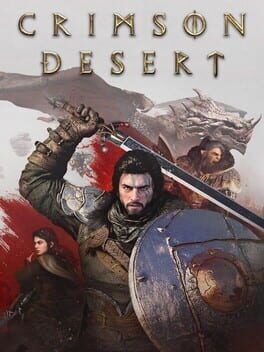

Four to six hours in Pearl Abyss’s sprawling RPG reveal a chaotic open world, dense questing, brutal combat and big questions about performance and consoles.
Crimson Desert is the rare preview build that leaves you both exhausted and itching for more. After four to six hours spread across its opening region and a curated mid-game slice, Pearl Abyss’s single player offshoot of Black Desert feels less like another checklist RPG and more like an open world experiment in controlled chaos.
It is maximalist in every sense. The continent of Pywel is thick with noise and activity, quests appear out of thin air, fights escalate from scrappy brawls to physics-driven circuses, and every few minutes the game finds a new way to shout for your attention. Sometimes it’s thrilling. Sometimes it’s overwhelming. And with launch rapidly approaching, that same maximalism hangs over the questions around performance and the conspicuous lack of extended console gameplay in public channels.
A world that refuses to sit still
Hands-on sessions have largely anchored players in Hernand, a compact early region that doubles as Crimson Desert’s thesis statement. This isn’t a Breath of the Wild style hike across cleanly segmented biomes, nor a Ubisoft sprawl of copy-paste camps. On foot, the pace and texture of the world are closer to Red Dead Redemption 2: slower movement, heavier animation, dense towns and a near-obsessive focus on tangible interactions.
Just walking through the first major settlement, you’re constantly jostled by people and possibility. Shopkeepers hawk wares, street toughs pull you into slapdash games of rock–paper–scissors, and back alleys hide bounties or odd jobs. Almost every NPC can be greeted, insulted or robbed if you mask up first. You aren’t simply hoovering icons off a map. You are poking at a simulation that pokes back.
Crucially, the world’s busyness is not just decorative. A child upset over a missing sheep can lead to a short stealth sequence and a fight with rustlers. A man who fell from his roof turns into a chimney cleaning quest where you physically climb up and sweep soot away before a timer expires. These little vignettes are mundane on paper but in practice sell the sense that your protagonist Kliff is not just a destined hero but a mercenary scraping by.
The flip side is cognitive overload. Within a couple of hours you are juggling town errands, wilderness bounties, Abyss-related main quests, faction business for the Greymanes and system tutorials that seem to arrive every few steps. The map radiates outward in all directions, and even the supposedly small starting region feels like a full game’s worth of distractions.
Quests that zigzag from grim to absurd
Most of the hands-on coverage has been surprised by how funny Crimson Desert can be. The broad strokes setup is straight-faced fantasy: Kliff, a Greymane mercenary cut down in battle and revived by beings from a sky realm called the Abyss, must claw his way back from obscurity, rebuild his people and confront a looming civil war. In dialogue and side quests though, Pearl Abyss leans into awkward humor and slapstick misfortune.
You’ll shake down drunken toughs over a card game debt, then moments later shift to a sombre investigation into a burned-out village. A bonding quest might involve teaching villagers to throw punches, only for the scene to veer into farce the first time someone actually lands a hit. The game is comfortable letting Kliff look like a put-upon straight man surrounded by weirdos, which helps humanize a character who could easily have been just another gruff fantasy lead.
Structurally, the early game is more curated than those wild trailers suggested. Main story beats funnel you through key systems in Hernand before the leash slackens. But the sheer density of incidental encounters keeps that funnel feeling porous. It is very easy to wander off for an hour and realize you have done nothing remotely related to the next main objective, yet have a stack of new recipes, bestiary entries and faction rumors to show for it.
Combat as violent playground
If the open world is where Crimson Desert overwhelms through density, combat is where it overwhelms through spectacle. Even in the opening hours, fights are brutal and busy. Kliff’s basic sword swings have real weight, enemies fly off cliffs or through furniture, and environmental hazards constantly threaten to upstage your carefully placed combos.
The battlefield feels like a toy box. You can kick ladders to send foes tumbling, grapple enemies and suplex them into their friends, or launch them skyward and juggle them with bow shots. In the mid-game slice, once more skills are unlocked through Abyss Catalysts, the language of combat becomes almost wrestling-like, with big crowd-pleasing finishers chained together through cancels and air control.
This goes both ways. Enemies are not passive damage sponges. Human opponents parry, flank and attempt to dogpile you. Monsters hurl debris, grab you, or force you to juggle positioning and stamina. Several previews highlight the Matthias duel in particular as a statement fight, a grounded exchange of blows that sells the brutality of the world without leaning too hard on particle effects.
Party members add another layer of chaos. Later in the game you can swap to allies like the tanky berserker Oongka or the nimble Damaine, each with their own movesets and specializations. These characters act less like traditional RPG companions and more like alternate loadouts, encouraging you to approach the same encounter as a crowd-control brawler one moment and a glass-cannon duelist the next.
It is thrilling, but the complexity is real. Attacks, dodges, grapples, item use, contextual actions and Abyss abilities all fight for real estate on a limited controller layout. More than one previewer left those sessions feeling like they were only just keeping up, forced to choose between learning advanced tech or simply surviving the relentless tide of enemies.
The Abyss as vertical counterpoint
The Abyss, that sky realm that resurrects Kliff, is more than just plot dressing. It is Crimson Desert’s answer to the question of how you break up all that ground-level grit. These sequences lift you into floating ruins and otherworldly platforms peering down on Pywel, turning the game into a hybrid of puzzle-platformer and skill tree.
Up here you unlock force-like powers that bleed back into the rest of the experience. Telekinetic shoves that knock enemies from ramparts, charged leaps that rocket you onto rooftops, and a stamina-hungry glide that lets you soar from high towers or Abyss islands down into the world below. The leap from tight city streets to open sky carries the same whiplash the rest of the game trades on, but it also broadens how you think about navigation.
Because these powers are tied to Abyss Catalysts, which function as a kind of currency for upgrades, the Abyss also becomes a pressure valve for progression. You are not just investing in bigger numbers, but in new verbs that change how you approach quests and encounters. Unlocking a stronger jump might solve a platforming puzzle, while a new mid-air strike could be the key to cracking a specific boss pattern.
Systems on systems: the Greymane machine
Beyond exploration and combat sits the Greymane faction layer. Early hands-on sessions only brushed against its full scope, but the intent is clear. You are not just playing as Kliff the individual; you are acting as a commander rebuilding an organization.
You recruit allies, manage their equipment, and dispatch them on timed missions that return with resources, money or story hooks. This sits closer to Assassin’s Creed Brotherhood’s assassin management or an RPG garrison simulator than a throwaway menu. In theory, your choices in this layer feed back into what you can accomplish in the field, affecting everything from the gear available in your camp to the allies you can call on for certain jobs.
Coupled with codex-style records for wildlife, NPCs, recipes and events, Crimson Desert begins to feel like a game that desperately wants you to live in it, not just sprint through its critical path. The question is how many players will have the patience to internalize its tangle of overlapping systems.
Performance and the BlackSpace question
All of this chaos is rendered on Pearl Abyss’s proprietary BlackSpace engine, and on high spec PCs the game has impressed hands-on attendees with its fidelity. Vast draw distances, detailed cities, heavyweight physics and a surprising lack of visible loading in curated demos all point to a technology stack designed to show off.
But there are caveats. Performance previews and hands-on reports describe frame rate dips when battles pile dozens of soldiers, destructible props and over-the-top effects into a single village square. Traversing dense urban hubs can push the engine harder than wide open plains. Early builds have leaned on dynamic resolution and aggressive post processing, sometimes compromising clarity in the busiest moments.
None of that is unusual for a work in progress, yet it feeds directly into the conversation currently swirling around Crimson Desert’s console versions. The public marketing cycle has remained strangely light on extended, uncut footage labelled explicitly as PlayStation 5 or Xbox Series X gameplay. That absence, combined with the PC footage’s outrageous visual ambition, has sparked accusations from some corners of the community that Pearl Abyss is “hiding” the reality of console performance before launch.
The console footage debate
Pearl Abyss’s PR team has been unusually forthright in pushing back. In recent interviews they have flatly denied that the studio is trying to conceal anything, pointing out that closed-door events have featured console code and that certification builds are already in the hands of platform holders. They argue that the focus on PC footage is a matter of capture pipeline and demo convenience, not evidence of a bait-and-switch.
From the outside, the debate becomes a classic expectations problem. Crimson Desert’s trailers sell a kind of visual excess usually reserved for high-end PCs. Fans on console understandably want to know how much of that experience they will actually get, and at what cost to frame rate and input latency. Developers insist that performance targets on PS5 and Xbox Series are a priority, but until the wider public sees extended, clearly labelled console captures, speculation will continue to fill the gap.
Based on hands-on writeups, a reasonable expectation is a tiered experience. PC on strong hardware looks set to be the flagship, where the BlackSpace engine can really stretch its legs. Current-gen consoles will almost certainly lean more on dynamic resolution, aggressive upscaling and trimmed foliage, crowd counts or physics density to hit acceptable frame rates. The core of the game’s chaotic open world and violent combat sandbox should remain intact, but it is hard to imagine every street brawl and storm-lashed siege matching the pristine PC footage one-to-one.
Should you be worried?
For now, the answer depends on what you want most from Crimson Desert. If you are chasing a perfectly smooth, razor-precise action game, all that systemic clutter and performance uncertainty might give you pause. The combat feels great when everything clicks, but inputs are layered, the UI is busy and the engine is doing a lot at once. This is not a lean character action game.
If you are drawn instead to wild, unpredictable open worlds that prize texture and surprise over clean design, Crimson Desert’s current trajectory looks far more promising. Across four to six hours it consistently throws new activities, combat wrinkles and narrative tones at you. It is messy, sometimes needlessly so, yet rarely boring.
The missing piece now is transparency. Pearl Abyss has built something that, even in limited hands-on form, justifies the long-running “is this real?” fascination around Crimson Desert. The next step should be to show it running on ordinary living room hardware and let players see how its beautiful chaos holds up when it is no longer carefully framed.
Until then, the most accurate preview verdict is also the most frustrating. After a few hours in Pywel, Crimson Desert feels like one of the most overwhelming, madcap open world RPGs in years, perched precariously between masterpiece and mess. Which side it lands on will come down less to the size of its world and more to whether BlackSpace and the console versions can keep that chaos playable when the full game finally arrives.