
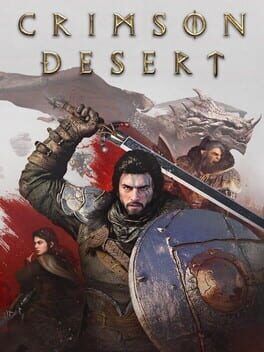
Crimson Desert is finished and locked for March 19, 2026, but going gold this early tells us a lot about Pearl Abyss’ ambitions after Black Desert, how its Skyrim‑sized world and single‑player focus fit into the 2026 RPG calendar, and why its wild hybrid combat has expectations sky‑high.
What “going gold” this early actually means
Pearl Abyss has confirmed that Crimson Desert has gone gold, with a global launch locked for March 19, 2026 on PC, PS5, Xbox Series X|S and Mac. In practical terms, “going gold” means the 1.0 build is finished and ready to be pressed onto discs and submitted to storefronts. Hitting that milestone almost two months before release is important for a couple of reasons.
First, it is a clear signal of confidence after a long and very public series of delays. Crimson Desert was originally pitched years ago as an MMO‑adjacent project, then re‑scoped into a fully single‑player open‑world RPG. Locking the code this early gives Pearl Abyss a rare luxury in today’s AAA landscape: time dedicated almost entirely to optimization, bug‑fixing and polish rather than scrambling to get core features in.
Second, it lowers the risk of a last‑minute date slip. When a big RPG is still “in development” a few weeks out, day‑one stability becomes a worry. Pearl Abyss is essentially telling players and platform partners that content is done and the remaining work is about making sure a visually aggressive, physics‑heavy game actually runs well on all target platforms.
In a 2026 calendar where players are wary of broken launches, the messaging around going gold early is as important as the milestone itself.
From Black Desert to Crimson Desert: why Pearl Abyss matters
Pearl Abyss is not a new name for RPG fans. The studio built its reputation on Black Desert Online, one of the most technically impressive MMOs of the last decade. Black Desert’s ultra‑fast, animation‑driven combat, robust character creator and ever‑evolving live service have quietly given Pearl Abyss something many RPG newcomers do not have: years of experience shipping and iterating on a huge, online open world.
Crimson Desert grew out of that success. It began life as a prequel set in the same universe, only to eventually become its own standalone IP. That pivot lets Pearl Abyss bring its world‑building and combat tech to a very different structure. Instead of designing around raids, grinds and cash‑shop driven retention, Crimson Desert can focus on a hand‑crafted narrative, bespoke encounters and progression that ends when the story does.
The lineage still matters. Black Desert proved that Pearl Abyss can deliver responsive, combo‑heavy combat that feels closer to a character action game than a traditional tab‑target MMO. It also showed that the studio can maintain a high bar for visuals in a large, streaming world. Crimson Desert is essentially taking that know‑how and applying it to a focused, one‑time purchase single‑player adventure with no MMO overhead.
That shift is a big part of why expectations are high. Players who bounced off Black Desert’s MMO grind but admired its combat and art direction now see Crimson Desert as a chance to enjoy that craft without worrying about daily quests, seasonal passes or social obligations.
A single‑player epic in a twice‑Skyrim world
Crimson Desert takes place on Pywel, a war‑torn continent where you play a Greymane warrior trying to reunite your scattered companions after a brutal ambush by rival faction the Black Bears. That setup sounds familiar as a fantasy hook, but the scale Pearl Abyss is attaching to it is not.
According to the studio, Pywel’s playable area is at least twice as large as Skyrim and even bigger than Red Dead Redemption 2’s map. The studio is keen to stress that it is not chasing size for its own sake. Previews highlight a map studded with castles, fortified towns, outposts, roaming bosses and discoverable activities that aim to fill the world with things to do rather than checklist filler.
Traversal is built around that ambition. Horses are a core part of overland travel, but dragon mounts and other airborne options appear early and often in demos, suggesting the team expects you to be soaring above this map, not spending hours jogging between icons. That is a key difference from many older open‑world RPGs where the fantasy of a giant world often translated into long sprints through empty space.
All of this runs on Pearl Abyss’ new in‑house engine, BlackSpace, which is built specifically for large, streaming worlds. Real‑time global illumination, heavy use of volumetric fog and detailed cloth and hair simulation push a hyper‑real style that stands apart from the more stylized look of games like Dragon’s Dogma 2. The engine choice matters because it shows Pearl Abyss wants total control over streaming, lighting and physics rather than fitting into someone else’s toolset.
How Crimson Desert fits into the 2026 open‑world RPG landscape
The 2026 release calendar is more crowded than it first looked when Crimson Desert was delayed out of late 2025. Within RPGs alone, March now clusters several big names. Lists from RPG‑focused outlets put Crimson Desert in the middle of a month that also includes titles like Monster Hunter Stories 3 and other mid‑sized action RPGs, with Nioh 3 and a new Resident Evil hitting only weeks earlier.
In that context, Crimson Desert’s March 19 slot occupies a sweet spot. It lands far enough after February’s hardcore offerings to avoid direct day‑one combat for the same audience, but early enough in the year to establish itself before the next wave of holiday‑season blockbusters. For players who treat long open‑world RPGs as seasonal commitments, March is becoming a kind of de facto “big RPG season,” and Crimson Desert is positioned as one of the tentpoles of that window rather than something squeezed in between established franchises.
The lack of an online component also helps it stand out. While other 2026 heavyweights chase co‑op hooks, live events or service‑style roadmaps, Crimson Desert presents itself as a finite adventure. That makes it easier to pick up in a busy year because it asks for a single, bounded chunk of your time instead of an ongoing relationship.
Key gameplay hooks: why impressions are so strong
Early hands‑on previews and extended gameplay demos paint Crimson Desert as an action RPG that pulls from a wide spectrum of influences.
Combat starts with tight, grounded melee. Attacks feel closer to a character action game than a traditional RPG with deliberate, weighty swings, cancels and combo routes that invite experimentation. Enemies do not just soak damage. They stagger, get juggled, and react dynamically to where you hit them.
Layered on top of that is a system of grapples and throws that borrows liberally from pro wrestling. In captured gameplay, the protagonist hoists enemies over his shoulders, power‑bombs them through tables, and hurls them off ramparts. Environmental interaction matters. Slamming a bandit into a pillar might collapse it, while tossing someone into a campfire adds damage and chaos. It is spectacle, but it is also systemic, giving fights the sort of messy, improvised feel that usually belongs to immersive sims rather than flashy RPGs.
Airborne combat adds another dimension. Some encounters throw you into mid‑air duels on the back of dragons or other mounts, weaving melee and ranged attacks together high above Pywel. Others let you launch enemies skyward and continue your assault in the air, turning battlefields into vertical playgrounds. This blends Black Desert’s speed with something closer to a fantasy spectacle fighter, only planted in an open world where fights can break out on clifftops, rooftops or moving caravans.
Mounted combat ties all of this together when you are on the ground. Horses are not just taxis that you dismount from when the fighting starts. Previews show riders skewering enemies with lances, vaulting off saddles into finishers, or dragging foes behind them. Chases, ambushes and running battles along roads transform traversal into potential combat encounters rather than downtime between quests.
The through‑line is that Crimson Desert constantly looks for ways to make combat and traversal overlap. Whether you are grappling a mercenary off a parapet, trading blows atop a tumbling wagon, or dueling in mid‑air under a dragon’s wings, the game is built to generate moments you want to replay in your head later.
Why expectations are so high
Several factors combine to put Crimson Desert near the top of many players’ 2026 watch lists.
Pearl Abyss brings a proven track record with large, visually dense worlds and fast, expressive combat. Crimson Desert leverages that experience but frames it inside a self‑contained, story‑driven campaign instead of a live service treadmill. The map is not just large on paper. It is supported by traversal options and systemic combat that make its size feel like an asset rather than an obligation.
Going gold well ahead of release provides a rare sense of stability in a year filled with delays and rocky launches. It suggests that the March 19 date is solid and that the remaining time is being used to refine, not scramble. Combined with the eye‑catching trailers and hands‑on reports that frame it as a blend of character action, open‑world spectacle and grounded, physical chaos, it is easy to see why many are treating Crimson Desert as a potential defining RPG for 2026.
If Pearl Abyss can deliver on performance and quest design to match the visuals and combat, Crimson Desert will not just be the spiritual successor to Black Desert’s best ideas. It will be one of the first truly next‑generation open‑world RPGs to fully arrive in this hardware cycle.