
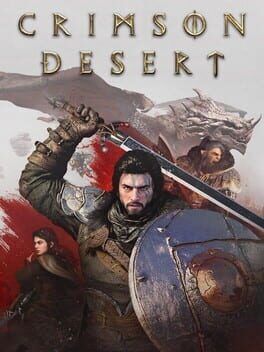

Crimson Desert has gone gold nearly two months ahead of launch. Here’s what that says about Pearl Abyss’ production pipeline, why it is doubling down on single‑player open‑world design after Black Desert, and how its colossal map and wild combat sandbox stack up against Elden Ring’s heirs in 2026.
Crimson Desert locking in its March 19, 2026 release and going gold nearly two months early is not just a calendar curiosity. For Pearl Abyss, the studio behind Black Desert Online, it is a statement about production maturity, a clear signal about how confident it is in this ambitious single player pivot, and an early marker in a 2026 RPG year that is already being framed around Elden Ring’s legacy and new challengers like Expedition 33.
What going gold this early tells us about Pearl Abyss’ pipeline
Most blockbuster RPGs hit gold status a few weeks before launch, often while teams scramble to push critical fixes into a looming day one patch. Crimson Desert being certified and “print ready” almost two months out suggests a very different internal rhythm.
First, it points to a pipeline that has finally caught up with the studio’s ambition. Black Desert’s long life as a live service MMO forced Pearl Abyss to build robust tools for content authoring, deployment, and QA at scale. That experience appears to be paying off. Multiple outlets note that core development is wrapped and the current focus is polish, optimization, and platform-specific tweaks rather than firefighting core systems.
Second, a long gap between going gold and release usually means extensive platform certification and performance passes. Crimson Desert is launching on PC, PS5, Xbox Series X|S, and Mac. Getting a visually dense, physics-heavy open world through multiple certification processes is nontrivial. Locking the code early gives Pearl Abyss time to tune streaming, loading, and performance across that whole matrix instead of racing to stop crashes.
Finally, it is a confidence play. After years of delays and skeptical “this looks too good to be real” reactions to trailers, announcing gold status this early helps reset the narrative. The game is not a theoretical tech showpiece anymore. It is finished, it has a date, and any further changes will be iterative rather than structural.
Fans should still expect a day one patch, but the message is clear: the pipeline is no longer the risk. The design is.
Why Pearl Abyss is leaning into single player after Black Desert
Crimson Desert started life as a prequel to Black Desert Online, yet over development it evolved into a purely single player, narrative driven RPG set in the war-torn continent of Pywel. That shift says a lot about where Pearl Abyss sees opportunity.
Black Desert proved the studio could build a flexible action combat system and a visually stunning sandbox, but the MMO framework limited how far it could push authored storytelling or experimental mechanics. Persistent economies and other players create guardrails. You cannot easily drop wrestling-style throws, bespoke cinematic boss arenas, or scripted mech battles into a shared world without creating balance nightmares.
By going single player, Pearl Abyss can aggressively choreograph its set pieces and progression pacing. Kliff’s journey can be tightly written, with faction politics, betrayals, and character beats that assume the player is the sole agent of change in Pywel. The world’s economies and loot tables can be tuned for drama instead of monetization.
It is also a strategic brand move. The market already knows Pearl Abyss as an “MMO studio.” Crimson Desert is framed as a rebuttal to that pigeonhole, positioned closer to The Witcher 3 than to its own predecessor. The promise is that all the tech and systemic depth honed in an MMO now serves a personal story instead of a treadmill.
How big is Pywel really, and what kind of open world is Pearl Abyss building?
Across previews, Pearl Abyss representatives have repeatedly highlighted the sheer scale of Pywel. Third party coverage cites internal claims that the playable map is roughly twice the size of Skyrim and larger than Red Dead Redemption 2. That puts Crimson Desert firmly in “one of the biggest open worlds of 2026” territory.
Raw square kilometers do not matter if the space is empty. Pearl Abyss insists the density is the point. Towns are packed with interactable NPCs, physics systems let you tear up parts of the environment to weaponize them, and traversal is layered. You are not just riding horses across plains. You are grappling between cliffs, climbing vertical structures, leaping between sky islands, and using a menagerie of mounts ranging from grounded animals to airborne monsters and mechanical suits.
There is also a clear attempt to create variety in the kinds of spaces you move through. Early demos show crowded cities full of merchants and side activities, bleak battlefields with large-scale skirmishes, icy mountain passes, subterranean ruins, and the bizarre “Abyss Islands,” floating landmasses that effectively serve as bespoke challenge zones above the main map.
If the final game delivers what is being hinted at, Crimson Desert’s open world aims to combine the sheer footprint of the biggest sandboxes with interaction density closer to something like Tears of the Kingdom. It is a risky balance. Overstuffed maps can turn into checklists, but under-filled ones will look barren at this scale.
Combat variety: from wrestling to dragon riding and mechs
Where Crimson Desert most clearly breaks from bog-standard fantasy RPGs is its combat sandbox. Pearl Abyss is treating fights less like pure stat math and more like a brawler that just happens to live inside an RPG.
At ground level the system builds on the studio’s Black Desert experience. Kliff can chain light and heavy attacks, dodge, parry, and swap between weapons mid-combo. But previews emphasize how quickly the moveset veers into fighting game territory. You see suplexes, shoulder throws, ground-and-pound sequences, and crowd-control moves that look like they have more in common with WWE or Yakuza than with Dark Souls.
Bosses are the showpieces. Many encounters give you unique skills or contextual finishers once you have learned patterns or broken armor. Some can be captured or turned into resources through bespoke mechanics afterwards, reinforcing the idea that big fights are narrative events, not just loot drops.
Layered on top of that hand-to-hand brawling is the game’s outrageous mount and vehicle system. Across various showcases and previews we have seen Kliff:
Ride traditional fantasy mounts like horses and bears.
Call in a named dragon, Tristar, for aerial combat, strafing runs, and traversal between high altitude locations.
Pilot hulking mech suits that fire rockets and energy blasts in set pieces that feel almost like a different genre stitched into the campaign.
The studio is also experimenting with smaller, grounded interactions that feed the same physical design language. Arm-wrestling, tavern brawls, mini-games like drinking contests and flute playing, and animal taming all draw on the same animation fidelity that makes the core combat pop. The result is an RPG where “combat variety” does not just mean a sword, a bow, and a spell school. It means using wrestling moves in a street fight, then hopping onto a dragon to assault a sky fortress, before dropping into a mech to finish a siege.
If Pearl Abyss can keep these modes feeling cohesive rather than like disconnected gimmicks, Crimson Desert could be remembered primarily for how tactile and surprising its action feels.
Where Crimson Desert sits in the 2026 RPG landscape
Crimson Desert is arriving into a fiercely competitive year. FromSoftware’s influence still looms large after Elden Ring, and spiritual successors and systems-driven open worlds keep trying to bottle that lightning. Expedition 33, with its painterly aesthetic and turn-based tactical battles, is vying for the prestige RPG slot. Larian’s post Baldur’s Gate era and big licensed projects like Star Wars Eclipse add more noise.
Within that crowd, Crimson Desert is positioning itself less as a Soulslike and more as a hybrid between cinematic action game and open world epic.
Compared to Elden Ring’s lineage, Crimson Desert is more authored and less opaque. Pywel is still dangerous, but it is structured around a central protagonist with a clear narrative spine rather than a purely self-directed pilgrimage. The emphasis on cutscene-heavy storytelling, personality-driven companions, and cinematic boss fights gives it more in common with something like The Witcher 3 or a modern Assassin’s Creed than with a FromSoft maze of lore.
Next to Expedition 33 and other turn-based or strategy-leaning RPGs, Crimson Desert is the maximalist action outlier. Expedition is promising deliberate, almost board game-like combat scenarios. Crimson Desert counters with immediate, physics-driven brawling, enormous real-time battles, and the wild spectacle of dragon and mech sequences.
That contrast is healthy for the genre. 2026 looks less like an “Elden Ring-clone” year and more like a showcase of different answers to the same question: what does a modern big-budget RPG look like after Elden Ring reset the bar for exploration and discovery? Crimson Desert’s answer revolves around systemic combat density and cinematic excess rather than mysterious austerity.
Platforms and what players can expect at launch
Pearl Abyss has confirmed that Crimson Desert will launch on:
PC via Steam
PlayStation 5
Xbox Series X|S
Mac
Given that the game has gone gold early, platform holders and players alike can expect feature parity across those versions. This is not a cross-gen title. Targeting only current consoles and modern PC/Mac hardware gives Pearl Abyss room to lean into large battles, heavy physics, and streaming an enormous world without contorting itself to fit Xbox One or PS4.
The extra runway before launch should translate into:
More stable performance modes on PS5 and Xbox Series, with a high probability of 60 fps-targeted options given the emphasis on responsive action combat.
Cleaner day one PC and Mac builds, ideally with fewer game-breaking hitching or streaming issues across diverse hardware, though open-world PC launches always carry some risk.
Cross-feature parity for headline systems like dragon riding, mechs, and sky islands without platform-specific compromises.
The big swing
Crimson Desert going gold nearly two months early is Pearl Abyss raising its hand and saying this project is no longer a mirage. The real test, starting March 19, will be whether its single player focus, monstrous map, and wildly varied combat sandbox add up to something cohesive.
In a 2026 RPG calendar that is already crowded with heirs and challengers to Elden Ring’s crown, Crimson Desert is the loud, unruly contender. If it sticks the landing, Pearl Abyss may end the year not just as “the Black Desert studio,” but as one of the new pillars of big budget single player RPGs.