
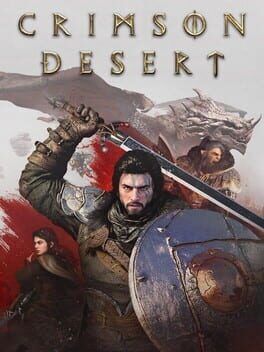

With Crimson Desert going gold nearly two months before launch, Pearl Abyss is signaling confidence in its sprawling open world and complex hybrid combat. Here’s what the early finish suggests about stability and scope, how recent previews read its strengths and weaknesses, and where it fits in a brutally crowded March 2026 RPG calendar.
Crimson Desert has quietly crossed a huge milestone. Pearl Abyss confirmed that the ambitious open world action RPG has gone gold ahead of its March 19, 2026 release on PS5, Xbox Series X|S and PC via Steam, capping roughly six years of development.
“Going gold” used to be a simple manufacturing checkpoint, but in the age of live patches it is more a statement of readiness than a hard stop. The timing here matters. Hitting gold status in late January gives Pearl Abyss nearly two months to focus on certification, optimization and a likely day one patch without scrambling to keep the date. For a new single player focused IP built on a bespoke engine and promising physics driven chaos, that early finish is a strong signal of technical stability and a mostly locked feature set.
This comes after a long, occasionally bumpy road. Crimson Desert was first shown in 2019 as a sort of narrative offshoot of Black Desert Online, then disappeared for retooling before reemerging at Summer Game Fest 2025, Gamescom and a run of show floor demos. Across those builds the core identity solidified: a cinematic, highly physical action RPG starring mercenary captain Kliff of the Greymanes, roaming the harsh continent of Pywel while juggling warring factions, monster hunts and large scale siege battles.
The gold announcement itself did not reveal new systems, but it effectively closes the book on large design pivots. Pearl Abyss is not locking combat or open world structure at the last minute. It is instead signaling that the version press played at events in 2025 is broadly representative of what players will see in March, ideally with sharper performance and fewer rough edges.
Recent previews give a clear picture of how that version plays. Hands on sessions from Summer Game Fest, Gamescom and PAX builds all highlight the same thing first: Crimson Desert’s combat is dense. Kliff’s move set mixes light and heavy strings with just frame parries, grapples, launchers, aerial juggles and contextual finishers that change depending on enemy type and position. One moment you are trading measured blows in a duel, the next you are suplexing a bandit off a cliff or punting someone into a brazier.
Previews consistently describe a hybrid between character action games like Devil May Cry and more grounded, weighty action RPGs. There is a lock on system, dodge rolls and block breaks, but also crowd control tools, throwable objects and tag team attacks with AI companions. Environmental interactions are more than window dressing. Players can kick enemies off ledges, use physics to knock over siege equipment or improvise with random props mid fight. That same systemic approach appears in stealth and infiltration sequences where you can climb fortifications, sneak through encampments or simply blow the gates off and improvise in the chaos.
This depth comes at a cost. Some writers who only had an hour with the game called the control scheme overwhelming, with layered inputs for stance shifts, grapples and context sensitive actions that take time to internalize. Others praised the ambition but noted that readability can suffer when a dozen enemies, destructible cover and cinematic camera cuts all collide. Pearl Abyss has talked about accessibility options and control presets to smooth the learning curve, and the extra time between going gold and launch likely focuses on tightening onboarding and UI clarity rather than rebuilding the system from scratch.
Outside of combat, the open world of Pywel has earned some of Crimson Desert’s loudest praise. Extended demos where press spent over two hours free roaming painted a picture of a world that leans into variety over pure size. Instead of a flat checklist map, Pywel is layered vertically with craggy cliffs, small villages that feel hand authored, underground spaces and larger cities tied into Kliff’s mercenary work.
Traversal is built to encourage improvisation. Kliff can climb, clamber and use grappling points that give exploration a slightly more tactile feel than the usual ride to a waypoint loop. Mounts play a major role too, with previews describing surprisingly nuanced horse handling that supports mounted archery, melee drive bys and chaotic chases where destructible terrain and ragdoll physics turn even simple escort jobs into slapstick spectacles.
Dynamic events and side activities attempt to stitch that movement and combat together. Players reported stumbling into ambushes, impromptu brawls in town squares, caravan raids and multi phase hunts that escalate from tracking a beast to fighting it as the environment shifts around you. Some coverage cautions that, at least in preview form, quest structure can veer toward familiar fetch tasks and “go here, kill this” jobs, though the presentation and physicality of each encounter often helped mask the template.
What sets Crimson Desert apart from its MMO cousin is how personal it tries to make this sprawl. Kliff’s story is not just a pretext for grinding. The campaign demos focus on party dynamics within the Greymanes, cinematic cutscenes with heavy motion capture and branching dialogue that affects how certain factions respond. Multiple previews came away feeling like Pearl Abyss is chasing something closer to a single player, story driven epic than a loot treadmill.
That identity will be tested in March, because Crimson Desert is not launching into a vacuum. March 2026 is shaping up as one of the most crowded RPG windows in recent memory. Several major expansions and at least two other big budget fantasy RPGs are currently targeting the same month, each competing for hundreds of hours of player attention.
In that context, going gold early is more than a technical milestone. It is a strategic move. Shipping on time in a dense calendar lets Pearl Abyss avoid slipping into an even busier late spring stacked with shooters and live service updates. It also gives marketing a clear runway. With the build locked, the studio can confidently push long form gameplay breakdowns, performance details and PC spec sheets without hedging every promise.
Perhaps more importantly, Crimson Desert offers a slightly different pitch than many of its peers. Where some March RPGs lean hard into CRPG style stat sheets or fully turn based systems, Pearl Abyss is aiming at players who want real time, tactile combat that borrows as much from spectacle fighters and physics sandboxes as it does from traditional action RPGs. If it can marry that kinetic feel with a coherent story and a world that keeps surprising players beyond the first dozen hours, it has a real shot at standing out instead of being swallowed by the release list.
The early gold milestone does not guarantee a flawless launch. Day one patches are a given, and questions remain about UI density, difficulty tuning and whether the open world’s activities can maintain momentum across a full playthrough. But after years of reintroductions and schedule shifts, Crimson Desert finally looks like what Pearl Abyss has been promising since 2019: a brutally physical, visually extravagant adventure that is actually ready to ship.
With the master build complete and certification underway, the last stretch before March 19 is about refinement, communication and trust. Players now know the date, they know the platforms and, thanks to those extensive previews, they have a clear sense of what kind of RPG Crimson Desert wants to be. The rest will be settled in Pywel.