
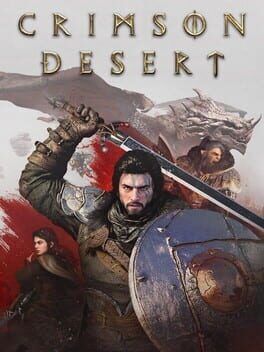

A closer look at Kliff, Oongka, and Damiane, how performance capture and full English voice acting aim to sell Crimson Desert’s single‑player story, and whether Pearl Abyss can step out of Black Desert’s shadow.
From MMO Studio To Character Drama
Pearl Abyss built its name on Black Desert, a sprawling MMO defined by systems, grinding, and famously flashy combat. Crimson Desert is something very different. It is a self-contained, single-player action RPG about three specific people, set in the war-torn continent of Pywel. The new “Meet the Cast” featurette is the clearest signal yet that Pearl Abyss wants you to care about who these characters are, not just what kind of DPS rotation they can run.
Instead of leading with technical buzzwords or loot spreadsheets, the video puts the spotlight on three actors in a performance capture volume talking about their roles. It is Pearl Abyss saying, in plain terms, that Crimson Desert’s story lives and dies by Kliff, Oongka, and Damiane.
Kliff: A Closed Book At The Center Of The World
Alec Newman plays Kliff Macduff, the Greymane mercenary who anchors Crimson Desert’s narrative. On paper he is an archetype players have seen before: a hardened warrior with a past, trying to hold together a band of misfits in a land buckling under feudal politics and war. What makes him interesting in the featurette is how much emphasis is put on his emotional restraint.
Newman describes Kliff as stoic and deeply loyal, someone guided by a strict personal code. Around strangers he appears like a closed book, the classic mercenary who keeps everyone at arm’s length. Around his own people, the Greymanes from the northern region of Pailune, he opens up and shows vulnerability and humor. That contrast is important for a game that has to sell hours of cutscenes and companion dialogue.
The trailers and featurettes position Kliff as the player’s lens on Pywel. He is not a blank slate avatar with a silent past. Pearl Abyss has deliberately thrown out character creation and class systems in favor of three authored protagonists, and Kliff is the one whose choices define the main story. For a studio coming out of the MMO space, locking you into a named hero like this is a bold move that says story comes first.
Damiane: The Fighter With Secrets
Rebecca Hanssen brings Damiane to life, and the featurette immediately frames her as more than just a secondary playable. She is a fierce, headstrong fighter who is willing to stand up for what she believes in, regardless of who or what is in her way. Hanssen notes that in real life she tends to avoid conflict, so playing someone who runs straight at it let her tap into a different side of herself.
The most tantalizing moment in the video is Damiane’s admission that she has been on the run and never told Kliff why. That single line points to a past that is going to matter in the plot. It suggests betrayals, old debts, or a history with one of Pywel’s factions that could pull the party into trouble whether they want it or not.
In footage, Damiane reads as grounded and practical. Where Kliff has the weight of leadership and old oaths on his shoulders, she feels more like someone defined by the present, constantly making hard calls to survive another day. If Pearl Abyss writes her well, Damiane could be the character that challenges Kliff’s moral compass and keeps the party from drifting into pure noble heroism.
Oongka: The Philosophical Bruiser
Stewart Scudamore’s Oongka is the most surprising of the trio. Visually he calls to mind an orcish bruiser, the kind of character other RPGs might reduce to a wall of muscle and rage. Scudamore makes it clear that Pearl Abyss is going in a different direction.
He describes Oongka as passionate about everything and unexpectedly philosophical, a world-wise nomad who has seen enough of Pywel to look past its prejudices. The twist is that he barely speaks in full lines at all. Most of his communication in the featurette is said to happen through grunts and nonverbal sounds rather than conventional dialogue.
That puts a lot on Scudamore’s shoulders. He talks about the challenge of making those grunts carry specific meanings, so players can read when Oongka is amused, frustrated, or devastated. It is the kind of role that only really works with tight performance capture and a clear animation language, and it is the biggest test of Pearl Abyss’s cinematic ambitions. If Oongka lands with players, it will be because face animation and body language were strong enough to let an almost wordless character stand alongside two fully voiced leads.
Performance Capture As The Selling Point
The cast featurette also doubles as a technical statement. Pearl Abyss has spent years expanding its motion capture facilities, and that investment is written all over Crimson Desert’s recent trailers. The camera lingers on actors in mocap suits, facial markers tracking every micro-expression, and directors pushing for specific beats in a scene instead of broad gesture work.
Alec Newman calls the combat “absolutely astonishing” and says he has never seen anything quite like it, but in the same breath he and the others talk about how much grounding the characters needed to keep up with that spectacle. Between wrestling throws, mid-air magic, and chaotic battlefield setpieces, the cast is there to humanize the chaos with believable reactions and physicality.
For a studio best known for MMO quest text, that shift to performance-driven storytelling is significant. Crimson Desert is fully voiced in English, not as an afterthought but as the primary language for its global release. That means tone, regional accents, and line delivery matter a lot more than they typically do in a system-first online RPG. The featurette leans into that, giving actors room to discuss motivation, relationships, and backstory instead of just talking about the size of the world.
Story First In A World Built For Systems
All of this sets up an interesting tension at launch. On one hand, Crimson Desert is clearly built by the Black Desert team. The footage is packed with physics-driven brawls, climbing, grappling hook moments, environmental interactions, and side activities that would be right at home in a massive online sandbox. On the other hand, Pearl Abyss is asking players to buy into a single-player narrative that is tightly authored around three specific heroes.
The choice to sideline character creation and classes in favor of Kliff, Damiane, and Oongka is where that tension is sharpest. It is a rejection of the “make your own protagonist” approach that defines a lot of modern open world RPGs. Instead, the game promises three distinct playstyles and perspectives that you swap between over the course of the adventure.
If the writing and performances do their job, that structure could give Crimson Desert a stronger sense of pacing than many of its peers. You are not just grinding out levels on a faceless build, you are moving through arcs where a stoic Greymane commander, a fugitive fighter, and a philosophical nomad collide with Pywel’s politics and each other.
Standing Apart From Black Desert And The Rest
The obvious question is whether that is enough to carve out an identity separate from Black Desert and the wider open world crowd. From a distance, Crimson Desert looks like another maximalist RPG stuffed with side content and physics gags. The cast featurette is part of Pearl Abyss’s argument that it is more than that.
Leaning on a cast that includes veterans from projects like Baldur’s Gate 3, Elden Ring, Cyberpunk 2077, and Stellar Blade, the studio is signaling that narrative and character work are now core pillars instead of window dressing. Kliff’s quiet conflict, Damiane’s hidden past, and Oongka’s almost wordless presence are all attempts to give players someone to think about long after a flashy combat encounter ends.
Whether Crimson Desert can really stand apart will come down to execution. The tech is impressive, and the acting talent is there. What the featurette makes clear is that Pearl Abyss understands the stakes. If players do not buy into these three leads as people with history, agency, and chemistry, Crimson Desert risks feeling like Black Desert with a prestige TV filter laid over it. If the performances and writing click, though, this could be the moment the studio pivots from MMO specialists to full-fledged single-player storytellers.
Why The Cast Featurette Matters
The “Meet the Cast” video is not just a marketing beat for names on a poster. It is Pearl Abyss making a promise about what Crimson Desert wants to be. By centering Alec Newman, Rebecca Hanssen, and Stewart Scudamore, the studio is betting that players in 2026 care about authored protagonists, nuanced performances, and the kind of character-driven drama that has powered the recent wave of big-budget RPGs.
For anyone who has watched Black Desert’s combat and wished it was wrapped around a focused single-player story, Crimson Desert looks increasingly like the answer. The cast featurette is the clearest look yet at how Pearl Abyss is trying to deliver on that pitch, one facial capture session at a time.