
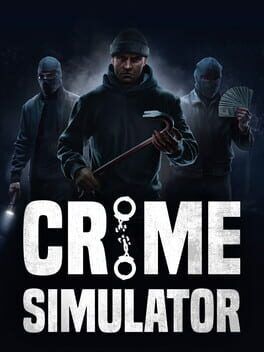

A solo Polish developer turned a niche criminal stealth sim into a 300k+ hit. Here is how Crime Simulator’s systems fuel YouTube and TikTok clips, and where the game could expand after launch.
Crime Simulator looks, on paper, like a very specific niche. A grounded, first person crime sim about sneaking into houses, stealing everything that is not nailed down, then slipping away before the cops show up. No glossy open world, no massive team, and a focus on slow, methodical stealth.
Yet by late 2025, the solo Polish developer CookieDev and publisher Ultimate Games S.A. had turned this unassuming project into a breakout success. Over 310,000 copies sold on Steam, an 81% “Very Positive” rating, and enough traction across YouTube, Twitch, and TikTok to get coverage from creators like Markiplier. With an Xbox Series X|S release in December 2025 and PlayStation and Switch 2 versions on the way, Crime Simulator is quietly becoming one of the most interesting indie success stories of the year.
This is not an accident. Crime Simulator is engineered to be watchable and replayable. Its systems make failure funny, success satisfying, and every heist just unpredictable enough to feel like a story worth clipping.
From Thief Sim Roots to a 300k Hit
CookieDev was not starting from zero. The developer had already built an audience with Thief Simulator and Thief Simulator 2, and Crime Simulator clearly grows out of that lineage. You play a debtor out of jail, forced to work off what you owe by accepting shady jobs. Everything spins out from that core fantasy of being the person that slips in, cleans a place out, and disappears.
Launching first on PC in June 2025, Crime Simulator was priced accessibly at around twenty dollars, with frequent discounts tied to updates and platform launches. That lower upfront cost matters in a crowded Steam ecosystem, especially for a game that shines once players start sharing clips and stories.
The game’s early PC success did not ride on huge marketing. Instead, it leaned heavily on discoverability through creators. Streamers and YouTubers gravitated toward it because every session reliably produces dramatic or hilarious outcomes. TikTok and short form video pushed it further, as bite sized moments of “perfect stealth ruined in two seconds” fit perfectly into the algorithm.
By the time the Xbox Series X|S version arrived in December 2025 with the 1.2 content update included, Crime Simulator had already cleared 310,000 copies sold on Steam and built strong word of mouth. Xbox players effectively got the “streamer-approved” version out of the box, with Rural Arizona, motion sensor hazards, and drivable cars already part of the package.
Why Crime Simulator Works So Well on Streams and TikTok
Plenty of stealth games are good to play but dull to watch. Crime Simulator dodges that problem by making almost every system legible to a viewer. You can glance at the screen and understand what is at stake.
The first trick is clarity of goals. Jobs revolve around simple, readable objectives like stealing a specific item, sabotaging a system, or wiping out a stash of cash. On a stream, the audience immediately knows the target and can track progress without needing long explanations. “We need to get into that house, grab the safe, and get out” is inherently more watchable than a dense quest log.
Crime Simulator also leans into roguelite structure and repetition. You return to neighborhoods, houses, and businesses across multiple jobs, but your skills, tools, and knowledge improve over time. Streamers can build a narrative across sessions. Viewers remember the “house that went terribly wrong last time” and get payoff when a better planned run finally cracks it. That creates episodic content without any extra work from the creator.
On the mechanical side, the toolkit is a goldmine for clips. Lockpicks, sleeping gas, crowbars, silenced pistols, drones, scanners, and other gadgets all interact with hazards and patrols in very visible ways. A well placed sleeping gas canister that drops a guard at the exact right moment is satisfying to watch. A badly thrown one that knocks out a civilian and sends the whole building into alarm is even better.
Crucially, failure is noisy and funny instead of frustratingly opaque. When a motion sensor catches you, or a neighbor spots you in a window, viewers see the cause. Chases, botched getaways, or last second jumps into a stolen car become natural crescendos. Crime Simulator never hides its chaos. It lets disasters play out in big, easy to read beats that suit reaction content.
The 4 player online co op mode multiplies this effect. Co op turns a cautious solitary sim into a social comedy engine. One player miscommunicates, opens the wrong door, or drives a stolen car into a fence, and suddenly the whole carefully planned heist becomes improvised chaos. That sort of unscripted breakdown is exactly what YouTube compilations and TikTok edits thrive on.
Systems That Turn Every Heist into Content
Under the hood, several design choices help Crime Simulator generate consistently watchable runs.
The first is its commitment to stealth as the default, not the only option. You are encouraged to sneak, case houses, study patrol routes, and use tools precisely. Combat exists but is deliberately unattractive as a primary strategy. That tension, knowing that violence is a backup plan not a solve everything button, keeps streams suspenseful. The audience knows that if a gun comes out, things have already gone wrong.
Second, the environments are compact but layered. Instead of an enormous city that takes hours to traverse, Crime Simulator focuses on dense pockets of opportunity. A single street might have multiple houses with different routines, security setups, and loot profiles. Viewers quickly learn layouts along with the streamer, which makes predictions and backseat planning part of the fun. “Last time the owner got home at 10, you have three minutes” becomes part of chat culture.
Third, the progression loop is always visible on screen. Money rolls in, new skills unlock, and hideout upgrades give concrete goals like better storage, improved planning tools, or faster escapes. For content creators, that steady drip of upgrades gives natural episode boundaries. One stream might be framed around earning enough to unlock a specific gadget, the next around using it in increasingly ambitious jobs.
The Xbox launch version, matching PC’s 1.2 update, adds Rural Arizona, motion sensors, and driveable vehicles. Rural Arizona in particular makes for great stream content because its wider, more open properties introduce longer approach routes and more opportunities to be spotted before you even reach a house. Viewers see the tension build from the walk up, not just once you are inside.
Solo Dev Strategy and Smart Scope
Crime Simulator’s success is also about scope control. As a solo dev project, CookieDev avoided the trap of trying to build everything. Instead of simulating an entire crime career across a sprawling metropolis, the game tightens its focus on small scale burglary, debt, and survival.
This narrower scope let the developer hone systems that matter most to both players and viewers. Heists are repeatable. AI routines are readable. The toolkit feels modular. When updates arrive, they add new ingredients to a proven recipe instead of trying to bolt on entirely new genres.
Pricing and platform pacing are also part of the strategy. Crime Simulator did its proof of concept on PC first, refined through patches and content updates, then arrived on console with stronger word of mouth and a better feature set. The Xbox Series X|S launch with version 1.2 means early console adopters do not feel like second class citizens, which helps maintain goodwill across platforms and keeps streams active in multiple communities.
Where Crime Simulator Could Expand Next
With over 300,000 copies sold and console versions rolling out, the big question is what comes next. Some of the answer is already on the roadmap. The Jewels update, planned as version 1.3, is set to introduce jewel theft, Thief Competition Mode, and Impostor Mode. Those features are promising not just for players, but for creators.
Jewel theft naturally implies higher stakes, more secure locations, and tighter security systems. That means more failure states and more hype when a daring plan works. Thief Competition Mode sounds ripe for streamer tournaments or community events, especially if there is support for leaderboards or challenge modifiers. Impostor Mode hints at social deception elements, potentially blending stealth gameplay with bluffing and misdirection. That would expand Crime Simulator’s appeal into the same territory that made games like Among Us and Project Winter viral.
Beyond the confirmed roadmap, there are clear directions the game could grow to keep its streamer momentum.
More systemic neighborhoods and routines would deepen both solo runs and co op planning. If owners changed habits based on previous robberies, or if neighborhoods gradually hardened their defenses, long running series would gain a sense of evolving consequence. Creators could anchor whole seasons of content around “breaking” a single heavily defended block.
Expanded non lethal tools would also fit perfectly into the game’s identity and clip culture. More gadgets that let you temporarily spoof security systems, create distractions, or stage fake emergencies would create higher skill ceilings and more inventive plays for advanced players to show off.
On the social side, lightweight in game challenge sharing could help creators and communities share specific job setups or self imposed rules. Things like “no gadgets, only crowbar” or “you have three minutes from entry to escape” could become daily heist challenges, mirroring how roguelites use daily runs to keep players coming back.
Finally, while Crime Simulator has a clear linear debt narrative, deeper narrative hooks or character moments could give long campaigns more emotional weight. Even small touches, such as recurring NPCs tied to certain neighborhoods or clients, might fuel fan theories and discussion videos.
A Quiet Success with Loud Stories
Crime Simulator is the kind of game that feels tailored to the modern creator ecosystem without sacrificing its identity as a slow burn sim. It respects stealth, timing, and planning, but never forgets that most players and viewers remember the disasters more than the perfect runs.
A solo Polish developer, a tightly scoped idea, and a toolbox full of noisy, legible systems have combined into a 300k selling, multi platform stealth hit. With more updates and console launches ahead, Crime Simulator is well positioned not just to keep selling, but to keep generating the kind of wild heist stories that fill TikTok feeds and YouTube playlists.