
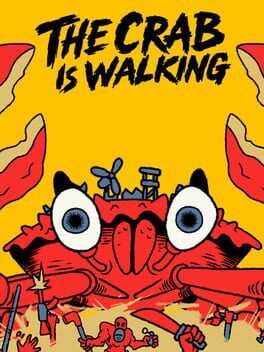

Hypnohead and tinyBuild’s The Crab Is Walking is a PC roguelite city builder where your settlement lives on a wandering giant creature, with playtests planned for 2027.
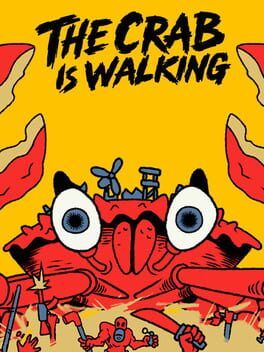
Image: IGDB
Store links: The Crab is Walking on Steam
A city builder with nowhere to sprawl
The strongest hook in The Crab Is Walking is also its central constraint: your capital is built on the back of a giant creature. Publisher tinyBuild and developer Hypnohead have announced the roguelite city builder for PC via Steam, Gematsu reports, with playtests planned to begin in 2027.
That immediately changes the normal city-building promise. This is not a fantasy of endless expansion across a blank map. According to the Steam overview quoted by Gematsu, players construct a city upon a giant monster and guide it through the apocalypse, with “full strategic depth squeezed into short roguelite sessions.” GamingOnLinux describes the setup as a roguelite kingdom builder and auto-battler where players pick an eight-legged ride, select a rider, merge buildings, unlock upgrades, and reshape the settlement while crossing a post-apocalyptic wasteland.
For a genre built on grids, roads, zoning, and the slow satisfaction of a town becoming a machine, The Crab Is Walking starts from a wonderfully rude premise: what if the land itself got up and left?
The crab is the design problem
The game’s Steam description, as relayed by Gematsu, makes space the pressure point. Buildings have their own shapes, every connection matters, and the back of a giant crab does not leave room for everything. Players are asked to decide whether to grow an army, increase production, or keep the Ride moving.
That last part is the twist that makes this giant crab city builder worth watching. In a conventional Steam city building game, your settlement is usually a place to protect, optimize, and enlarge. Here, the settlement is cargo, fortress, engine, and weapon platform at once. The city is valuable because it can move, but movement becomes another demand competing with production and defense.
The confirmed systems point toward a compact strategy puzzle rather than a sprawling municipal sandbox. Buildings can be merged and upgraded, and the developers are promising combinations strong enough to “break the game,” according to the Steam overview quoted by Gematsu and GamingOnLinux. That phrasing suggests a roguelite appetite for discovery: not simply building correctly, but learning which strange arrangements become powerful over repeated short runs.
Rides, riders, and the strategy of pairing personalities
The Crab Is Walking also builds variety around two choices before the run fully takes shape: the Ride and the Rider. Gematsu’s Steam-page excerpt says different creatures and heroes journey through the wasteland in unique styles, with some pairs leaning aggressive and others favoring defense, production, or skills.
That is an important distinction for PC strategy game players who bounce off city builders when the optimal path feels too solved. If the Ride changes the available shell, priorities, or movement profile, and the Rider changes the toolset on top of that, then each run can begin with a different strategic grammar. The sources do not yet specify individual Riders, creature names, stats, or upgrade trees, so the exact depth of those choices remains unconfirmed.
What is confirmed is the intent: play to advantages, work around weaknesses, and find a pairing that fits how you develop your creature. The Steam text quoted by Gematsu cheekily compares the setup to the rabbit and the turtle before landing on the punchline that, here, you have a giant crab. It is a small joke, but it also captures the game’s appeal. Hypnohead seems to be designing around asymmetry and limits, not only bigger numbers.
A roguelite road through the apocalypse
The Crab Is Walking is being pitched as short-run strategy, and the route system appears to carry much of that tension. The Steam overview says no two runs take the same road and frames path selection as a tradeoff between danger and reward. GamingOnLinux highlights the same idea with the feature line: “The safe road is safe. The hard road pays.”
That structure should be familiar to roguelite fans, but it has a different flavor when attached to a settlement. A difficult route is not simply a harder combat room. It can pressure the whole build: whether you invested in units, production, movement, upgrades, or the building connections that make the city function. The sources confirm more than 100 unit types, described in the Steam copy as “powered by gasoline and hate,” which points to a post-apocalyptic punk tone rather than the medieval-fantasy wrapper of Hypnohead’s previous game.
The auto-battler label, used by GamingOnLinux, also matters. The current source material does not detail how battles play out, how much direct control players have, or how unit behavior is tuned. It does, however, suggest a management-first rhythm: build the city, choose the path, survive the consequences, then return with lessons for the next attempt.
Why Hypnohead is not making The King Is Watching 2 yet
The Crab Is Walking comes from Hypnohead, the studio behind The King Is Watching. GamingOnLinux cites a press-release explanation from the developers saying they are not making The King Is Watching 2 because they are “not finished with the first game.” Hypnohead says it is still working on The King Is Watching and releasing new content for it, with the next update planned to focus more heavily on gameplay variety.
That context helps position The Crab Is Walking as a parallel experiment rather than a replacement sequel. In the same press-release excerpt published by GamingOnLinux, the developers say the new game gives them room to attempt things that were not possible or practical in The King Is Watching. They point to a different resolution for more detailed pixel art and more elaborate animations, plus more sophisticated unit behavior, combat statistics, and a more convenient, polished interface.
For indie city builder fans, those are the details to hold onto. The premise is funny, yes, but the craft questions are practical: can the interface keep a cramped shell readable, can the pixel art make many building shapes distinct at a glance, and can the unit behavior support the promised auto-battler depth without becoming visual noise? Hypnohead has publicly identified those areas as part of the new project’s ambition, but players will need hands-on time before any of it can be judged.
Where cozy management fans fit into a gasoline-and-hate wasteland
The Crab Is Walking is not being marketed in the provided sources as a cozy game. The confirmed language is harsher and stranger: apocalypse, wasteland, auto-battler, gasoline, hate, hard roads, and a capital balanced on a monster’s shell. Still, its appeal could overlap with the cozy management crowd because the core friction is legible, tactile, and small-scale.
Cozy management fans often gravitate toward games where every tile placement has character and every upgrade visibly changes the little world under their care. The Crab Is Walking appears to shrink the city builder fantasy into a dense, toy-like space, then make that space move. If the interface lands, rearranging buildings on a living shell could scratch the same planning itch as compact farm layouts or shop-management optimization, only with sharper teeth.
The caveat is difficulty. The Steam overview quoted by Gematsu says it is “never an easy ride,” and the roguelite structure implies failure, repetition, and route-risk decisions. This may be a warm-looking pixel strategy game rather than a low-pressure comfort game. For players who enjoy cozy management but want stronger strategic bite, that tension could be the pitch.
Release timing, platform details, and what is still missing
Right now, The Crab Is Walking is confirmed for PC via Steam, according to Gematsu, with the Steam listing live and playtests set to begin in 2027. The sources provided do not list a final release date, price, demo timing, minimum PC requirements, Steam Deck status, controller support, localization details, or console versions.
That makes the practical advice simple. If the premise clicks, the Steam page is the place to wishlist and watch for playtest information. If you need firm performance data, accessibility options, or a clearer picture of how much city builder, roguelite, and auto-battler DNA the final game contains, wait for playable impressions or developer updates closer to the 2027 playtests.
As an announcement, though, The Crab Is Walking already has a clean identity in a crowded PC strategy space. It takes the settlement fantasy, folds it onto a creature’s back, and turns limited space into the main event. For an indie Steam city building game, that is the kind of constraint that can make a small project stand out long before the crab reaches the finish line.