
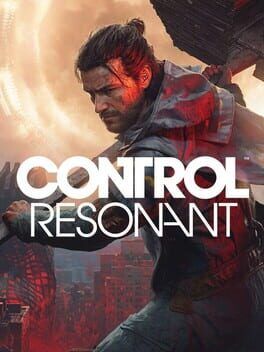

Breaking down Control Resonant’s new story trailer: Dylan Faden’s tortured return, a paranormally shattered Manhattan, what Remedy is evolving in its action formula, and everything we know about the September 24 launch.
Sony’s June State of Play closed on a familiar red glow and the sound of something breaking loose. Remedy finally pulled back the curtain on Control Resonant with a full story trailer, a confirmed September 24 release date, and a much clearer picture of where the series is heading after Jesse Faden’s takeover of the Oldest House.
The trailer is only a few minutes long, but it is dense with hints about Dylan’s new role, Manhattan’s warped new reality, and how Remedy is retooling Control’s combat into something faster and nastier.
Dylan Faden steps out of the cell and into the apocalypse
The original Control ended with Dylan Faden literally and figuratively contained. He was the tragic cautionary tale of what happens when an ordinary person collides with paranatural forces without the right structure or support. Resonant’s trailer essentially opens by shattering that box.
We see Dylan in a clear, Magneto‑style containment cell at the Federal Bureau of Control, surrounded by clinical lighting and observation booths. The State of Play trailer and accompanying press materials describe this as the starting point of the game: Dylan is still an FBC prisoner, but that status is about to become irrelevant.
A cosmic entity begins to intrude on reality, and Dylan’s narration flips the framing. He is no longer just the subject of FBC reports but the person explaining the threat to us. Remedy pitches him as “humanity’s last shot” against something that is actively rewriting the rules of the world. That immediately reframes Dylan from passive object to reluctant spear point.
Crucially, this is not a redemption arc in the clean superhero sense. The trailer lingers on Dylan’s instability. His voiceover swings between fatalism and grim determination, and we see flashes where his powers are barely restrained. Moments of stillness in the cell cut hard to him tearing through streets with telekinetic force, suggesting that Resonant will lean into the tension between his duty and the damage he can do simply by existing.
Jesse’s presence is mostly implied for now. The story trailer and the PlayStation Blog mention her involvement and the wider FBC but keep her physically offstage. That leaves space for Dylan to own the spotlight while still threading through the larger Remedy Connected Universe, including lingering questions around Dr. Darling and Alan Wake 2’s fallout.
Manhattan as the new Oldest House
Control’s Oldest House worked because it turned one brutalist building into a constantly shifting labyrinth. Resonant scales that same idea out to an entire city, and the trailer is Remedy’s first proper statement on what a paranaturally shattered Manhattan actually looks like.
From the opening skyline shot it is clear this is not just New York under attack. Whole blocks are folded and inverted in midair, skyscrapers hang like stalactites, and streets twist into impossible angles. The PlayStation Blog calls it “warped by paranatural forces” and that is exactly how it plays in motion. This is not a backdrop but an active threat, as if the Hiss finally broke containment and started editing the city.
We glimpse Dylan fighting on streets that fall away into bottomless voids, in subway tunnels that loop back into themselves, and in plazas where traffic lights and taxis float weightless. It looks like Remedy is using Manhattan’s iconography as raw material for the same kind of reality‑bending level design that made the Ashtray Maze such a standout.
At the same time, there is a deliberate contrast between normalcy and corruption. Some shots show relatively intact blocks, with ordinary storefronts and apartment windows punctured by growing paranormal lesions. That gradient from familiar to impossible should make exploration feel less like walking discrete “biomes” and more like moving along a spectrum of reality breakdown.
What the trailer reveals about the story
Across different cuts of the trailer and the write‑ups from PlayStation, IGN, and others, a rough picture of Resonant’s premise emerges.
A mysterious cosmic entity has attached itself to Manhattan and is actively altering fundamental aspects of reality. The FBC appears to be completely outmatched. Its local presence is either overrun or absent, and Dylan is pushed into the role of first responder despite being a walking containment risk.
Dylan’s voiceover hints that the FBC is treating this as more than just another Altered World Event. He talks about resonance changing how people think, perceive time, and understand themselves. This suggests that Resonant is not just reusing the Hiss but introducing a new flavor of paranatural corruption, something that attacks cognition and identity as much as physical space.
There are also layered teases toward the broader Remedy universe. Offhand references to missing personnel and unseen experiments line up neatly with longstanding questions about Dr. Darling’s fate and the cross‑dimensional weirdness that Alan Wake 2 dove into. We do not see Alan or Jesse directly, but the framing of “nothing stays contained forever” feels like Remedy signaling that all of these threads are about to knot together a little tighter.
Dylan’s powers and the evolution of Remedy’s paranormal action
Mechanically, the trailer is our best look yet at how Resonant is changing Control’s combat. Early previews have already emphasized that this is not a Soulslike but it is clearly more aggressive and front‑loaded than the first game.
We see Dylan chaining telekinetic throws with rapid dodges, launching debris in broad arcs that chew through multiple enemies at once, and then following up with close‑range finishers. Remedy’s signature mix of gunplay and psychic powers is intact, but the emphasis appears to be on momentum. Encounters look like they are built around staying airborne, sliding between pieces of cover, and constantly using the environment as a weapon.
One of the most striking shots shows Dylan using a kind of gravity well ability to crush enemies and scenery together at a single point, turning a city intersection into a collapsing knot of cars and concrete. Another has him surfacing from beneath a floating chunk of street, implying vertical movement and traversal powers that go beyond Jesse’s levitation.
Remedy keeps calling Resonant its “most expansive” project, and the combat footage supports that. Wider streets, open squares, and multi‑level interiors give its systems more room to breathe. Instead of the tight office corridors of the Oldest House, Resonant’s Manhattan seems designed for long sightlines and layered verticality. Fights look less like isolated combat arenas and more like flowing chases through zones that are constantly reconfiguring.
The enemies reflect this shift too. The trailer shows fast‑moving, insect‑like constructs that skitter along walls, hulking resonance‑warped brutes that can meet Dylan’s force head‑on, and more human silhouettes that appear partially overwritten by the new cosmic influence. That mix should pressure players to juggle crowd control, mobility, and focused damage in a way that feels more intense than the first Control’s often deliberate pacing.
How Remedy is pushing its paranormal formula forward
Control Resonant’s trailer feels like Remedy taking everything that worked in Control and Alan Wake 2 and scaling it outward, while also testing how far players are willing to follow them into the abstract.
On the narrative side, handing the lead role to Dylan is a bold move. Instead of continuing with Jesse as Director of the FBC, Remedy is exploring what happens when someone more fragile and compromised is asked to hold the line. That opens the door to a messier, more psychological story where the protagonist’s inner instability mirrors the outer collapse of Manhattan.
Structurally, a warped city gives Remedy more room for non‑linear storytelling. The brief glimpses of side streets, underground spaces, and towering, impossible structures suggest a hub‑and‑spoke design where Dylan can pursue different threads of the crisis in an order that feels more player‑driven. Manhattan as a setting also allows for more NPCs and factions, something the stark isolation of the Oldest House could not easily support.
In terms of pure feel, Resonant looks like it wants to be more immediate. Enemies rush, the camera tracks Dylan up close in the thick of fights, and the sound design in the trailer leans hard on impact and dissonant choral stings. Remedy seems to be chasing the dream of a combat system that is as expressive and surreal as its narrative framing, rather than relying on story sequences to carry the weirdness.
At the same time, the studio is not abandoning its slower, more investigative roots. Quick cuts tease quiet interiors, cork boards, and odd artifacts that scream "collectible case file". A reality in freefall should give the team plenty of excuses to write more of the cryptic, darkly funny FBC documents that made Control’s lore hunting such a highlight.
Release date, platforms, and editions
Control Resonant is set to release on September 24, 2026 on PlayStation 5, Xbox Series X|S, PC, and Mac. Remedy is self‑publishing, and the studio is bucking the recent trend of higher base prices with a $59.99 standard edition.
A Digital Deluxe Edition at $69.99 includes extra in‑game content, with a platform‑specific PlayStation Digital Deluxe Edition granting 48 hours of early access on PS5. That means PlayStation players who pre‑order that top tier will be able to start exploring warped Manhattan two days before the official launch.
With the story trailer out, Resonant now shifts from a mysterious codename to a concrete date on the calendar. What remains ambiguous is exactly how far Remedy plans to push Dylan, Manhattan, and the larger connected universe when nothing is contained anymore. If the trailer is any indication, the answer is: as far as they possibly can without collapsing the whole thing into the ocean.