
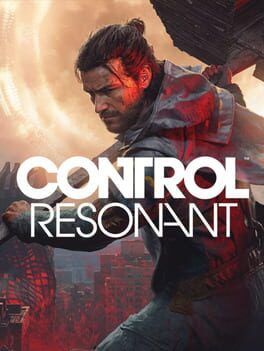

Remedy’s Q3 2026 financial results show Control Resonant sales drove a 226% revenue jump, but the small profit reveals the cost of building a self-published franchise.
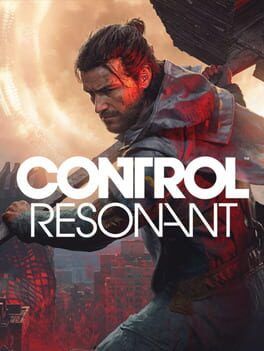
Image: IGDB
Store links: Control Resonant on Steam
A seven-day launch window changed the shape of Remedy’s year
Remedy’s third-quarter revenue rose 226% year over year to €39.6 million after Control Resonant launched on September 24, according to the company’s Q3 2026 business review as reported by GamesIndustry.biz, Eurogamer, GameSpot, and other outlets. That is the concrete shock in the numbers: the quarter captured preorders and only the first seven days of sales, yet it was enough to turn a €16.4 million operating loss in the same period last year into a €0.6 million operating profit.
The tension is in that second figure. A studio can triple revenue and still land only slightly above break-even at the operating line when launch marketing, platform fees, partner revenue shares, and depreciation of capitalised development costs arrive at the same time as sales. Remedy’s Q3 2026 revenue headline is the obvious one, but the profit line is the more strategic read. Control Resonant appears to have given Remedy a much stronger commercial base, while also showing how expensive its current model is.
CEO Jean-Charles Gaudechon called the launch “a defining milestone for the company,” according to GamesIndustry.biz and Eurogamer. That framing is justified by the timing. Remedy said the physical release occurred after the Q3 review period, on October 15, and that Control Resonant had sold more than one million units by then, making it the fastest-selling game in Remedy’s history. The Q3 report therefore does not represent a full launch cycle. It is a partial snapshot that already changed the studio’s 2026 outlook.
The revenue mix shows a studio moving from work-for-hire support to franchise economics
The most important line inside the Remedy financial results is not only total revenue. GamesIndustry.biz reported that game sales and royalties made up about €35 million of Q3 revenue, up from €6 million in the same quarter last year. Development fees from the Max Payne 1 & 2 remake and the final development fee accrual for Resonant under Remedy’s Annapurna agreement totalled €4.3 million.
That split matters because it points to a different risk profile. Development fees can steady a studio while projects are in production, but they do not carry the same upside as owning and selling a successful franchise entry. With Control Resonant, Remedy is seeing the upside of a launch that it can directly monetize. It is also seeing the costs more directly. GamesIndustry.biz reported that Remedy now self-publishes its titles, which means the company books royalty expenses and platform fees itself. Those expenses include Annapurna’s share of Resonant revenue, and Remedy said they will decrease once initial investments have been recouped.
The phrase “self-publishing” can sound like pure independence from the outside. In financial terms, it is closer to taking control of both the steering wheel and the fuel bill. Remedy gets a larger strategic claim over its IP, release cadence, and marketing decisions, but the launch quarter absorbs costs that might previously have been less visible to readers tracking only revenue. That is why a 226% revenue jump and a €0.6 million operating profit can coexist without contradiction.
Control Resonant sales did what sequels are supposed to do: widen the funnel
Remedy’s internal data, as reported by GamesIndustry.biz and Eurogamer, indicated that nearly half of Control Resonant players were new to the Control franchise. Remedy said reaching new players was a key goal and that the early results indicated a growing audience for both the franchise and the studio.
That is the cleanest franchise signal in the whole report. A sequel can sell well by converting an existing fan base quickly, especially in the first week. That produces a healthy launch, but it can also front-load demand. Resonant’s more interesting claim is that almost half of the audience had not been in the Control funnel before. If Remedy’s data holds across later quarters, Control has moved from cult prestige property to a broader commercial platform.
The regional breakdown supports that reading. GamesIndustry.biz reported that the US represented nearly half of Resonant’s PC and console sales. On PC, Chinese-speaking regions and the UK followed. On console, the UK, Canada, and Brazil ranked behind the US. Eurogamer similarly reported that the US made up nearly half of players across PC and console, followed by Chinese-speaking regions and then the UK. The details differ slightly by how the outlets summarize platform splits, but the central pattern is consistent: the launch was heavily US-led, with meaningful PC demand in Chinese-speaking markets and console traction across English-language and Brazilian markets.
For a franchise strategy, that is valuable because it gives Remedy a clearer map for post-launch marketing. The company does not need to guess whether Resonant is only a legacy-fan purchase. Its own early data says new players are entering, and its market data suggests where the next conversion push should be aimed.
The older Control gaining sales is the strongest back-catalog signal
The Q3 report also said 2019’s Control benefited from Resonant’s launch. GamesIndustry.biz reported that sales of the original Control exceeded both the comparison period and the first two quarters of 2026. Eurogamer also noted that Control performed better this quarter than in the previous two quarters and the same quarter last year.
That detail is easy to skip, but it is central to Remedy’s franchise argument. A sequel that pulls players back to the first game creates a healthier ecosystem than a single product spike. It suggests Resonant increased awareness of the series as a whole, not only demand for the new release. For a studio with a connected brand identity and multiple ongoing projects, that back-catalog lift is one of the few publicly visible signs that marketing spend is creating durable franchise value.
There is a balance risk here. Eurogamer described Control Resonant as artistically impressive but critically divisive, noting that some critics felt it had less narrative bite than its predecessor. That critical split did not stop the early sales milestone, and Remedy’s Gaudechon pointed to “excellent player reviews” as part of the foundation for longer-term sales potential, according to GamesIndustry.biz. Still, divisive reception can affect long-tail conversion, especially once launch-window excitement fades and undecided players wait for discounts, patches, or word of mouth from friends.
The practical read for players is simple: Control Resonant is already available on Mac, PC, PS5, and Xbox Series X/S according to the game listings cited by Eurogamer and GamesIndustry.biz. The physical edition arrived after the Q3 period, on October 15. The sources provided here do not include pricing, performance data, PC requirements, or upgrade-path details, so buyers looking for those specifics should check the relevant storefront before purchasing.
The wishlist number is the next test, not a victory lap
Remedy reported 2.4 million outstanding wishlists for Control Resonant, according to GamesIndustry.biz. Gaudechon said the company’s priority now is to “get Resonant into the hands of more players,” and said remaining 2026 sales would ultimately define Remedy’s financial year.
That is a careful statement, and it should be read that way. Wishlists are a potential audience, not sold units. They can convert during awards visibility, platform promotions, patches, content updates, or seasonal discounts. They can also sit idle if players are unconvinced by price, performance, reception, or timing. For Remedy, the wishlist pool is leverage only if the studio can convert it efficiently after the launch marketing peak.
The source material gives one reason for caution: marketing spend peaked around launch, and Remedy said it would invest with discipline, prioritising actions with a clear return. That is the right posture for a company trying to turn a strong launch into a full-year result. Heavy spending can keep a game visible, but it can also flatten the profit benefit of every additional sale if customer acquisition costs are poorly controlled.
This is where Remedy’s strategy resembles a live economy problem. The studio has a large potential audience in wishlists, a proven new-player share, and a back-catalog halo. The optimal play is not necessarily maximum spend. It is targeted spend in markets and platforms where the conversion signal is strongest, especially given the US share of early sales and the PC interest in Chinese-speaking regions.
The profit swing needs context before it becomes a comeback narrative
Remedy’s operating result improved by roughly €17 million year over year, from a €16.4 million loss to a €0.6 million profit. Tbreak, citing Remedy’s business review, noted that the 2025 comparison included a €14.9 million non-cash impairment on FBC: Firebreak, which accounts for much of the year-over-year gap. That context does not erase Control Resonant’s impact, but it does keep the comparison honest.
The quarter was stronger operationally too. Tbreak reported EBITDA of €6.8 million compared with €0.7 million a year earlier, and an operating margin of 1.5%. It also reported that revenue-related partner expenses, including Annapurna’s share of Control Resonant revenue and platform fees, rose to €18.9 million from €0.6 million. Other operating expenses increased because Remedy described Resonant’s campaign as the largest marketing investment in its history, with spending peaking around launch.
There is also a cash timing issue. Tbreak reported operating cash flow of negative €0.1 million and said trade and other receivables rose to €27.7 million from €8.4 million, reflecting game sales to be paid in later periods. Cash and liquid investments stood at €24.1 million on September 30, down from €36.5 million a year earlier. Those figures make the quarter look less like a sudden cash windfall and more like a launch that improved the income statement before all related cash moved through the business.
For investors and players watching Remedy’s stability, that distinction matters. Control Resonant revenue changed the trajectory, but the company still has to collect, convert, and manage the post-launch cost curve.
Remedy now has a clearer franchise plan, but Q4 has to prove the tail
The strongest conclusion supported by the source material is that Control Resonant has established Control as a larger commercial franchise than it was before launch. Gaudechon said, as reported by GamesIndustry.biz, that “with the sequel we have now established Control as a true franchise.” The early sales milestone, new-player share, regional spread, wishlist base, and original Control sales bump all support that statement.
The unanswered question is how durable the demand will be once the launch window is over. Q3 included preorders and seven days of digital sales, while the physical release and the one-million-unit milestone landed after the quarter. Remedy itself said sales over the rest of the year will define financial year 2026. That makes Q4 the real stress test for Control Resonant sales: can Remedy turn a fast start into a long tail without overspending to keep the machine running?
The broader portfolio also matters. Remedy reported a quieter quarter for the Alan Wake franchise, according to GamesIndustry.biz, while Alan Wake 2’s capitalised development costs are now fully depreciated. The Max Payne 1 & 2 remake continued to contribute development fees. Resonant therefore sits at the center of a portfolio transition: established IP creating royalty and sales upside, contract-linked development fees supporting the pipeline, and self-publishing pushing more responsibility onto Remedy’s own balance sheet.
My read is that Remedy has won the opening fight but not the campaign. The launch proves that Control can bring in new players at scale, and the revenue jump gives the studio a stronger base for 2026. The narrow operating profit, high partner and platform costs, launch-heavy marketing spend, and remaining wishlist conversion challenge show the next phase will be less about celebration and more about execution.