
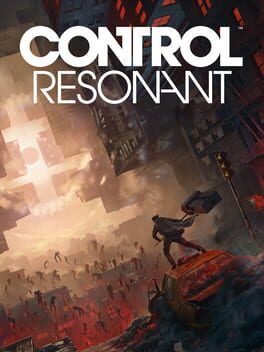

Remedy’s newly announced Control Resonant shifts the action to a collapsing Manhattan, puts Dylan Faden in the spotlight, and pushes the Remedy Connected Universe forward after Alan Wake 2.
Remedy has finally lifted the veil on Control Resonant, a full-scale sequel to 2019’s Control and the clearest statement yet of its ambitions for the Remedy Connected Universe after Alan Wake 2. The reveal trailer and early previews sketch a game that is at once intimately tied to the Federal Bureau of Control and radically removed from the Oldest House, trading brutalist corridors for a twisted New York where the city itself is an Object of Power waiting to happen.
In Resonant, players take control of Dylan Faden, Jesse’s brother and former FBC prisoner. Years after the events of Control and Alan Wake 2, Dylan walks out into a Manhattan that has already tipped over the edge of the paranatural. Buildings shear and reform midair, intersections fold into labyrinths, and the sky itself looks like a resonance experiment gone wrong. Remedy calls it a “paranatural action RPG,” but the pitch goes beyond the label: this is a story about a man whose mind was once a threat that needed to be contained, now thrown into a world where containment has completely failed.
What we know from the reveal is that Resonant is set roughly seven years after the first game. The Hiss, the Board, and the broader weird infrastructure of the FBC have not gone away, but Manhattan is being torn apart by a new cosmic presence that seems less like an invasion and more like a transcription error in reality. Dylan arrives with his powers unstable and his goals divided. He is searching for Jesse while also being pushed into the role of field agent, champion, or possibly sacrificial component in a ritual too big to fully understand.
Mechanically, Remedy is leaning into melee combat and progression in a way that sets Resonant apart from Control. The Service Weapon is gone, replaced by an evolving blade-like focus called the Aberrant. In motion it looks more like a living sigil than a piece of gear, shifting form as Dylan chains telekinetic strikes, dashes, and counters. Remedy describes the Aberrant as something that grows with Dylan, with a skill and upgrade system that lets players steer him toward specific styles, from hyper-aggressive crowd control to single-target boss shredding. Gunplay still exists, but the fantasy now centers on closing the distance, breaking an enemy’s stance, then tearing chunks out of the environment to finish the job.
Just as important is the setting. The Oldest House was a single contained mystery that rewrote itself behind closed doors. Resonant’s Manhattan feels like the moment those doors never closed at all. Streets stretch into impossible perspectives, skyscrapers peel back to reveal FBC-style maintenance guts, and pockets of reality fracture into alternate spaces that look like a cross between the Astral Plane and a memory palace built from Dylan’s trauma. Remedy has talked about segments of the city connecting to a more psychological layer, a mindscape where Dylan’s conflicted history with the Bureau, the Hiss, and Jesse herself becomes literal architecture.
This shift dovetails with where the Remedy Connected Universe stands post Alan Wake 2. That game made it explicit that the Bureau, the Dark Place, Cauldron Lake, and even prior Remedy works are entangled through overlapping layers of fiction and control. Resonant seems primed to be the next escalation point. If Control was about discovering the Bureau and Alan Wake 2 was about weaponizing narrative to reshape reality, Resonant is what happens when those forces leak into one of the most iconic cities on the planet.
You can already feel those cross-currents in the way Manhattan is described. The city’s collapse reads like a mass Altered World Event, something closer in scale to Bright Falls but suffused with decades of ambient cultural resonance. New York has always been a magnet for stories, so it makes twisted sense that in Remedy’s cosmology it might become unstable once the right paranatural frequency hits. That leaves the door open for references and incursions from across the Connected Universe, whether that is FBC documents on the events of Bright Falls, sightings of familiar symbols from Alan Wake’s manuscripts, or more overt crossovers that exploit Dylan’s sensitivity to psychic echoes.
Post Alan Wake 2, the Bureau also has to reckon with proof that fiction is not just influenced by Altered World Events but can generate them. Resonant’s premise allows Remedy to explore how the FBC tries to operate in a world where the line between urban legend, genre trope, and containment breach is almost gone. A reality-warped Manhattan is not a problem you solve with blackout curtains and redacted memos. It is a crisis that forces the Bureau out of the shadows and into a more visible, messy role, and Dylan, as a former subject of that secrecy, is the perfect lens on the shift.
All of this sets the table for new paranatural mechanics that go beyond Control’s familiar telekinesis, levitation, and mind control. The emphasis on resonance in the title hints at systems based on harmonizing, disrupting, or tuning into layers of reality. It is easy to imagine Dylan modulating frequencies in the environment to bend space more precisely, sliding between parallel versions of a street to solve traversal puzzles or set up ambushes. Enemies might “ring” at different frequencies, making them vulnerable to particular powers or combinations of environmental objects, pushing players to think of combat less as a shooter and more as a kind of destructive choreography.
The Aberrant itself seems ripe for resonance-based customization. Instead of just adding damage or elemental effects, upgrades could change the way Dylan interacts with reality. One configuration might stabilize surrounding space, briefly freezing the shifting geometry of a level so players can sprint across a collapsing bridge or hold a safe pocket during a chaotic encounter. Another might amplify the city’s instability, turning a charged heavy attack into a localized distortion that pulls enemies and debris into a singularity, reconfiguring the arena while dealing massive damage.
Then there is the psychological layer. Remedy has always been at its strongest when gameplay systems reflect inner states, and a Dylan-centric sequel offers plenty to mine. The mindspaces hinted at in early coverage could function like personalized sectors of the Astral Plane, built from Dylan’s memories of the Bureau, his time in confinement, and fragmented glimpses of Jesse’s path through the Oldest House. These may not just be story vignettes but fully playable hubs where adjusting mental “anchors” changes the layout of corresponding districts in Manhattan, feeding into a loop of introspection and external consequence.
Locations are likely to push that metaphor even further. If Control’s Foundation DLC took us to the bedrock beneath the Oldest House and AWE tied into Alan Wake’s Pacific Northwest nightmares, Resonant’s New York may split along other thematic lines. You can imagine a version of Midtown that has calcified around corporate bureaucracy, full of towering archives and boardrooms frozen mid-meeting, a physical echo of the FBC’s own culture. Downtown might fracture into a tangle of overlapping time periods, Wall Street crashes and late-night TV neon sharing alleyways that flicker in and out, like a live-action Night Springs episode bleeding into the real.
Remedy has also teased a more open structure, with semi-open districts of Manhattan linked by fast travel and layered objectives. That raises the tantalizing possibility of FBC field offices or impromptu safe rooms set up in repurposed buildings, each one a little island of bureaucratic order trying, and frequently failing, to hold back the flood of weirdness. Completing operations in these areas could stabilize their surroundings, only for deeper layers of instability to surface, reflecting the idea that you never fully “fix” an Altered World Event. You just negotiate a ceasefire.
In the timeline of the Remedy Connected Universe, Resonant arrives at a moment when every thread is tightening. Alan Wake has rewritten parts of reality, the Bureau’s secrets are more fragile than ever, and now one of its most dangerous former subjects is at the center of an urban-scale breach. Remedy says the game will be approachable even if you skipped Control and Alan Wake 2, but it is clear that for long-time followers this is where the serialized storytelling really kicks in. Expect dossiers hinting at Project Thresholds beyond Earth, background broadcasts that reference Night Springs and Return, and environmental details that quietly position Manhattan as just one station along a much longer road.
Control Resonant is framed as “a larger world that’s inspired by Neon Genesis Evangelion,” and that influence fits. A haunted, collapsing metropolis, a damaged protagonist whose inner life is as volatile as any monster, and a shadowy organization still pretending it can orchestrate outcomes that are spiraling out of its hands. For Remedy, it is a chance to blow out the Control formula without losing the strange poetry that made the Oldest House so memorable. For the Connected Universe, it looks like the next major rupture, the moment the paranatural stops being marginal and starts looking uncomfortably like the new normal.
If the original Control asked what happens when a single building is bigger on the inside, Control Resonant asks what happens when the outside world finally catches up.