
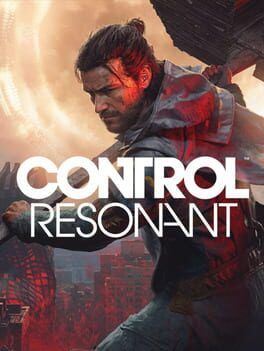

Remedy’s new PS5 details for Control Resonant point to a faster, melee-led sequel with clear performance targets, DualSense support, Assist Mode tuning, and a few launch questions still unanswered.
Image: IGDB
Store links: Control Resonant on Steam
Remedy’s PS5 pitch starts with frame rate, then raises harder questions
Remedy has now put hard PlayStation 5 numbers behind Control Resonant, and the headline is clear: the sequel has been built around 60fps responsiveness even as it pushes the series out of the Oldest House and into a warped Manhattan. In a September 15 PlayStation Blog post, Remedy communications director Thomas Puha said Control Resonant offers two modes on the standard PS5. Performance mode targets 60fps at 1440p, while Quality mode targets 30fps at 2160p.
On PS5 Pro, Puha said Remedy uses PSSR and offers Performance, Quality, and Balanced modes. The confirmed targets in the provided PlayStation Blog excerpt are Performance at 60fps and 2160p, and Quality at 30fps and 2160p with ray tracing. The excerpt confirms Balanced exists, but does not include its target resolution, frame rate, or ray tracing setup, so that part of the Control Resonant PS5 feature set remains incompletely detailed in the available source text.
That gap is worth noting because Remedy is selling this sequel on feel as much as spectacle. Puha wrote that Control Resonant is a “gameplay-driven experience” built with 60fps performance in mind from the beginning, with responsiveness taking priority. For returning Control players, that is the first real signal about the sequel’s priorities. The original Control became a showcase for paranormal art direction, destructible environments, and psychic gunplay. Resonant, as described by Remedy and the PlayStation Store, is shifting the physical tempo toward close-range combat, form switching, and fast decisions inside hostile spaces. A 60fps-first statement is not garnish here. It is Remedy acknowledging that the sequel’s combat will live or die on timing.
DualSense support is aimed at Dylan’s powers, not only weapon feedback
The newly detailed Control Resonant features on PS5 are not limited to resolution modes. Remedy says the game supports DualSense adaptive triggers, vibration, and 3D Audio with a compatible headset. The PlayStation Store page also lists vibration function and trigger effect support for the DualSense wireless controller, and marks the game as PS5 Pro Enhanced.
Puha’s PlayStation Blog post gives two concrete examples of how Remedy is using the triggers. Dylan’s Barrage ability, which launches projectiles at enemies, and Volatile Anomaly, described as a turret-like ally that can be thrown and detonated, apply different levels of resistance when players pull the triggers. That tells us the controller work is being tied to supernatural ability execution rather than treated as a general rumble layer.
For Control Resonant gameplay, that distinction matters. Remedy’s sequel puts Dylan Faden in the lead, and both the official PlayStation Store description and GamingBolt’s September 15 overview describe him as fighting through a Manhattan altered by paranatural threats while searching for Jesse Faden. The PlayStation Store frames the city as overrun by the Hiss, the Mold, and other threats, while Remedy’s PS Blog says Manhattan is split into visually distinct Zones. The DualSense design, at least in the examples Remedy has chosen to show, appears focused on giving Dylan’s powers a different hand feel from his melee weapon. If the first game’s rhythm was built around Launch, evade, shoot, and seize the room from a distance, Resonant’s PS5 feature pitch suggests a closer, heavier cadence where powers punctuate pressure instead of replacing it.
The Aberrant changes the combat promise of the Remedy Control sequel
The largest mechanical pivot is Dylan’s weapon. The PlayStation Store says players use the “raw force” of Dylan’s shapeshifting melee weapon, the Aberrant. GamingBolt goes further in its “15 Essential Things to Know” report, identifying five forms: Dual Blades, Axe, Scythe, Whip, and Heavy Hammer. According to GamingBolt, each form has its own role across attack speed, range, power, crowd control, and stagger potential.
GamingBolt also reports that Control Resonant uses a Gap meter on enemies, functioning as a stagger bar that depletes as Dylan lands blows. Once that meter breaks, enemies become vulnerable to heavier attacks and lethal finishers. The reported loop is not simply about picking the biggest form and swinging through a crowd. GamingBolt describes a rhythm where quicker forms such as Dual Blades or Whip can pressure and chip away at stagger, then heavier forms such as Axe or Hammer can punish the opening.
That is a significant change in combat grammar for a Remedy Control sequel. Jesse’s Service Weapon in Control was a transforming firearm, but it still sat inside a third-person shooter framework. Dylan’s Aberrant, as described by GamingBolt and supported in broader terms by the PlayStation Store, turns transformation into a close-range sequencing problem. The player is asked to read enemy posture, pick a form, break resistance, and cash out damage before the room resets around them.
The upgrade structure reinforces that direction. GamingBolt reports that each of the Aberrant’s five forms has a tailored upgrade tree with improved power, efficiency, new moves, stagger damage, status effects, and combo-extending potential. The same report says the weapon uses Primary, Secondary, and Combo Ender slots, allowing forms to shift mid-combo, and that players can respec upgrade points. If that system lands, Resonant may feel less like a shooter sequel wearing a melee skin and more like an action RPG where buildcrafting is expressed through timing, reach, and recovery frames.
The Gap is also a place, which makes progression sound faster and stranger
Remedy is using the word “Gap” in two important ways across the available material. GamingBolt uses Gap to describe an enemy stagger meter at the heart of combat. Puha’s PlayStation Blog post also describes “the Gap” as a liminal space within Dylan’s mind that he can access at will. According to Remedy, players can go there to unlock upgrades for Dylan and the Aberrant, test builds, craft Artifacts, and more.
That overlap could be intentional terminology tying Dylan’s internal state to combat pressure, or it could simply be Remedy using the same word across connected systems. The confirmed practical detail is that the Gap is a progression and testing space, and Remedy says moving back and forth to it is near-instantaneous on PS5. The same blog post says fast travel across Manhattan’s visually distinct Zones is near-instantaneous as well.
For returning players, this is one of the quieter but more consequential Control Resonant PS5 details. Control’s Oldest House was dense, looping, and hostile to straightforward navigation by design. Resonant’s Manhattan, according to the PlayStation Store, is an expansive world made of multiple areas with perception-bending locations, gravity anomalies, puzzle implications, and tactical combat consequences. If players are expected to swap zones, test builds, craft Artifacts, and re-enter the field regularly, loading speed becomes part of the pacing. Remedy’s claim of near-instantaneous travel suggests the studio wants experimentation to feel like a cut, not an intermission.
The PlayStation Blog also states that main story quest progress can be tracked through PS5 Activities, and that Game Help will be available after launch. Those are platform conveniences rather than design pillars, but they fit the same pattern: Remedy appears to be smoothing the friction around a bigger structure while making the fights themselves more demanding.
Assist Mode confirms Remedy knows melee will ask more from players
Five days before the PS5 technical blog, Remedy lead gameplay designer Sergey Mohov detailed Control Resonant’s expanded Assist Mode in a separate PlayStation Blog post. Mohov described the new combat system as close-range and demanding, with enemies that require players to read attacks, manage staggers and status effects, and time dodges. He said Remedy wanted players to control individual parts of the experience rather than rely on a small set of traditional difficulty levels.
The confirmed Assist Mode options include Enemy Aggression, Perfect Dodge Window, Enemy Projectile Speed, Incoming Damage, Outgoing Damage, Outgoing Falter, Power Recovery Speed, and Enhanced Melee Magnetizing. Mohov also confirmed stronger assists such as Immortality, One-Hit Kills, and One-Hit Falters. Importantly, he said Assist Mode can be enabled or disabled at any point during gameplay, and that Remedy intentionally avoids forcing those choices before players have felt the combat for themselves.
This is practical information for anyone worried that the Control Resonant gameplay shift might leave them behind. If the original Control worked for you because of its atmosphere, story, and telekinetic freedom rather than its difficulty spikes, Remedy is saying you can narrow the adjustment to the exact point of friction. If incoming damage feels too high but enemy behavior feels fair, those can be separated. If dodge timing is the issue, that can be widened without turning every enemy into paper.
Mohov also said the system can make the game harder, which he framed as a change from the first Control. That matters for action players who want the Aberrant system to keep biting after the first playthrough or after a build starts to click. Assist Mode, based on Remedy’s description, is less a concession menu than a combat calibration suite. The real test will be whether adjusting those values preserves encounter design, but the intent is clearly tied to the sequel’s sharper melee focus.
Launch details, editions, and the Deluxe early access calculation
Control Resonant’s release date is September 24, 2026, according to Remedy’s PlayStation Blog posts and the PlayStation Store page. The PlayStation Store UK listing prices the Standard Edition at £49.99 and the Digital Deluxe Edition at £54.99. The Deluxe listing includes the game, 48-hour early access, the AWE Mission Outfit, an Untapped Artifact identified as a Wallet, a Starter Resource Bundle, a digital artbook, and the original soundtrack.
That £5 difference is unusually small for an edition with early access, artbook, soundtrack, an outfit, an Artifact, and resources, at least in the UK PlayStation Store listing provided. Buyers should still make the decision based on what they value. The most concrete gameplay-adjacent inclusion is the Starter Resource Bundle, but the source text does not specify its contents or how meaningful it is in progression. The 48-hour early access is clear on the store page, although the provided sources do not state exact regional unlock times.
The PlayStation Store lists Control Resonant as a one-player game with nine accessibility features, Strong Language and Strong Violence ratings descriptors, and PS5 Pro Enhanced support. Wikipedia’s public entry, included in the provided source material, lists PlayStation 5, Windows, and Xbox Series X/S for September 24, 2026, with macOS later in 2026. Because the strongest official source text here is PlayStation-focused, the PS5 details are the firmest available for this piece.
Remedy’s PlayStation Blog also gives a main story estimate of 25 to 35 hours, with “plenty more” for completionists. That is useful for planning because Resonant’s structure sounds wider than Control’s bureau-bound sprawl. The PlayStation Store calls it an action-adventure RPG, and Wikipedia’s entry also describes it as an action role-playing game. Remedy has not, in the supplied excerpts, defined the full quest structure, endgame, or completionist scope in measurable terms.
What returning Control players should keep an eye on before launch
The strongest confirmed read on Control Resonant is that Remedy is changing the series through contact. The setting expands from the Oldest House to Manhattan, the protagonist shifts from Jesse to Dylan, the weapon moves from a transforming gun to a shapeshifting melee instrument, and the PS5 presentation is being tuned around responsiveness. The sequel still carries Control’s familiar paranormal vocabulary, including the FBC, Jesse Faden, the Hiss, the Mold, Objects of Power, and reality-bending spaces, but the player’s body position in combat appears to be the major break from 2019.
There are also open questions. The PS5 Pro Balanced mode is confirmed by Remedy’s blog excerpt, but its exact target is not included in the provided text. Ray tracing is confirmed for PS5 Pro Quality mode, while the excerpt does not list ray tracing for standard PS5 Quality mode or PS5 Pro Performance mode. Remedy says it built new Northlight engine technology for the game’s ambitions while keeping a close eye on performance, but the supplied material does not include final performance analysis, VRR information, install size on PS5, or hands-on frame pacing data.
Players returning for story should also note the changed emotional center. The PlayStation Store says Dylan emerges after years in FBC confinement during a paranatural crisis and seeks Jesse while trying to understand and contain dangers that have spilled beyond the Oldest House. GamingBolt reports that Jesse has mysteriously absconded and Dylan is trying to find her. Both sources point to a sequel built around absence, pursuit, and containment failure rather than Jesse’s first ascent into directorship.
For now, the sensible pre-launch approach is straightforward. If you care about combat feel, start in Performance mode on base PS5 unless visual sharpness matters more to you than response. If you are on PS5 Pro, wait for the missing Balanced specifics or independent launch testing before treating it as the default. If melee precision worries you, try the intended rhythm first, then use Assist Mode to tune the exact part that is blocking you. Control Resonant’s release is close, and Remedy has given enough detail to show the shape of the sequel. The remaining question is whether its new rhythm can make Manhattan feel as dangerous, coherent, and strange as the Oldest House once did.