
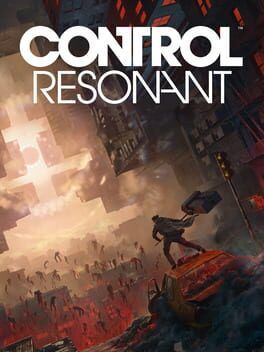

Control Resonant makes a bold pivot from the Oldest House’s gunplay to Dylan Faden’s aggressive, build-driven melee combat across a quarantined, broken Manhattan. We break down the new systems, the Aberrant weapon, and why this new setting changes everything.
Control was a game about being trapped. The Oldest House folded in on itself, a brutalist maze whose shifting corridors made you feel like an intruder in your own story. Control Resonant inverts that premise. Dylan Faden is not locked inside the Federal Bureau of Control. He is their weapon, deployed into a quarantined Manhattan that has literally bent under paranatural pressure, and the entire design has bent with it.
Control’s precise supernatural shooter has given way to something far more aggressive. Remedy calls Resonant an action RPG, but the footage and systems paint a picture closer to a stylish brawler with deep buildcrafting, set inside open-ended city zones. Melee is no longer your panic button. It is the spine of the combat loop.
From Service Weapon to Aberrant
Jesse’s Service Weapon defined the first game. It was a gun that happened to rewrite reality, and everything orbited around that idea. Dylan’s signature tool flips the relationship. The Aberrant is a towering, shapeshifting melee weapon that just happens to be a gun when it needs to be.
In play it looks closer to a character-action sword than a sidearm. Basic swings have real weight and follow-through, with generous hitboxes that encourage you to be inside the danger, not kiting around it. The Aberrant can be specced into multiple primary and secondary forms: heavier, slower cleaves that chunk through Hiss armor, whiplike mid-range slashes that let you herd enemies, and ranged lashes that bridge the gap between traditional Control telekinesis and a more physical moveset.
Rather than swapping discrete weapon archetypes, you are continuously evolving one living object. Those changes are made in The Gap, Dylan’s surreal inner space, where the Aberrant’s sprawling skill tree lets you pick new attack strings, charged strikes and mobility-focused follow-ups. The promise is that two late-game Aberrants might share a silhouette but feel wildly different in your hands.
A Combat Loop Built Around Getting In Close
The most important structural change is philosophical. Control’s combat was about juggling cooldowns and using the Service Weapon to fill the gaps between powers. Control Resonant pushes you into a closed circuit that begins and ends with melee.
Melee strikes refill the resource that fuels your abilities. Abilities in turn are tuned to stun, disorient or expose enemies to executions. Executions then deliver short, explosive buffs to your close-range damage. Remedy talks about this as a flow chart, but in motion it reads more like a rhythm game played at 60 frames per second. Whiffing your opening blows does not just feel bad, it stalls the entire loop.
That loop is also where the action RPG side shows through. Early builds showcased two very different versions of Dylan. One leaned fully into up-close aggression, using fast dash-cancels, aerial juggles and wide, crowd-controlling slams to keep entire packs of enemies suspended and helpless. The other drifted toward a tactical summoner, relying on lingering debuffs and autonomous allies to control space before diving in for boosted finishers.
Where the first Control let you eventually unlock a broad, Swiss army knife of powers, Resonant clearly wants you to specialize. The Aberrant’s tree branches hard. Commit to heavy swings and you get bigger damage windows but narrower defensive options. Chase mobility and you gain wall-running combos and mid-air repositions at the cost of raw output. Every node trades something, and every trade interacts with your broader build.
Resonants, The Gap, And Lasting Choices
If the Aberrant is the heart of Dylan’s kit, Resonants are its arteries. These are former people of power, entities that have been folded and rewritten by a cosmic Pattern, and they function as the game’s tentpole boss encounters. Mechanically they are closer to Mega Man than a loot treadmill. Each Resonant does not shower you with marginal stat bumps. Instead, beating one forces you to pick between a small set of mutually exclusive rewards.
One early example offers a defensive telekinetic shield that soaks incoming damage, a Seeker ability that calls volatile telekinetic entities to harass and then detonate around targets, or a third, still-hidden option. You do not get all three. You are making a statement about what your Dylan is for this playthrough.
Those decisions are then banked in The Gap. Whenever Dylan collapses under the strain of his powers or the city’s breaking physics, he wakes inside this mental limbo, a dreamlike space where the UI and fiction blur together. Here you invest Resonant rewards into your loadout, slot new skills into combos and adjust the passive Talents that stitch everything together.
Remedy is deliberately clear that you will not see everything in a single run. There are more Resonant powers, Aberrant branches and Talents than a standard clear can support, and a New Game Plus structure is already baked into the pitch. This is a game built for buildcrafting sickos who want their second and third characters to feel meaningfully different, not just statistically inflated.
Talents, Stats, And True Buildcraft
Talents are Resonant’s answer to Control’s somewhat opaque mod system. Rather than stacking generic +10 percent damage cards, you invest in specific passive perks that create clear synergies with your chosen kit. A Talent might reward you for chaining three different attack types in quick succession, or for maintaining executions within a short time window, or for staying airborne for a certain number of beats.
Crucially, Remedy says that most of these systems will surface real numbers. Cooldown reductions, damage coefficients and status durations are no longer hidden away. This is a shift toward transparency that should matter for players who enjoy theorycrafting. If you want to build a Dylan who lives off damage over time, kiting infected mobs around ticking anomalies while Seekers do their work, the game intends to give you the tools to measure and optimize that fantasy.
For everyone else, the structure is designed to stay readable. Combat Abilities, Weapon Upgrades and Talents are three clear pillars. Resonants define your big, identity-shaping powers. The Aberrant’s tree handles the texture of every swing. Talents tell you how you should ideally move and improvise once the fight starts. The idea is that even a casual player will, by instinct, end up with a coherent archetype, while more dedicated fans can push the edges of the system.
Manhattan As A Warped Combat Sandbox
All these mechanical changes would land differently if Resonant were another trip through a single building. Instead, the sequel relocates to Manhattan under supernatural quarantine. This is not a seamless open world, but a set of large, discrete zones carved out of the city and then violently reassembled by Hiss incursions and gravitational anomalies.
The shift from the Oldest House’s claustrophobic corridors to an outdoor, vertical metropolis changes how combat reads. In the first game, most fights played out in offices and archives, with limited sightlines and strict floor plans. Resonant’s Manhattan is openly hostile to the idea of a flat battlefield. Streets tilt ninety degrees, buildings fold sideways, gravity wells pin cars to mid-air intersections. Certain areas appear to run entirely along walls or ceilings, asking you to think in three dimensions before you even meet the first enemy.
Traversal abilities are tuned to match. Dylan’s Reach lets him cross impossible gaps and close the distance to airborne threats. Gravity anomalies can flip your orientation, so a dash that would have been a dodge on the ground becomes a plunging attack from a skyscraper face. The Aberrant’s more mobile branches take clear advantage of this, turning Manhattan’s debris into a parkour playground where the floor is just a suggestion.
That has knock-on effects for encounter design. Battles are less about peeking out from cover and more about threading aggressive routes through layered arenas. A quarantine-zoned block might stack street-level fodder, mid-air snipers anchored to spinning wreckage and a Resonant mini-boss that warps the geometry on a timer. Navigating that space cleanly is part of the build question. A bunker build with a static shield and slower swings may dominate tight interiors, but it will feel very different hanging from the side of a tilted high-rise.
Storytelling In The Open
The move to Manhattan also changes Control’s famously internal storytelling. Documents and memos still exist, but Dylan’s mission is framed around living people trapped inside the quarantine rather than an already-insular bureaucracy. Survivors shelter in makeshift safe zones between incursion sites. FBC handlers like Zoe De Vera guide you remotely and on the ground. Returning faces such as Simon Arish bring connective tissue to the first game, but they are now operating in forward bases carved out of hotels, subway stations and gutted offices.
To keep the pace up in this more open structure, Remedy uses light dialogue choices that slot into exploration and traversal. Conversations can continue while you walk or drift through the air, letting you shade Dylan’s attitude without locking you into long cutscenes. In a game so focused on the momentum of combat, it is a smart adjustment that also helps Manhattan feel like a quarantined city filled with actual, stressed-out people, not just another surreal dungeon.
Aggression As Identity
Viewed from a distance, Control Resonant looks like a contradiction. It takes a series built on carefully measured gunplay and smothering architecture and blows it out into a bigger, louder, more openly spectacular game. The trick is that Remedy has found a throughline for that escalation.
By centering the Aberrant and doubling down on melee, Resonant forces you to inhabit Dylan’s role as a directed weapon rather than a beleaguered survivor. By tying your strongest abilities to Resonants and The Gap, it turns each boss encounter into a real inflection point for your build. By staging fights across a quarantined, gravity-sick Manhattan, it transforms the backdrop into a core part of the combat fantasy.
If the first Control was about learning how to survive the Oldest House, Control Resonant is about deciding what kind of weapon you want to be in a city that might not survive you.