
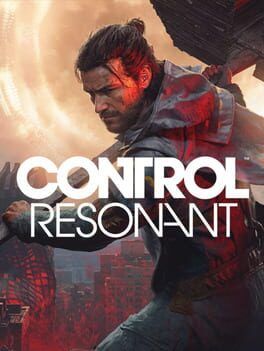

Remedy’s Control Resonant launch trailer puts Dylan Faden, the Aberrant, and a warped Manhattan in focus before the September 24 digital release.
Image: IGDB
Store links: Control Resonant on Steam
Remedy’s launch trailer puts Dylan Faden on the clock
Remedy Entertainment has released the Control Resonant launch trailer one week before the sequel’s digital launch on September 24, 2026, setting up the clearest public snapshot yet of how the studio wants players to read its return to Control. According to MonsterVine, GamingTrend, DLH, and Gamestic, the trailer is set to “My Favourite Game” by The Cardigans and centers Dylan Faden as the playable lead, showing him facing paranatural threats, large-scale bosses, and surreal spaces while using different forms of the Aberrant.
That trailer arrives with a specific kind of pressure attached. Control Resonant is scheduled to release roughly seven years after 2019’s Control, as GamesIndustry.biz notes, and Remedy is no longer selling the sequel on the enclosed, shifting architecture of the Oldest House alone. The reported focus has moved to Dylan, melee-forward combat, and an open version of Manhattan distorted by paranatural forces. The Control Resonant release date therefore matters less as a calendar marker than as the moment Remedy’s bigger structural bet becomes playable for the wider audience.
The trailer’s job is familiar for a late-cycle marketing beat: compress tone, threat, protagonist, and combat identity into a fast sequence. What makes this one more revealing is how closely it lines up with Remedy’s broader positioning. Dylan is not presented as a quiet substitute for Jesse Faden. The sources describe him as the center of the action, equipped with the Aberrant and placed against overwhelming enemies and monumental bosses. The cut is built around acceleration, impact, and scale, which fits what Remedy has said elsewhere about a faster protagonist moving through a freer world.
The trailer sells force, but the sequel is being sold on structure
The strongest visual idea in the Control Resonant launch trailer, based on the outlet descriptions and Remedy’s quoted announcement text carried by GamingTrend and DLH, is Dylan tearing through reality-bending encounters while mastering multiple forms of the Aberrant. MonsterVine says the trailer shows him using those forms against enemies and large-scale bosses. Gamestic adds that the story places Dylan inside a heavily distorted Manhattan, reshaped by shifting realities and paranatural anomalies, after the Federal Bureau of Control sends him into the epicenter of a supernatural crisis following Jesse Faden’s mysterious disappearance.
That is the cinematic hook, but the larger design pitch is more complicated. GamesIndustry.biz reports that Control Resonant swaps the tight confines of the Oldest House for the open streets of Manhattan and emphasizes melee combat, which it describes as a first for Remedy. Senior level designer Arhi Makkonen told GamesIndustry.biz that this new Manhattan is the “biggest world we have ever done,” a claim that reframes the trailer’s spectacle. The city is not backdrop alone. It is the main design problem Remedy has built the sequel around.
Makkonen’s comments point to the core challenge. In the first Control, Remedy could shape pacing through corridors, chambers, thresholds, and the literal ceilings of an interior space. Makkonen said that inside the Oldest House, Jesse’s levitation always existed under a ceiling. In Control Resonant, Dylan can move faster, and the outdoor Manhattan setting gives Remedy “a lot of freedom to make a lot of height distance.” The studio’s set-piece language, then, has to change. A fight is no longer naturally contained by office walls and brutalist geometry. A route through the streets has to account for a protagonist who may be able to reach rooftops, climb sheer surfaces, or break the intended line before the director’s hand can close around the frame.
Manhattan is being positioned as Remedy’s biggest design risk
Remedy’s open Manhattan is the central tension behind the Control Resonant September 24 launch. Makkonen told GamesIndustry.biz that any attempt to create a guided experience inside an open-ended structure is difficult because players can go almost anywhere. He described a sequence where designers wanted Dylan to move through streets and loop back to rooftops, but his movement toolset made it “very hard to keep him out of the rooftops in the first place.”
The solution, according to Makkonen, was not to clamp down on movement unless necessary. “As much as possible, we want to have freedom,” he told GamesIndustry.biz. Remedy is using landmarks, colors, and zone composition to pull the player’s eye rather than force a single path. When a player enters a new zone, Makkonen said the goal is to show the most interesting main location in front of them while surrounding it with other opportunities. Ideally, he said, a player would understand the world without needing a map, even if the map remains useful in practice.
That design philosophy matters because Control’s best moments often depended on oppressive staging: a room sealing shut, a strange object becoming an arena, a seemingly administrative hallway turning hostile. GamingBolt reports that Control Resonant changes that relationship between place and progression. While the first and final Resonant encounters are fixed, GamingBolt says Remedy has stated that the major Resonants between them can be tackled in whatever order players choose, with much of Manhattan freely available early on. If that holds across the final game, pacing becomes partly player-authored. The sequel is asking players to decide when to seek the next major confrontation, when to drift into side activity, and when to test how far the city will let Dylan move before it pushes back.
The Aberrant and melee focus change the rhythm of a Control fight
The Control Resonant gameplay changes described across the available sources suggest a sequel that wants combat to feel closer, faster, and less dependent on the gun-forward pattern many players associate with Jesse’s Service Weapon. MonsterVine and Gamestic both describe Dylan using different or multiple forms of the Aberrant, while Wikipedia’s summary of the game’s public information identifies the Aberrant as Dylan’s primary weapon and says it can shapeshift into a variety of armaments. GamesIndustry.biz separately reports that Control Resonant places a focus on melee combat, a first for Remedy.
For an action-adventure player, that is the most important practical shift shown around the trailer. Control’s combat rhythm was elastic: launch debris, fire, levitate, reposition, cleanse the room. A melee-forward sequel built around a shapeshifting weapon implies a different kind of tempo, one where commitment distance, enemy roles, and animation timing carry more weight. GamingBolt reports that enemies in Resonant have distinct combat roles, which would fit a system that asks Dylan to read space and threat priority rather than simply maintain distance and cycle powers.
The risk is obvious. Remedy’s strengths have long been atmosphere, surreal escalation, and authored spectacle. Melee combat in an open world has less room to hide if hit reactions, camera behavior, lock-on logic, enemy spacing, or traversal transitions feel loose. The provided sources do not include performance data, final hands-on review findings, or platform technical targets, so any verdict on how well the new combat works has to wait. What is confirmed is the intention: Remedy is positioning Dylan’s body in the fight differently than Jesse’s, and the launch trailer’s emphasis on force, bosses, and the Aberrant is part of that reset.
Progression now runs through the city, not only through Dylan
GamingBolt’s comparison of Control and Control Resonant reports one of the sequel’s more unusual design changes: Dylan does not use conventional XP in the way Jesse earned Ability Points through missions. Instead, zones level up as players complete activities. GamingBolt says zone progression can provide benefits such as health drops, loot reveals, and extra excursions, and can also award Dylan Talent Points.
That system matches Remedy’s stated interest in a Manhattan that reshapes and responds rather than simply expands. GamingBolt reports that defeating a Resonant can permanently alter Manhattan through what Remedy calls the Resonance Cycle. According to that report, killing a major Resonant can make the city shapeshift, introduce new threats, make existing encounters more dangerous, and evolve objects and activities. In other words, bosses are being framed as changes to the campaign state, not only gates on a critical path.
This is the part of the sequel that could most affect players deciding how quickly to push the main story on September 24. If the middle Resonants can be tackled in different orders and each victory changes the city, then the question is not only which boss is next. It is which version of Manhattan you are willing to create before exploring another district. The sources do not say how reversible those changes are, how transparent the game is about consequences, or whether players can meaningfully predict the effect of defeating a given Resonant. Those are major unanswered questions because they determine whether the Resonance Cycle feels like reactive world design or opaque escalation.
September 24 is digital day, but not every version arrives together
The confirmed Control Resonant release date is September 24, 2026 for the digital version on PlayStation 5, Xbox Series X|S, and PC. MonsterVine reports that PC availability includes Steam and the Epic Games Store, and that GeForce NOW support will be available at launch. Gamestic also lists Steam and Epic Games Store for the PC release. MonsterVine reports the Standard Edition price at $59.99 and the Digital Deluxe Edition at $69.99.
There are a few timing details players should separate carefully. MonsterVine and Gamestic both report that PlayStation 5 players who purchase the Digital Deluxe Edition receive 48-hour early access. The provided material does not include exact unlock times by region, so players should check their platform storefront before planning around a specific hour. Physical editions for PlayStation 5 and Xbox Series X|S are scheduled to follow on October 15, according to MonsterVine and Gamestic, with a Standard Edition and a SteelBook Edition. MonsterVine reports that the SteelBook Edition includes a SteelBook case, three fine art prints, and a key art poster.
The Mac version is not part of the September 24 launch. MonsterVine says Control Resonant is planned for Mac through Steam and the App Store later in 2026, while Wikipedia’s public listing also places macOS later in 2026. For players waiting on Mac, the available sources confirm the platform plan but not a specific date. For players on console or Windows PC, September 24 is the main digital launch, with October 15 reserved for boxed copies.
Remedy’s larger world now extends beyond one haunted building
Control Resonant is also arriving at a different business moment for Remedy. MonsterVine reports that Remedy Entertainment will publish the game, with Annapurna Pictures co-financing and co-producing the project. Wikipedia’s development summary says Remedy acquired full ownership of the Control series from 505 Games in February 2024 and later partnered with Annapurna Pictures to finance half of the sequel’s development costs. Those details help explain the scale of the sequel’s push: Remedy is no longer presenting Control as a single contained success, but as a larger world it can steer more directly.
The story setup described by Gamestic also widens the cast and continuity. Dylan is sent into the crisis after Jesse’s mysterious disappearance, faces returning threats such as the Hiss and the Mold, and works with new ally Zoe de Vera alongside familiar FBC figures Emily Pope and Simon Arish. Wikipedia similarly summarizes the premise as Dylan battling hostile entities while searching for his estranged sister Jesse. The sources agree on the central shift from Jesse to Dylan, though they vary in how much supporting story detail they provide.
For players waiting on the Remedy Control sequel, the practical guidance is straightforward. If you want the earliest confirmed access and are on PlayStation 5, the Digital Deluxe Edition’s reported 48-hour early access is the only early route mentioned in the provided sources. If you want a physical copy, wait until October 15. If you are on Mac, wait for a later 2026 date. If your main concern is whether the new structure preserves Control’s pacing, September 24 is the real test. The launch trailer shows confidence and momentum, but the sequel’s defining question is whether Remedy can make freedom, melee pressure, and a reactive Manhattan carry the same uncanny precision the Oldest House once delivered room by room.