
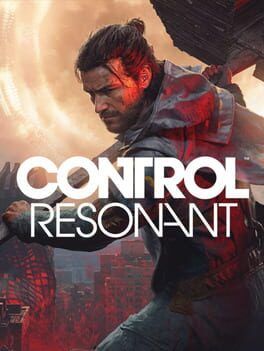

Recent Control Resonant interview details point to a sequel built around Dylan Faden, melee-first combat, Manhattan-scale exploration, and Remedy’s challenge of expanding Control without sanding away its mystery.
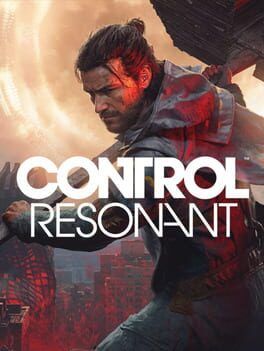
Image: IGDB
Store links: Control Resonant on Steam
Dylan Faden moves to the center, and Control changes shape around him
The clearest signal from the latest Control Resonant interview cycle is that Remedy is not treating its Control sequel as a simple return to Jesse Faden’s Service Weapon routine. In interviews with GamingBible and Screen Rant, Remedy developers frame the sequel around Dylan Faden’s perspective, a move that changes both the story’s emotional axis and the combat language around it.
GamingBible reports that art director Elmeri Raitanen described Control as a universe Remedy can approach from different angles, rather than a series locked to one protagonist. Raitanen told the outlet that the original 2019 game was Jesse’s story, while Control Resonant puts players on “the other side of the sibling coin” with Dylan. That is the concrete pivot underneath the sequel’s stranger promise: same supernatural world, different wounded observer, different rules of motion.
That matters for the texture of a Remedy action game. Jesse entered the Oldest House as an outsider and became Director through a rhythm of discovery, institutional horror, and escalating power. Dylan, by contrast, was already inside the Federal Bureau of Control’s nightmare. GamingBible’s recap of the first game notes that Dylan was kidnapped by the organization as a child, developed supernatural powers, and became the subject of cruel experiments. Screen Rant’s interview with actor Sean Durrie also points to that continuity, with Durrie saying he brought what he knew of Dylan’s backstory from the first game into the sequel.
The practical read is that Control Resonant can make its mystery less about learning what the Bureau is and more about what the Bureau has done. That is an interpretation, not a confirmed plot summary. What is confirmed across the provided sources is the protagonist shift, the sibling-search premise, and Remedy’s stated interest in treating Control as a broader franchise space rather than a single-character vehicle.
Manhattan widens the Oldest House problem without replacing it
The original Control made architecture feel hostile. Its brutalist corridors folded into impossible thresholds, shifting rooms, dead office light, and the sense that the building itself had a pulse. Screen Rant’s interview with creative director Mikael Kasurinen makes clear that Remedy sees the Oldest House’s spatial identity as both a strength and a limit.
Kasurinen told Screen Rant that the Oldest House could feel “bigger than it would look from the outside,” but that there was still a ceiling on how much spatial breadth Remedy could express inside that location. He said Control Resonant pushes into the outside world with a stronger sense of the surrounding structure, navigation, traversal, and the opportunities placed in front of players.
The reported setting shift lines up with other source material. Wikipedia’s public listing describes Control Resonant as following Dylan after he is released from FBC captivity to help contain an escaped extradimensional entity that has taken control of downtown Manhattan. Screen Rant similarly describes New York City as crumbling under Hiss corruption, while the assignment’s linked Summer Game Fest interview is framed around bringing the madness of the Oldest House to Manhattan.
There is a useful tension in those descriptions. Wikipedia’s wording emphasizes an escaped extradimensional entity and hostile entities. Screen Rant and GamingBible refer to the Hiss, the hostile force central to the first Control. Those may be different ways of describing the same threat, or they may reflect a broader sequel setup where the Hiss remains part of the supernatural vocabulary but not the whole answer. The sources provided do not settle that distinction. For players watching Control Resonant gameplay closely, the important question is whether Manhattan behaves like an open city with haunted pockets, or like the Oldest House logic spilling through streets, landmarks, interiors, and side objectives.
Remedy’s best action spaces usually work because the level is a combat instrument. In Control, a mail room, research wing, or astral platform could suddenly become a kinetic arena. Moving that grammar into Manhattan raises a harder design challenge: the sequel has to create readable routes and systemic encounters while preserving the sense that the world is violating its own rules.
The combat shift is the biggest design risk, and the most interesting one
The Control Resonant interview details point to the sequel’s sharpest mechanical break from 2019’s Control: melee is moving to the foreground. GamingBible reports that Raitanen said Remedy has been making shooters for about 20 years and that the studio was happy to finally make a melee game with Control Resonant. He also said that, from an animator’s perspective, a third-person melee game can be more interesting than a third-person shooting game.
Wikipedia’s public listing describes Control Resonant as an action role-playing game rather than the first game’s third-person shooter, and says Dylan’s primary weapon is the Aberrant, a shapeshifting weapon that can become different armaments. That detail, if reflected in the final game as listed, is the clearest sign that Remedy wants the sequel’s combat to be closer, heavier, and more form-driven than Jesse’s gun-and-launch cadence.
That is a major identity test. Control’s combat rhythm was built around snap decisions at medium range: throw concrete, dodge, levitate, pierce armor, seize enemies, reload energy through aggression. The Service Weapon was important, but the game’s rhythm came from weaving paranatural powers through gunfire and vertical movement. A melee-first Control sequel has to solve different problems. It needs impact readability, enemy commitment windows, crowd control, camera discipline, and convincing animation blending when supernatural powers begin tearing the arena apart.
Screen Rant’s interview supports the idea that Remedy is aware of the whole-body change. Kasurinen said the team put energy into traversal, weapons, and making “a million little things” feel right compared with the first game. The phrase is broad, but the context is specific: Control Resonant is trying to feel larger, more open, and mechanically different without becoming shapeless.
For Remedy action fans, the footage to watch is not the finisher montage. It is the connective tissue between hits. Can Dylan close distance without breaking encounter balance? Does the Aberrant create distinct choices or simply cycle through stylish attack animations? Do powers interrupt, amplify, or replace melee strings? If Control Resonant is truly more systemic, its best encounters should let the player improvise inside consistent supernatural rules rather than wait for a scripted spectacle to arrive.
A larger game can help Control’s mystery, but only if the rules stay sharp
Remedy’s connected-universe style invites speculation, and Control Resonant is already being discussed through that lens. GamingBible asked Raitanen about the community-named Remedy Connected Universe, noting that Control planted seeds for Alan Wake 2. Raitanen said the studio could eventually see more connected stories, but added that it depends on how people receive Control Resonant and that the game is not out yet.
That is a careful answer, and it should be treated as such. It is not a confirmation of Alan Wake, Max Payne-adjacent material, or any unannounced Remedy property appearing in Control Resonant. It is confirmation that Remedy recognizes the shared-story conversation and sees future connected stories as possible, conditional, and dependent on reception.
The healthier expectation is to watch how Control Resonant expands the world rules before looking for crossover breadcrumbs. The first game worked because its weirdness had procedure. Altered Items, Objects of Power, thresholds, the Board, the FBC’s memos, and the Hiss all operated with enough internal consistency to let absurdity feel authored rather than random. Moving to Manhattan could widen that framework by showing how Bureau containment doctrine fails at civic scale: streets, apartments, transit routes, public panic, and ruined infrastructure.
The risk is that bigger becomes looser. Screen Rant’s Kasurinen described the sequel as placing more energy into navigation, traversal, and opportunities in the space around the player. Wikipedia’s listing says Remedy described Control Resonant as “open-ended,” with optional quests and objectives. Those are promising terms for systemic play, but they also raise the pacing question every action-adventure sequel faces when it expands: how does the game keep dread, escalation, and authored weirdness from dissolving into a checklist?
That is where Dylan’s point of view can do real work. Jesse’s story gave Control a clean investigative spine. Dylan’s history gives Resonant a more unstable emotional one. If Remedy uses that instability to shape side quests, power discovery, and city logic, the sequel can widen the supernatural mystery while staying recognizably Control. If the city becomes a generic activity board wearing FBC terminology, the franchise’s identity gets thinner.
The business and production context points to ambition, not unlimited certainty
The source material also shows why Control Resonant appears to be a larger bet for Remedy. Wikipedia’s development summary states that Remedy and 505 Games announced plans in June 2021 for a multiplayer spin-off and a bigger-budget Control project, later referenced under the codename Heron. It also states that Remedy confirmed Heron as a Control sequel in November 2022, acquired full ownership of the Control series from 505 Games for €17 million in February 2024, and partnered with Annapurna Pictures in August 2024 to finance half of the sequel’s development costs. According to that same public summary, full production began in February 2025.
Those details are worth reading alongside the interviews. Remedy’s public creative language is about scope, perspective, and a new combat identity. The business history points to a studio consolidating ownership of the franchise while sharing financial risk on a bigger production. That combination makes Control Resonant feel like a franchise-defining release rather than a modest follow-up.
It also clarifies why the sequel may be positioned differently from Control 2019. Wikipedia lists Control Resonant as developed and published by Remedy Entertainment. The same listing says it is scheduled for macOS, PlayStation 5, Windows, and Xbox Series X/S on September 24, 2026. PC Gamer’s guide says the game, previously known as Control 2, received a release date during Sony’s June 2026 State of Play. Tom’s Guide also references a September 24 release in its interview framing.
Because the provided material does not include a storefront page, pricing, editions, PC requirements, console performance modes, or upgrade information, none of those should be treated as known here. The practical advice is simple: if you are deciding whether to pre-order or wait, the interviews are useful for understanding direction, but the missing technical and commercial details are still decisive. Remedy’s recent games are often judged as much on atmosphere, pacing, and performance delivery as on premise. For a larger, open-ended Manhattan setting, performance clarity will matter.
What to watch next as Control Resonant gameplay comes into focus
The best way to follow Control Resonant from here is to track the systems behind the spectacle. The interviews already identify the sequel’s pillars: Dylan Faden as lead, a Manhattan-scale supernatural breach, a stronger emphasis on melee, traversal improvements, open-ended exploration, optional objectives, and Remedy’s continued interest in a connected universe. The open questions sit between those pillars.
For combat, watch whether the Aberrant’s shapeshifting creates tactical identities. A Remedy action game lives in the beat between decision and impact. If each weapon form changes range, timing, crowd control, and power synergy, Control Resonant gameplay could feel meaningfully distinct from the first game. If the forms blur together, the sequel’s melee emphasis risks becoming a surface-level genre swap.
For exploration, watch how Manhattan is structured. Kasurinen’s Screen Rant comments suggest Remedy wants stronger spatial awareness and organic navigation than the Oldest House allowed. Wikipedia’s listing describes optional quests and objectives. The question is whether those optional paths reveal new rules, characters, threats, and power uses, or whether they mostly feed progression. Control’s documents and side rooms were part of its storytelling engine. Resonant’s city needs an equivalent language.
For narrative, watch how Remedy handles Jesse’s absence. The reported premise has Dylan searching for his estranged sister, and Raitanen’s GamingBible comments frame the sequel as Dylan’s side of the sibling story. That gives the game a strong personal drive, but it also puts pressure on the writing to avoid turning Jesse into a simple objective marker. The sibling switch is at its most compelling if it reframes both characters rather than replacing one lead with another.
For the wider Remedy universe, keep expectations restrained. Raitanen acknowledged the possibility of more connected stories but tied that future to Control Resonant’s reception. That makes the sequel’s own identity the first test. Crossovers can add charge, but Control’s power comes from bureaucracy, dread, architecture, and the awful comedy of trying to file paperwork around impossible events.
Based on the confirmed interview details, Control Resonant looks like Remedy’s attempt to make a stranger, more physical, more spatially ambitious Control sequel. The promise is real, but so is the risk. A melee-led, open-ended Manhattan game has to move differently, breathe differently, and still obey the uncanny rules that made the Oldest House memorable. That is the set-piece to watch before release: not one collapsing building, but whether the entire sequel can hold its shape while reality bends around Dylan Faden.