
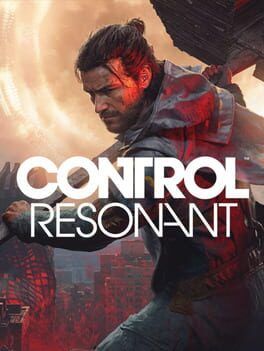

Remedy’s first Control Resonant hotfix lowers enemy health and Falter thresholds, buffs Dylan’s scaling, and makes respeccing cheaper for early build experimentation.
Image: IGDB
Store links: Control Resonant on Steam
Remedy Moves Fast on Resonant’s Opening-Hour Friction
Control Resonant launched broadly on September 24, 2026, and Remedy immediately pushed hotfix 1.3.3 to soften one of the sharpest complaints around the sequel: enemies in the early game were taking too long to kill, too long to stun, and leaving Dylan Faden feeling underpowered before his build had room to breathe.
Remedy described the target of the update in its launch blog, as quoted by Rock Paper Shotgun and Kotaku, saying the hotfix addresses “enemy health pools feeling too high,” enemies requiring too many hits to Falter, and Dylan’s early combat strength “not feeling powerful enough.” That makes this a unusually direct day-one balance correction. It is not a vague stability pass or a hidden tuning sweep. It is a public response to a specific combat rhythm problem identified by reviewers and early players.
The headline changes are clear. Remedy has reduced the base health and required Falter level of most enemies, including the Dancer and Deserter bosses. It has also raised the maximum Aberrant Strength and maximum Ability Strength, with those increases now scaling on a curve so later upgrades produce larger damage gains. In Remedy’s own framing, as relayed by multiple outlets, the goal is for the game to feel more dynamic while still offering challenge.
For players arriving after the full launch rather than through early access, this means their first hours in Control Resonant may already feel different from the version some reviewers and Digital Deluxe Edition players encountered. Kotaku reports that the game was technically available from September 22 for players who pre-ordered the more expensive version, while September 24 marked the wider release on consoles and PC.
The Enemy Nerf Is Really a Pace Change
The Control Resonant enemy nerf is easy to read as a simple difficulty reduction, but the notes point to something more specific: pacing. Remedy did not say it was removing enemies, cutting encounter density, or changing the structure of fights. The studio is adjusting how long combat states last before they resolve into a stun, execution, ability burst, or kill.
That distinction matters in an action game built around pressure and release. If an enemy has too much health, every exchange stretches. If the Falter threshold is too high, the execution system waits offstage while the player keeps trading blows. If Dylan’s early damage is too low, the combat fantasy lags behind the animation, sound, and world design doing the heavy lifting.
Rock Paper Shotgun’s coverage adds a useful wrinkle from its review playthrough. Its reviewer told the outlet that Falter infliction buffs are significant because the poise and execution system sometimes failed to enter the loop cleanly: enemies could die before enough Falter damage was applied. That observation shows the tuning problem was not only “too hard” in the bluntest sense. The system’s timing could miss its own dramatic cue. Remedy’s answer lowers both health and Falter requirements, which should, in theory, give the game more chances to surface executions before fights either drag or collapse.
The Dancer and Deserter being named alongside most enemies is also important. Bosses set the temperature for a game’s combat language. If early bosses feel like walls before players understand the build system, the player learns caution, attrition, and restraint. By reducing their health and Falter requirements, Remedy is telling new players to engage with stun and execution flow earlier rather than treating it as a late-game luxury.
Dylan’s Power Curve Gets a Stronger Tail
The other half of the Remedy Control Resonant update is a buff to the ceiling of Dylan’s damage systems. According to Remedy’s patch notes as reported by GamingBolt, Kotaku, MP1st, and Rock Paper Shotgun, maximum Aberrant Strength and maximum Ability Strength have been increased. Those increases follow a progression curve, with larger gains toward the end. GamingBolt sums up the practical effect plainly: more upgrades now equal more damage.
That change does two jobs at once. In the short term, it helps counter the feeling that Dylan is weak during the opening stretch. In the longer term, it makes upgrade investment easier to read as power gained, rather than as incremental menu work with an uncertain payoff. Remedy also updated English UI text to make that relationship clearer.
The Aberrant Strength label changes from “Multiplier X%” to “Damage and Falter X%,” according to MP1st and GamingBolt. That is a small text edit with a real design purpose. “Multiplier” is abstract. “Damage and Falter” tells players exactly which combat outcomes are being affected: how hard Dylan hits and how quickly enemies can be pushed into a stun state.
Build Power text has also been revised. MP1st reports the old description said it was “Calculated based on equipped Weapon Forms, Talents and Core Upgrades.” The new English text says Build Power comes “From unlocked Combat Abilities, Aberrant forms/upgrades, Talents, and Core Upgrades.” GamingBolt reports the same functional change. The updated wording shifts emphasis from what is merely equipped to what has been unlocked across several progression categories.
MP1st notes that these UI text changes are English-only for now, with localizations to follow. That is a practical caveat for players outside English-language settings: the numbers may already behave differently after the hotfix, even if translated explanatory text has not yet caught up.
Cheaper Respecs Make Bad Early Choices Less Costly
The Control Resonant respec cost change may be the most player-friendly part of the hotfix for anyone who starts a new action RPG by guessing. Remedy says it is permanently reducing the cost of respeccing and increasing the stock of Reset Items across all vendors, according to MP1st, TheGamer, Rock Paper Shotgun, and GamingBolt. The first Resonant boss fight, The Artist, will now drop two Reset Items instead of one.
That matters because early build decisions are often made with incomplete information. Players do not yet know which Aberrant forms suit them, which combat abilities will define their rhythm, or how much value a stat will gain later in the curve. If respeccing is expensive, a weak early build becomes a tax on experimentation. Players either push through friction with a setup they dislike or hoard resources out of fear that a better option is coming.
The hotfix lowers that pressure. It does not make every upgrade free, and the sources do not provide exact new prices for Reset Items, so there is no confirmed number to compare against the launch build. What is confirmed is the direction: respeccing is cheaper, vendors carry more Reset Items, and The Artist drops an extra one.
That fits the broader tuning pass. Reduced enemy health helps fights resolve faster. Reduced Falter thresholds bring executions into play sooner. Higher strength scaling makes upgrades feel more consequential. Cheaper respecs let players course-correct when the build they imagined does not match how Control Resonant actually moves in the hand. For new players, that combination should make the opening less punishing without requiring them to restart or lean immediately on difficulty sliders.
Assist Mode Remains the Safety Valve for Both Sides
Remedy is also pointing players toward Assist Mode if the hotfix still misses their preferred difficulty. MP1st reports that Assist Mode is available in the Gameplay menu and lets players adjust individual parts of the experience, including enemy aggression, incoming damage, and how quickly Dylan recovers his abilities. Kotaku also notes that Remedy reminded players they can adjust enemy health and damage, including in the harder direction.
That is important because a day-one enemy health cut creates a predictable split. Players who found Resonant’s early enemies spongy may see the update as a necessary correction. Players who liked the extra resistance may worry that the first hours will lose weight. The confirmed answer, at least from Remedy’s listed options, is that the baseline has changed but customization remains available.
GamingBolt frames Assist Mode as a way to adjust enemy health, damage, and more if the post-hotfix game feels too easy. MP1st’s detail about sliders makes the tool sound more granular than a single easy-medium-hard switch. The sources provided do not confirm whether every Assist Mode setting affects achievements across all platforms, so players chasing trophies or achievements should be cautious about assuming there is no impact unless their platform or Remedy states it directly.
The larger design tension is familiar for action games with RPG progression. If base enemies take too little punishment, upgrades feel ornamental. If they take too much, every hallway becomes a delay. By making the default friendlier while leaving sliders in place, Remedy appears to be moving the standard experience toward faster combat flow rather than declaring one ideal difficulty for everyone.
Versions, Platforms, and Whether to Wait
Control Resonant is available on PS5, Xbox Series X|S, and PC, according to GamingBolt and Kotaku. The first hotfix is identified by Remedy and several outlets as 1.3.3, while MP1st reports platform-specific version labels: PS5 players see it as update 1.300.300, and Xbox players see version 1.3.3.0. MP1st also reports the PS5 download is 350 MB and says it should be a small download across all platforms.
For anyone starting now, the practical guidance is straightforward. Make sure the launch hotfix is installed before judging the early combat balance, especially if you are sensitive to spongey enemies or slow stun buildup. If you played during early access and bounced off the opening, the specific problems Remedy names are the same ones this patch targets: enemy health, Falter requirements, and Dylan’s early strength.
There are still unanswered questions. The sources do not provide exact before-and-after values for enemy health, boss health, Falter thresholds, Ability Strength, Aberrant Strength, or Reset Item prices. That means players cannot yet calculate how deep the nerfs and buffs go. We also do not have platform-by-platform performance changes tied to this hotfix, because the reported notes focus on combat balance, respec economy, and UI text.
The strongest confirmed read is that Remedy has treated Control Resonant’s launch-day criticism as a tuning issue rather than a philosophical disagreement with players. The studio has not rebuilt the combat system. It has shortened the runway to the parts of combat that were meant to sing: stun, execution, upgrade payoff, and build experimentation. If Resonant’s opening previously felt like Dylan was dragging his power behind him, hotfix 1.3.3 is designed to get him moving sooner.