
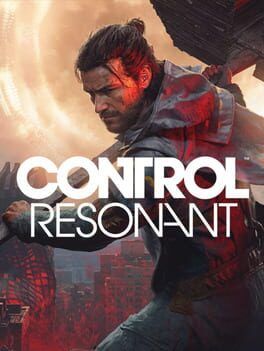

A hands-on look at Control Resonant’s bolder combat, Dylan’s starring role, how it stretches the Control universe into Manhattan, and what it says about Remedy’s interconnected game strategy.
A new kind of Control
Control Resonant immediately feels like a sequel that refuses to repeat itself. The Oldest House is gone, replaced by a warped slice of Manhattan that has been gutted, folded and possessed by paranatural forces. Remedy shifts genres toward a full action RPG with melee-heavy combat, deep skill trees and gear, yet the tone, framing and off-kilter weirdness are still unmistakably Control.
In the hands-on slice covered by previews, Resonant drops you into a mid-crisis New York where reality is breaking in public. Streets pitch and buckle, skyscrapers twist in the distance and interior spaces refuse to obey basic geometry. Instead of creeping through brutalist corridors, you are sprinting down avenues, soaring between rooftop gaps and ricocheting through apartment blocks as they rearrange around you. It feels louder, more aggressive and far more open than the original without losing that essential sense of “the mundane invaded by the impossible.”
Dylan Faden finally takes center stage
The biggest shift is not the city, but who you are inside it. Resonant puts Dylan Faden in the lead, turning the tragic supporting figure from Control into a fully playable protagonist. Where Jesse was an outsider walking into the Bureau’s secret world, Dylan is an insider thrown into everyone else’s reality. He grew up as an object of interest, a living paranatural weapon in Bureau care, and now he has to navigate a New York that never signed up for this.
This inversion gives Remedy a strong narrative hook. Dylan is not discovering the strange, he is discovering the normal. That makes his perspective skewed in ways that can be funny and unsettling. NPCs react like terrified civilians, while Dylan treats dimensional incursions with the casual familiarity of someone raised in containment reports. The hands-on coverage suggests he comes off as more brittle and intense than Jesse, less of a cool-headed director and more of a blunt instrument who knows he has been used that way.
Remedy leans into his status as a "living weapon." Dylan’s arc is bound up with control in a more literal sense: how much of his life, power and identity has been authored by the Bureau, and how much can he reclaim while the world is collapsing around him. Mission setups, dialogue stingers and environmental details constantly nudge at that question, giving Dylan a different flavor of vulnerability than Jesse’s haunted determination in the first game.
Melee-first combat in a city that hits back
If Control was about carving space out of chaos with telekinesis and a transforming pistol, Resonant is about closing the gap and breaking things apart at close range. Previews describe a combat system that borrows from character-action design. Dylan wields conjured melee weapons, hot-swapping between forms as he chains together air dashes, ground pounds and telekinetic strikes.
Early on, Remedy engineers a metaphysical bridge between Jesse and Dylan. This clever sequence essentially fast-forwards Dylan through the long onboarding curve Jesse endured in the original, granting him some of her core powers from the jump. Within the opening stretch he can already launch debris, hover and dash, which keeps early combat from feeling underpowered and frees Remedy to layer on new powers and weapon stances quickly.
Encounters are more arena-like and vertical than before. Manhattan’s shattered layouts give enemies opportunities to flank and swarm. Dylan’s kit pushes you to stay in motion, weaving between floating rubble, vaulting over wrecked cars and slamming down from midair to scatter clustered Hiss. The shift to RPG structure supports this by feeding you new perks, skill tree branches and loot that play into specific styles, like gravity-defying juggle combos or crowd-control builds that keep a whole street locked down.
Despite the new pace, there are strong echoes of Control’s readability and impact. Objects still fly apart in clouds of dust and paper, the environment still reacts violently to your powers and enemy designs are still unsettling mixes of the familiar and the corrupted. The difference is the cadence. Instead of slow escalations through office floors, fights tend to spike harder and faster, pushing you to experiment with tools rather than rely on a single overpowering build.
Expanding the Control universe into the open
Moving out of the Oldest House was always going to be risky for Remedy’s reality-bending world, but Resonant uses New York as a canvas to show how wide that universe really is. The city is not just a big new map. It is a narrative statement that the paranatural is no longer quarantined.
You see the Bureau’s fingerprints everywhere. Improvised checkpoints, containment rigs bolted into sidewalks, abandoned mobile command centers, strangely calm agents trying to maintain protocol while skyscrapers bleed light. Resonant reframes the Federal Bureau of Control as a global emergency service rather than a purely secretive agency. That makes the prior games feel like the calm before a storm instead of self-contained anomalies.
By staging weird set-pieces in apartments, subway platforms and busy intersections, Remedy gets to collide the series’ creepypasta vibe with everyday city life. Previews highlight sequences like Dylan navigating a maze of shifting living rooms accompanied by a diegetic musical performance, echoing Control’s famous Ashtray Maze while proving that such reality-warping spectacles can work outside the Oldest House’s walls.
The RPG structure also hints at a broader universe. Side missions tease other organizations and factions exposed by the crisis, while item descriptions, memos and collectibles bolt new conspiracies onto the existing Remedy “lore web” established by Control and Alan Wake 2. Resonant feels less like a simple sequel and more like the spine of a shared setting where different styles of game can plug into the same underlying mythology.
Remedy’s connected-world experiment in practice
Control Resonant is launching into a context where Remedy has been unusually explicit about its ambitions. With Alan Wake 2 tying itself directly into the Bureau’s files and future projects already announced as part of a shared Remedy universe, Resonant has to do more than just be a good sequel. It has to show that this interconnected strategy produces games that stand on their own while enriching each other.
So far, the approach seems to be working on a creative level. Dylan’s story does not feel like a sidequest for Jesse or a piece of connective tissue between bigger events. Instead, it reframes everything we thought we knew about the Bureau and its living weapons. References to the Oldest House, Jesse and the Bright Falls incidents are present, but they are used as texture and emotional stakes rather than mandatory homework.
Structurally, Remedy appears to be borrowing a page from comic universes while avoiding their worst habits. Events in Resonant clearly matter to the wider world, yet the story slice shown in previews is focused, character-driven and readable even if someone missed prior games. Long-time fans will recognize cross-game symbols, reports and names, but the plot is grounded in Dylan’s immediate crisis in Manhattan.
Business-wise, Resonant is also a test of whether the audience wants Remedy’s worlds explicitly stitched together. The heavy investment in new systems, a fresh protagonist and a vastly expanded setting suggest the studio sees this as a pillar entry, not a small spin-off. The art team has already talked about hoping Resonant’s success funds even more stories inside this universe, which implies a long-term plan of rotating protagonists, genres and tones while maintaining a coherent supernatural framework.
Is the connected strategy paying off?
Based on the hands-on impressions and how Resonant presents its world, Remedy’s connected strategy is paying off in at least two important ways. First, it gives the team permission to rethink structure and genre without abandoning what made Control special. A more action-forward RPG makes sense because it is anchored in a character whose life and body are weapons, and in a city-scale catastrophe that demands a different pace from the slow-burn mystery of the Oldest House.
Second, it lets characters like Dylan finally step into the spotlight, turning unresolved threads from past games into compelling new leads. Instead of endless escalation around the same hero, Remedy is building a rotating cast whose stories intersect and reverberate. That promises a universe where future games can feel both familiar and genuinely surprising.
There are still open questions about pacing, build balance and how well the RPG systems hold up over a full campaign. But taken as a hands-on glimpse, Control Resonant looks like a confident evolution of Control and a strong proof-of-concept for Remedy’s wider universe. Dylan Faden is no longer just a tragic footnote in someone else’s file. He is the lens through which a much stranger, much larger world finally comes into full view.