
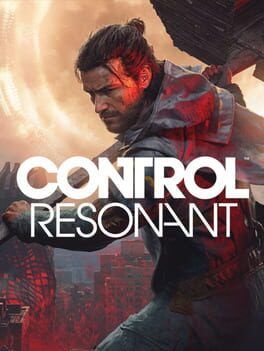
New Control Resonant IGN First footage shows Dylan battling a magma-spewing Resonant known in reports as The Deserter, giving a clearer look at Remedy’s sequel combat, arena design, and launch questions.
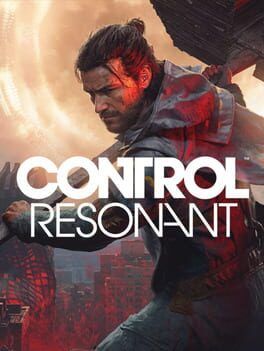
Image: IGDB
Store links: Control Resonant on Steam
The Deserter puts Control Resonant’s arena design under pressure
IGN First has published new Control Resonant gameplay centered on a major boss encounter, and the strongest reveal is simple: Dylan is shown fighting a giant, magma-spewing Resonant inside an industrial space where the floor itself becomes a weapon. IGN describes Resonants as the biggest threats in Remedy’s latest story, positioned at the center of the game’s corrupted New York and tied to the world around them. Other coverage, including GamingBolt and Khel Now, identifies this boss as The Deserter, a towering Resonant whose body appears to be barely holding together under molten pressure.
That naming detail is worth flagging because the source trail is slightly uneven. IGN’s own write-up calls the enemy Dylan fights the “Central Resonant,” while GamingBolt, Khel Now, and VGTimes refer to the boss as The Deserter. Based on the available material, the safest reading is that the new Control Resonant boss fight footage shows a major fiery Resonant identified by multiple outlets as The Deserter, while IGN’s article frames the same encounter through the broader Resonant hierarchy. Remedy has not, in the supplied source material, issued a separate clarification on the name.
The immediate tension in the reveal is not scale alone. Plenty of action games build boss drama by making the enemy huge. This footage, as described by IGN and VGTimes, appears to make the arena unstable from the opening rhythm. The boss turns sections of the floor into lava, spits magma toward Dylan, and gradually layers in more aggressive attacks. That gives the encounter a pacing arc: first survive the space, then read the monster, then keep moving as both start collapsing into the same threat.
A boss fight built around movement instead of a parry check
The new Control Resonant gameplay lands differently because of what Remedy has reportedly removed from the combat language. Khel Now reports that Remedy has confirmed Control Resonant does not feature traditional parrying, while GamingBolt points to prior coverage saying the sequel removed weapon switching and parrying in pursuit of more immediate, visceral combat. In that context, The Deserter is a useful demonstration target. A magma boss that floods the arena, fires projectiles, and attacks with heated pipes is a poor fit for a combat system built around waiting for a single perfect counter. The pressure is spatial.
GamingBolt describes the fight as starting slowly, with the player avoiding lava streams before The Deserter becomes more creative. The boss then launches fiery projectiles and stabs with red-hot pipes protruding from its body. VGTimes frames the encounter as a moving hazard test, with Dylan forced to keep moving and jump constantly because the floor beneath him becomes part of the danger. Those details suggest Remedy is leaning into combat rhythm through positioning, aerial recovery, and environmental awareness rather than the familiar stop-start cadence of parry windows.
For an action sequel, that is a meaningful signal. The Control Resonant boss fight footage does not, from the descriptions available, present combat as a duel in a clean arena. It presents it as a set-piece with a pulse. The enemy’s body, the factory floor, the projectiles, and the molten pools all appear to operate as overlapping beats. Dylan’s job is not simply to reduce a health bar. He has to keep finding playable space as the encounter takes it away.
The run-up matters as much as the monster
The Deserter footage is not only a boss clip. IGN says the video includes a short run-up to the mission location, and VGTimes reports that the 11-minute gameplay segment spends its opening stretch on Dylan’s path through the area before the fight begins. GamingBolt and Khel Now both note that Dylan fights Hiss enemies, solves an environmental puzzle, and pushes deeper into a dangerous factory before reaching the boss arena.
That structure gives the reveal a different shape than a standalone creature showcase. The factory is framed as a dungeon-like space, and GamingBolt connects it to Control Resonant’s “Faults,” the game’s term for dungeons, following IGN First’s earlier Metro Fault mission gameplay. The footage reportedly moves from regular enemy encounters to puzzle solving, then into a larger fight on the first floor before the boss itself. VGTimes also says the clip offers a closer look at different Aberrant forms in action.
The practical takeaway is that Remedy appears to be using the boss as the end point of a combat-and-exploration chain rather than dropping Dylan into an isolated spectacle. If Faults are the sequel’s dungeon structure, then The Deserter functions as a thesis statement for how a mission can escalate: corrupted industrial space, enemy pressure, mechanical puzzle, enemy mix-up, then a boss whose attacks express the same environmental identity as the location. The factory is reportedly on the verge of exploding, according to GamingBolt, and the fight design seems to turn that premise into traversal pressure.
A visual identity made from heat, machinery, and instability
Control Resonant’s new footage also sharpens the sequel’s visual direction without needing a lore dump. The supplied reports describe a giant fiery monster, lava streams, bursts of magma, molten pools, and red-hot pipes jutting from the boss’s body. That is a strikingly physical image for a series space built around corruption, supernatural force, and shifting environments. The Deserter reads, from these descriptions, as a creature and a failing industrial machine at once.
That matters for Remedy’s set-piece identity. The best boss arenas do not merely host a fight. They create an image that teaches the player how to move. Here, the visual language is readable: glowing floor equals danger, pipe movement equals close-range threat, magma bursts equal ranged pressure, and the boss’s unstable body implies escalation. Khel Now describes The Deserter as barely holding its molten body together while spewing lava across the battlefield, while GamingBolt says the creature struggles to maintain its massive frame. Those details make the monster’s physical condition part of its intimidation.
There is also a tonal reset happening here. Early sequel reveals can be swallowed by familiar nouns: Hiss, Dylan, Remedy, New York, Resonants, Faults. The Deserter footage gives Control Resonant a fresh silhouette. A boss that turns a factory into a lava hazard communicates the sequel’s scale more directly than a promise of bigger stakes. It shows Remedy trying to make threat legible through motion and material, with heat and industrial debris doing narrative work before anyone explains the mythology.
The reveal raises a bigger question about killing Resonants
IGN’s teaser around the footage may be the most intriguing long-term detail. The outlet says Resonants are central to Control Resonant’s corrupted New York and play a massive role in Remedy’s story and world. IGN also says it will explain in a future IGN First drop how killing them “might make your life harder.” That is a confirmed tease from IGN’s coverage, not a full system explanation.
This is where expectations for the Control sequel can start to shift. If Resonants are only bosses, The Deserter is a strong spectacle encounter. If killing Resonants changes the world state, mission pressure, enemy behavior, or dungeon conditions, then these fights could become consequential choices or tradeoffs rather than mandatory climaxes. The source material does not confirm which of those paths Remedy is taking, so it would be premature to claim a systemic boss-hunting structure. But IGN’s wording clearly invites the question.
That question also reframes the footage. The factory may be on the verge of exploding, according to GamingBolt, and The Deserter appears to be tied to that location. IGN says Resonants matter to the world around them. Put together, the reveal implies bosses are connected to place, not simply placed at the end of a level. The open issue is whether Control Resonant makes that connection mechanical after the fight ends.
Launch timing and platform details still have a small conflict
For players tracking release plans, the sources agree on the broad window but conflict on the exact date. GamingBolt, Khel Now, and VGTimes report Control Resonant is scheduled to launch on September 24, 2026. IGN’s game information box lists an initial release date of September 22, 2026. With only the supplied sources available, that discrepancy should be treated as unresolved rather than silently corrected.
The reported platforms are clearer. GamingBolt tags the game for PC, PlayStation 5, Xbox Series S, and Xbox Series X. Khel Now and VGTimes also report a launch on PC, PS5, and Xbox Series X|S. No supplied source includes pricing, PC system requirements, edition details, performance targets, or upgrade paths for prior owners, so those remain unconfirmed here.
VGTimes adds two additional public-facing details: the game has more than 1.5 million wishlists and Russian text translation will be available from day one. Those claims are attributed to VGTimes in the supplied material. They are useful signals of interest and localization planning, but they do not answer the buyer questions that still matter closer to launch, especially performance on Xbox Series S, PC requirements, and whether Remedy’s more aggressive combat design holds up across longer sessions.
The footage gives Remedy a cleaner sequel pitch
The Deserter Control Resonant reveal works because it compresses several sequel promises into one readable sequence. Dylan fights through Hiss, navigates a factory, solves a puzzle, uses Aberrant forms in combat, and ends up facing a Resonant that changes the rules of the arena. The footage reported through IGN First and covered by GamingBolt, Khel Now, and VGTimes points to a sequel trying to sell combat as motion, not hesitation.
That can reset expectations in a practical way. Instead of asking only how Control Resonant expands the first game’s supernatural fiction, the better question after this footage is how often Remedy can build encounters where the enemy, arena, and mission premise move together. The Deserter is a promising answer on paper: a molten boss in a failing factory, forcing Dylan to survive both the monster and the ground beneath him.
For now, the strongest confirmed reason to pay attention is the design signal. Control Resonant’s latest IGN First gameplay does not show a safe boss locked inside a circular room. It shows Remedy building pressure through the space itself, with The Deserter as the center of a fight that looks dangerous before the first hit lands.