
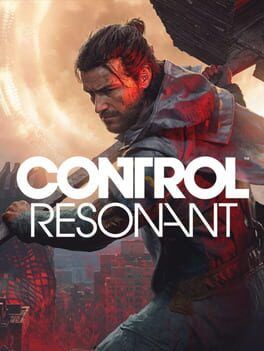

Remedy lead gameplay designer Sergey Mohov says Control Resonant's core experience is around 30 hours, changing the sequel's pacing stakes in a packed September window.
Image: IGDB
Store links: Control Resonant on Steam
Remedy’s sequel is no quick return to the Bureau
Control Resonant is being positioned as a much larger commitment than Remedy’s 2019 original. In an interview with TechRadar, lead gameplay designer Sergey Mohov said the sequel’s “core experience” will take around 30 hours to complete, with completionist playthroughs expected to land closer to 50 hours. That is the concrete number now reshaping expectations around Remedy’s next Control game.
The tension is immediate: Control Resonant is dated for September 24, 2026, a release window that Push Square describes as one of the busiest months of the year for new console games. The sequel is also due the same day as Silent Hill: Townfall, according to Push Square, while other September competition cited across the supplied reporting includes Marvel’s Wolverine, The Blood of Dawnwalker, a new Onimusha, and more.
For players searching how long is Control Resonant, the answer being reported is clear enough for planning: roughly 30 hours for the main path, roughly 50 for full completion. For Remedy, that number carries a bigger creative question. A 30-hour core campaign demands a different rhythm than the original Control, a game whose power came partly from its concentrated pressure inside the Oldest House.
A 30-hour core campaign changes the shape of Control
The first Control was compact by modern action-adventure standards. Polygon and Wolf’s Gaming Blog both point to HowLongToBeat averages that put the original at roughly a dozen hours for the main story, with completionist runs under or around 30 hours. Insider Gaming similarly cites the original as taking a little over 11 hours for the main story, around 19 hours with side missions, and nearly 30 hours for completionist play.
That comparison is the heart of the Control Resonant length conversation. Remedy is not simply adding a few extra chapters around a familiar structure. If Mohov’s estimate holds, the sequel’s core path alone is in the range of a full completionist run of the first game. That reframes pacing, mission density, side content, and combat mastery.
A tightly built 12-hour supernatural shooter can afford to move like a trapdoor opening beneath the player. The Oldest House gave the original a pressure-cooker identity: corridors bent, departments became arenas, and every new power folded into a haunted office-block labyrinth. A 30-hour sequel has to breathe differently. It needs escalation that can survive repetition, optional paths that feel authored rather than padded, and combat systems that stay readable after dozens of encounters.
The reported structure points to wider spaces and longer arcs
Polygon reports that Control Resonant shifts away from the original’s confined Oldest House setting toward the streets of New York City, with Remedy describing the sequel’s map as built around open-ended zones that give players more freedom in how they approach objectives. Polygon is careful to say the game is not strictly open-world, which is an important distinction. The reporting suggests a zone-based action RPG structure rather than a checklist city.
That structure helps explain the Control Resonant 30 hours figure. Open-ended zones create space for optional objectives, alternate routes, enemy strongholds, and slower investigative beats between major story set pieces. They also create risk. Remedy’s best sequences often depend on carefully staged perspective shifts, sound design, and spatial surprise. Widening the map means the studio has to preserve that authored unease without turning every city block into a commute.
The sequel’s change in combat focus also matters. Polygon describes Resonant as making major changes that include a new protagonist and combat system. Insider Gaming’s account of Mohov’s TechRadar interview notes that the designer discussed influences from Devil May Cry 2, Devil May Cry 3, and PlatinumGames, while saying players may recognize individual references but should not expect the game to feel exactly like those titles. IXBT’s report adds that the longer campaign is intended to give players more time to master Dylan’s abilities, supernatural powers, ammunition types, and the shapeshifting weapon Aberrant.
Taken together, the confirmed length and reported structure suggest a sequel built less like a single haunted descent and more like a sustained supernatural campaign. That is exciting if the combat has enough expression to carry 30 hours. It is worrying if the encounter design leans too hard on repeated enemy waves.
Pacing is now Remedy’s biggest design test
Remedy’s storytelling has always favored sharp cuts: documents that imply catastrophe, live-action intrusions, sudden tonal breaks, and combat spaces that become theatrical stages. The original Control could cycle through discovery, dread, firefight, and office surrealism at a brisk clip because it did not need to support a 50-hour completionist ceiling.
A longer Control sequel needs a stronger long-game structure. The central campaign has to distribute its revelations carefully enough that the mystery does not flatten halfway through. The combat has to introduce meaningful changes beyond damage scaling. Side content has to do more than point the player toward another red-lit room full of possessed bodies.
This is where the action RPG label matters. Wikipedia’s supplied entry describes Control Resonant as an action role-playing game rather than the first game’s third-person shooter, with Dylan Faden as the playable character and the Aberrant serving as a shapeshifting primary weapon. Because that information comes from a public listing rather than the quoted TechRadar interview, it should be treated as listing context rather than a fresh developer announcement here. Still, it aligns with the broader reporting that Resonant is moving toward deeper combat systems and broader exploration.
From a pacing perspective, the best-case version of this sequel uses its 30-hour span to make players inhabit the crisis: learn a combat language, read the city’s paranormal logic, and return to zones with new tactical confidence. The weaker version would be a Remedy story stretched across too many errands. The runtime number alone cannot settle which version exists.
The September release window makes the runtime a buying decision
Control Resonant’s length lands differently because of its date. Polygon reports that the game will release September 24 for PlayStation 5, Windows PC, and Xbox Series X. IXBT likewise lists September 24, 2026 for PS5, Xbox Series X|S, and PC. Push Square frames the PS5 release as arriving in a packed September and highlights that it shares its date with Silent Hill: Townfall.
That turns the Control sequel from a simple day-one question into a calendar problem. A 10-to-12-hour campaign can be fit around other major releases in a crowded month. A 30-hour core experience asks for several evenings at minimum, and a 50-hour completionist run can easily swallow the launch window for anything arriving nearby.
Wolf’s Gaming Blog also notes prior reporting of 48-hour early access being exclusive to PlayStation, calling the move baffling. The supplied excerpt does not include the underlying terms, price, or edition details, so readers should not treat that as a full purchasing breakdown from the sources here. The practical guidance is simpler: if you are choosing between several September games, Control Resonant appears to be a larger time investment than the first Control by a wide margin.
There is also a platform wrinkle in the supplied material. Polygon and IXBT name PS5, Windows PC, and Xbox Series X|S for September 24. The supplied Wikipedia entry lists PlayStation 5, Windows, and Xbox Series X/S for September 24 in its release field, while separately listing macOS for 2026. Based on these sources, console and Windows players have the clearest date. Mac timing is less clearly pinned down in the supplied material.
Length gives Remedy room, but it raises the stakes
The most useful way to read the Remedy Control Resonant runtime is as a statement of ambition rather than a quality guarantee. Mohov’s 30-hour estimate tells us Remedy expects the sequel’s main path to support a scale closer to a large action RPG than a tightly paced supernatural shooter. The 50-hour completionist estimate tells us the game likely has enough optional material for players who want to probe every strange corner.
That can serve the sequel well. Polygon’s reporting on open-ended zones gives Remedy room to build encounters with multiple approaches. The reported melee focus and inspirations cited by Insider Gaming could help the combat feel physical and expressive across a longer campaign. The New York setting described by Polygon offers a broader stage than the Oldest House, with room for city-level escalation and stranger public spaces.
But longer campaigns expose seams. If the narrative is built around mystery, the drip-feed has to be disciplined. If combat is more melee-driven, enemy variety and animation clarity become crucial. If exploration is broader, traversal and objective design have to carry atmosphere without wasting time.
For now, the confirmed answer to Control Resonant 30 hours is that the sequel is aiming for a substantially larger core experience than Control. Whether that size sharpens Remedy’s supernatural action or dilutes its menace will depend on pacing, encounter design, and how well the studio turns open-ended zones into authored set pieces rather than empty space between them.