
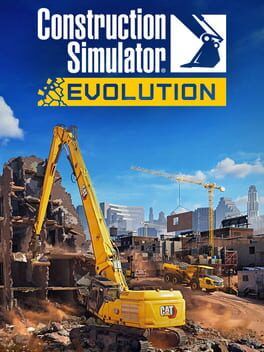

Demolition, manual labor, and a broader job fantasy aim to modernize Construction Simulator beyond just driving big machines.
Construction Simulator has always been about the machines. You climbed into the cab, flicked on the indicators, unfolded booms and arms, and slowly learned the dance of hydraulics. With Construction Simulator: Evolution, astragon and weltenbauer are finally asking a different question: what happens when you step out of the cab?
According to the initial reveal, Evolution is pitched as the “next evolutionary stage” of the series, but that buzzword only matters if something genuinely changes about the day to day loop. The headline answer is that this time you are not just operating vehicles. You are demolishing, cutting, drilling, lifting by hand, and filling in the gaps of a work site that used to be handled entirely by context prompts and fade to black shortcuts.
The biggest shift comes from demolition. Earlier Construction Simulator entries treated the teardown phase as either a cutscene, a single machine job, or a quick objective you cleared so you could get back to pouring concrete and moving dirt. Evolution turns demolition into its own pillar of the experience. Structures can now be methodically broken down, with dedicated tools and tasks rather than a generic “destroy X” meter. That means peeling away materials layer by layer, dealing with structural elements instead of just mowing everything down with a single excavator bucket.
For sim fans, this matters because demolition is its own discipline. A good construction site is defined as much by what is removed as what is built. Giving demolition more mechanical weight finally acknowledges that reality. It also creates space for varied pacing: methodical deconstruction, noisy bursts of destruction, then quiet cleanup before any foundation work even starts. If the series follows through on this promise, demolition could become a satisfying counterpart to its more familiar earthmoving and crane work instead of a side note.
The second big change is manual labor. Evolution adds hands on tools like hydraulic hammers, table saws, and nailguns. Where older games would have you park a flatbed truck and instantly “deliver” a prefab bundle via a menu interaction, here you are expected to get out, move materials, cut elements to size, and assemble sections on site. It pushes the camera from the distance of heavy machinery into the intimacy of a worker’s eye level.
That focus on manual tasks has two potential payoffs. First, it fills in the dead time between big machine jobs with grounded, tactile interactions. Instead of teleporting from one vehicle seat to the next, you are solving micro problems: cutting beams to spec, anchoring panels, or repairing smaller fixtures. Second, it broadens who the fantasy is for. Previous entries mostly made you feel like a fleet manager and operator. Evolution tries to make you feel like part of the crew, not just the person holding the keys to the crane.
The risk with any new feature list in a sim is that it turns into a checklist. New tools, new phases, new vehicles, but the work still feels like isolated mini games stacked on the same old contract loop. The early pitch for Construction Simulator: Evolution sounds more ambitious than that, because demolition and manual labor are tied into the structure of jobs rather than sitting off in their own mode.
Campaigns on the two new maps one German inspired and one US inspired are being built around the full lifecycle of a project, from teardown to finishing work. That means demolition is not just a side activity you can skip if you do not care, but a gate you must pass before any build begins. Likewise, manual labor is woven into these contracts as mandatory phases instead of optional bonus objectives. If the designers are serious about this, the formula evolves from “drive a truck to the marker, complete machine task, watch progress bar fill” into a more continuous site simulation where your role shifts organically throughout the day.
There is also the question of how this affects difficulty and immersion. Sim players tend to split into two groups: those who want full fidelity and those looking for a gentler, semi realistic experience. Manual tools and demolition give the developers new knobs to tune. They can add more nuanced control schemes and safety considerations for hardcore players, while keeping optional assists and automation for anyone who prefers to stay in the cab. Whether Evolution modernizes the formula will depend on how flexible these systems are. If every manual task boils down to pressing a button at the right icon, the illusion will wear thin quickly. But if tools behave differently, if material handling actually changes how a job unfolds, these additions could meaningfully deepen the sim rather than clutter it.
It also matters how all of this ties into progression. The series has traditionally rewarded you with more contracts and bigger machines. Evolution can now reward competence in specific disciplines. A player who excels at precise demolition might unlock more complex teardown jobs, while someone drawn to carpentry style work could chase contracts that lean on saws and nailguns. That sort of specialization is what turns a construction playground into a believable career path, and it is where manual labor systems can justify their existence as more than flavor.
On the technical side, the presence of 35 licensed brands, expanded fleets, and the usual mix of steering wheel and multiplayer support create the baseline you would expect in 2026. Those are table stakes for a modern construction sim. What matters more is that the fantasy broadens beyond “I drive expensive machines” to “I help shape this site from the first hammer blow to the final fixture.” For long time fans, that is arguably the first real evolution the series has seen since its move to modern consoles and PC.
Right now, Construction Simulator: Evolution is promising a more complete construction worker experience, not just a better vehicle sandbox. Whether demolition and manual labor are truly transformative or simply new icons to chase on the map will only be clear once players see how tightly they are woven into contracts, physics, and progression. But if astragon and weltenbauer follow through, Evolution could finally close the gap between the fantasy of running a site and the reality of getting your hands dirty on one.