
Relic's Operation Torch DLC launches November 25, 2026 on PC with 15 North Africa missions, American perspectives, and a tighter historical campaign structure.
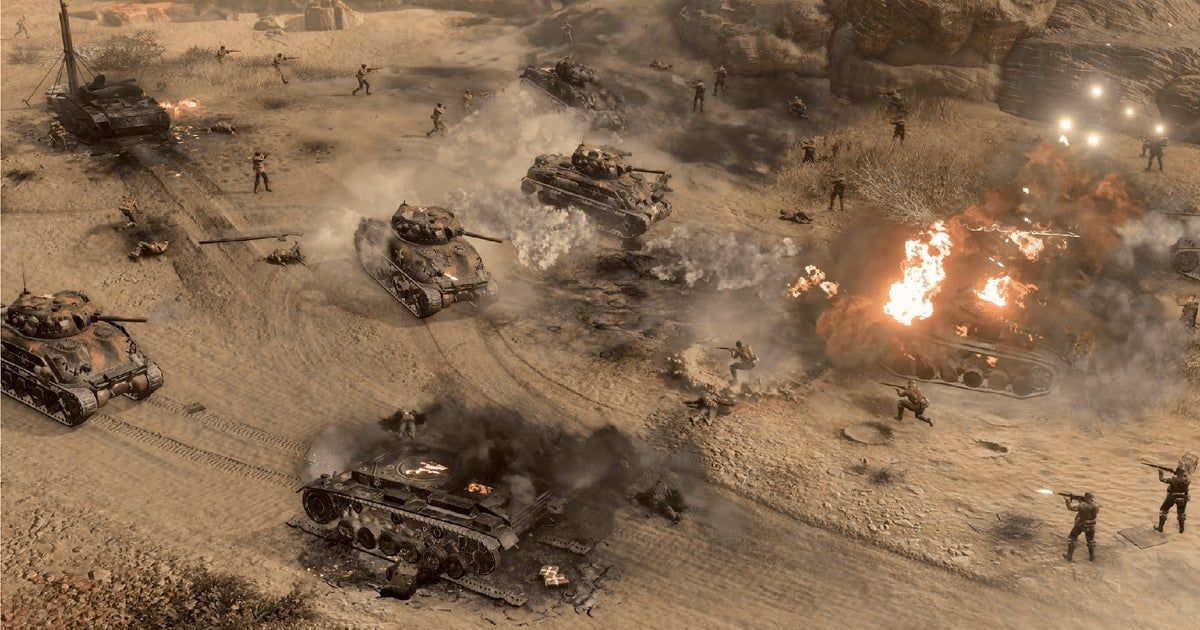
Image: eng.pressbee.net
Relic is returning Company of Heroes 3 to campaign warfare in November
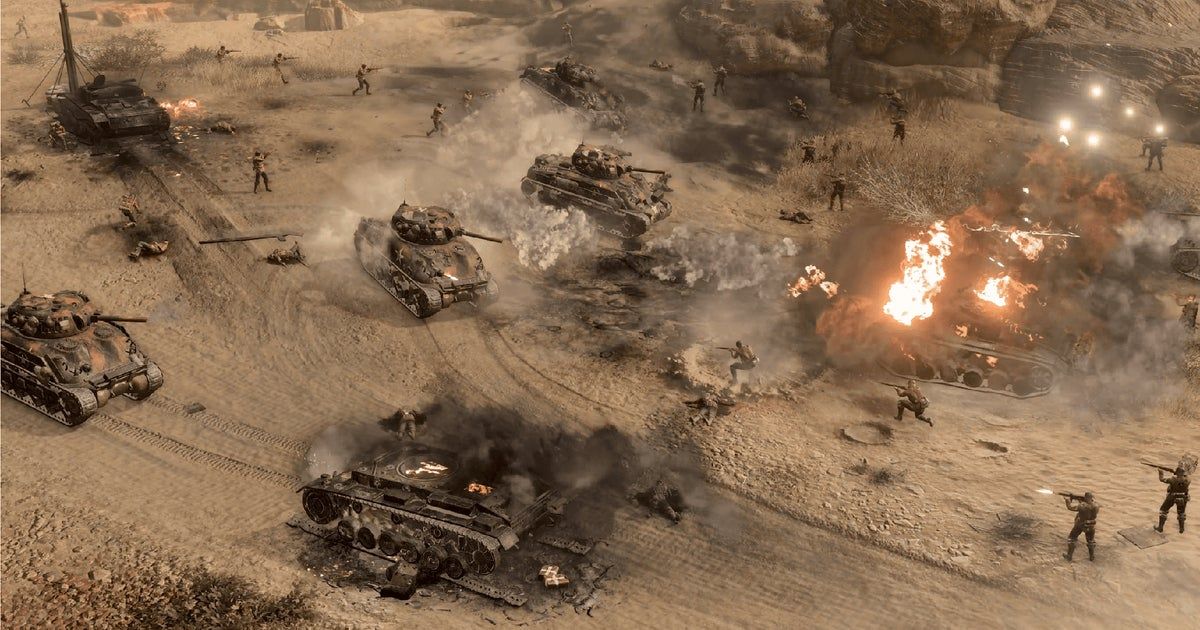
Company of Heroes 3: Operation Torch is scheduled to launch on November 25, 2026 for PC, according to Relic Entertainment's announcement carried by Games Press and reported by GameWatcher. The new Company of Heroes 3 DLC is a narrative-driven campaign set during the Allied landings in North Africa, and Relic describes it as the first single-player mission content for Company of Heroes 3 since the game launched.
That last detail is the real pressure point. Company of Heroes 3 arrived in 2023 with a major emphasis on campaign play, but the new expansion is not another broad strategic layer or a multiplayer battlegroup pack. Operation Torch is a 15-mission campaign built around a defined historical arc: the opening invasion, the defeat at Kasserine, and the final assault on Hill 609. For players who bounced off the original campaign structure, Relic is now making a cleaner pitch: come back for authored missions, historical momentum, and tactical scenarios with less ambiguity about what kind of RTS experience is being sold.
Rock Paper Shotgun also reports the November 25 date and frames the DLC around American forces in the 1942 invasion of North Africa. The sources agree on the core facts: this is PC campaign DLC, it is focused on Operation Torch and the North African theater, and it puts the player in command of an inexperienced American force as it is tested by early-war lessons against German opposition.
Operation Torch narrows the lens to one historical campaign
Relic's press announcement says Operation Torch is inspired by the Allied campaign in Axis-occupied North Africa and follows American forces during their first major campaign against German troops. The campaign covers the Allied landings in North Africa, the setback at Kasserine, and the fighting at Hill 609. Rock Paper Shotgun adds the broader historical framing, noting that Operation Torch involved British and American forces invading Vichy France-controlled Algeria and Morocco.
That narrower lens matters because Company of Heroes works best when the tactical problem is legible. A beach landing asks the player to break a defended line. A defensive action asks them to preserve combat power under pressure. A stealth operation changes the resource equation by valuing timing and positioning over raw production. Relic says the 15 missions will include beachfront landings, stealth operations, defensive actions, and large-scale assaults, with each mission built around a distinct combat scenario.
The historical framing also gives the campaign an unusually clear escalation curve. The American force begins inexperienced, suffers hard lessons, and becomes a more seasoned army. That is not a claim about mechanical difficulty scaling by itself, since Relic has not detailed exact difficulty settings or mission-by-mission systems. It is, however, the announced narrative spine. For a tactics-led RTS, that spine can do useful design work: early missions can teach tool use, mid-campaign defeats can stress bad habits, and late assaults can ask the player to combine infantry, armor, support weapons, and abilities under heavier pressure.
Three American perspectives replace the abstract army story
Relic says players will experience Operation Torch through the perspectives of three American soldiers, with viewpoints spanning command and field-level action. The studio's announcement says those perspectives are meant to reflect the hardships, losses, responsibilities, and lessons that shape the force across the campaign.
That is a different emphasis from treating the North Africa front as a map of objectives. It suggests a campaign that wants players to read battles through responsibility and consequence rather than through territory alone. The supplied materials do not name the three soldiers, list their roles, or confirm whether they have unique mission mechanics, so it would be premature to assume hero-unit systems or character-specific progression. What is confirmed is narrative framing: three American soldiers, 15 missions, and a campaign arc tied to real events.
For lapsed RTS players, this is potentially the most important part of the sales pitch. The genre often asks returning players to relearn build orders, hotkeys, veterancy interactions, cover rules, vehicle facing, ability timing, and unit preservation all at once. A character-framed, mission-led campaign can create a more controlled re-entry point. Instead of throwing players directly into competitive multiplayer economy management, Operation Torch appears designed to teach through authored battlefield situations where the tactical lesson is attached to a place, a setback, or a named phase of the campaign.
The upgrade system turns optional objectives into a campaign economy
Relic's announcement says players will earn upgrades by completing missions and optional objectives, then use those upgrades to shape how their combat forces evolve. Rock Paper Shotgun similarly reports that players will pick upgrades earned through objectives, letting troops develop around a preferred tactical approach.
That is the system to watch. In Company of Heroes, the moment-to-moment economy is usually fuel, munitions, manpower, territory, timing, and preservation. Operation Torch adds a campaign-level layer where optional play can translate into future power. If tuned well, that can give side objectives real weight without turning them into chores. A risky flank to secure an optional target becomes a strategic investment if it unlocks stronger tools later. If tuned poorly, it can create snowball problems where strong players over-earn upgrades and struggling players fall further behind.
The sources do not specify the upgrade trees, costs, permanence, respec options, or whether choices lock out alternatives. DualShockers reports that the campaign will offer two different progression choices per mission, but the provided source text cuts off before giving the full context, so that detail should be treated cautiously until Relic's own public materials are consulted directly. The confirmed point is broader but still important: optional objectives feed a progression system, and that system is meant to support meaningful choices in how the army develops.
From a strategy perspective, this is where Operation Torch could distinguish itself from a linear nostalgia campaign. Historical missions can become static if the player is simply reenacting a known outcome. A flexible upgrade economy gives the player a way to solve the same historical pressure with different tactical identities, whether that means leaning into infantry endurance, armored momentum, support weapons, artillery, reconnaissance, or combined-arms control. Relic has not confirmed those exact branches, but the design intention is clear enough: battlefield success should alter the shape of the force over time.
The North Africa setting fills a gap left by the base campaign structure
DualShockers describes Operation Torch as a counterpoint to the Afrika Korps-themed tutorial campaign included in the base game. That reading fits the announced focus: the new DLC shifts attention to an American-led campaign in the same wider theater, tied to real Allied operations and early U.S. battlefield experience.
Rock Paper Shotgun's context is also useful here. In its 2023 review, the outlet called Company of Heroes 3 a strong return for Relic's RTS series, while also saying that ironing out lingering campaign issues could make it an all-timer for World War II strategy fans. Operation Torch does not automatically solve those concerns. It is a paid campaign expansion, not a retroactive verdict on the original game's campaign. But its mission-focused structure does look like a direct answer to one of the main tensions around Company of Heroes 3: players wanted the tactical sharpness of the series with campaign pacing that felt deliberate and rewarding.
Relic's recent activity around Company of Heroes 3 also shows the studio experimenting with format. Rock Paper Shotgun recently covered Company of Heroes 3: Final Stand, a roguelite wave-defense spin-off, and DualShockers refers to Last Stand as an earlier DLC this year. Operation Torch moves in the opposite direction from a roguelite survival format. It returns to authored single-player battles with historical sequencing. That contrast is useful because it shows Relic using the same RTS foundation for different audiences: shorter experimental modes on one side, traditional campaign warfare on the other.
Release date, platform, price, and the unanswered practical questions
The Operation Torch DLC release date is November 25, 2026. Games Press attributes that date to Relic Entertainment's announcement, and GameWatcher specifies that Company of Heroes 3: Operation Torch is launching on PC via Steam. Rock Paper Shotgun also reports the November 25 launch window. Based on the supplied sources, PC is the only confirmed platform.
There are several things Relic's announcement, as provided, does not settle. No price is listed in the supplied materials. No system requirements are provided. No preload timing is mentioned. No console version is confirmed. No detailed mission list is public in the source text beyond the campaign's major historical beats. Readers interested in the Company of Heroes 3 North Africa campaign should therefore treat the date and PC availability as confirmed, while waiting for store-page details on pricing, regional availability, bundle eligibility, and any ownership requirements beyond the base game.
The timing is also notable. Operation Torch launched historically in November 1942, and DualShockers points out that releasing the DLC in November lines it up with the historical anniversary month, even if not on the exact date. That is a presentational choice rather than a gameplay guarantee, but it reinforces the DLC's identity as a history-forward campaign rather than a feature pack built primarily around multiplayer balance or faction expansion.
A focused campaign could be the right re-entry point, if the missions carry the load
For lapsed RTS players, the appeal of Company of Heroes 3 Operation Torch will likely depend on how much they want structured tactical problems rather than another open-ended strategic layer. The confirmed ingredients are promising for that audience: 15 missions, a clear North Africa arc, American forces learning under pressure, varied mission types, and upgrades tied to objectives. Those are the building blocks of an accessible return path for players who still like cover tactics, unit preservation, and battlefield improvisation but do not want to relearn the competitive meta on day one.
The risk is equally clear. A historical campaign lives or dies on mission design. If the beach landings, stealth operations, defensive stands, and assaults each demand different habits, Operation Torch can remind players why Company of Heroes remains one of the strongest tactical RTS formats around. If those scenarios collapse into similar capture-and-hold routines with different scenery, the historical framing will do less work than the announcement suggests.
For now, the grounded advice is simple. Players who want multiplayer additions, new competitive factions, or confirmed balance changes should wait for more specific patch and store information, because the supplied sources describe Operation Torch as single-player campaign DLC. Players who left Company of Heroes 3 wanting a tighter authored campaign should keep an eye on November 25. This is the first new single-player mission content since launch, according to Relic, and its North Africa focus gives the game a clean chance to win back strategy fans through missions rather than promises.