
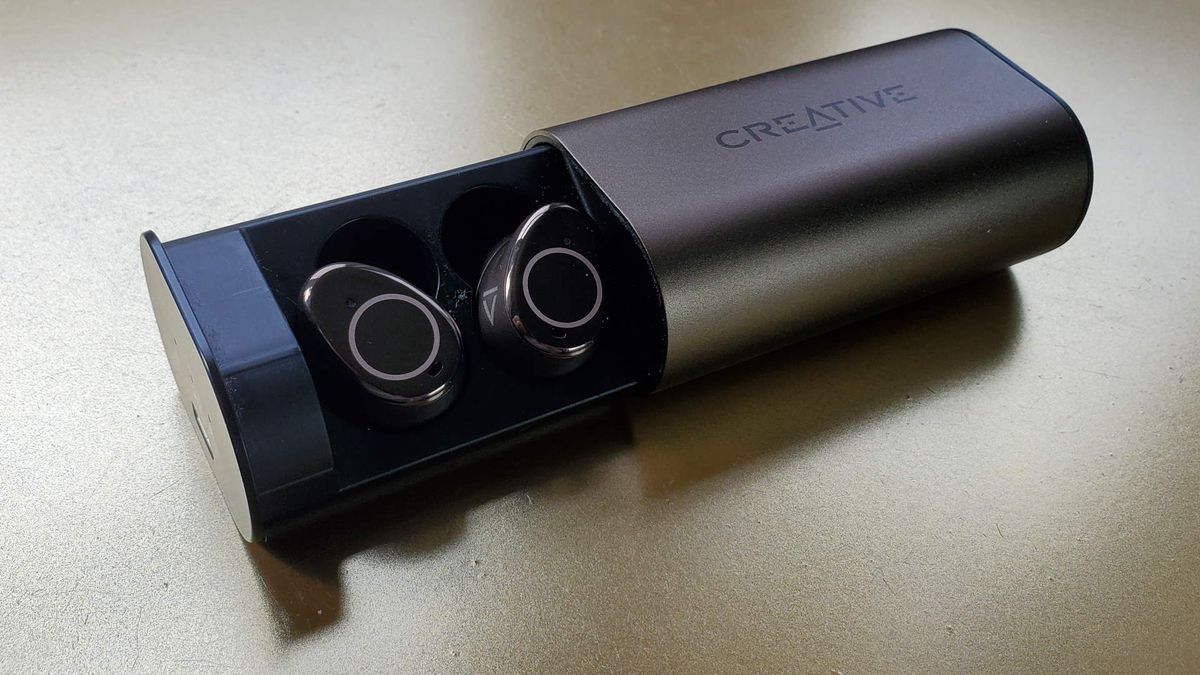

Recent TOZO PM1 and Creative XF1 coverage shows how compact gaming audio is splitting between portable personal speakers and serious small-footprint desk audio, with different tradeoffs for players.
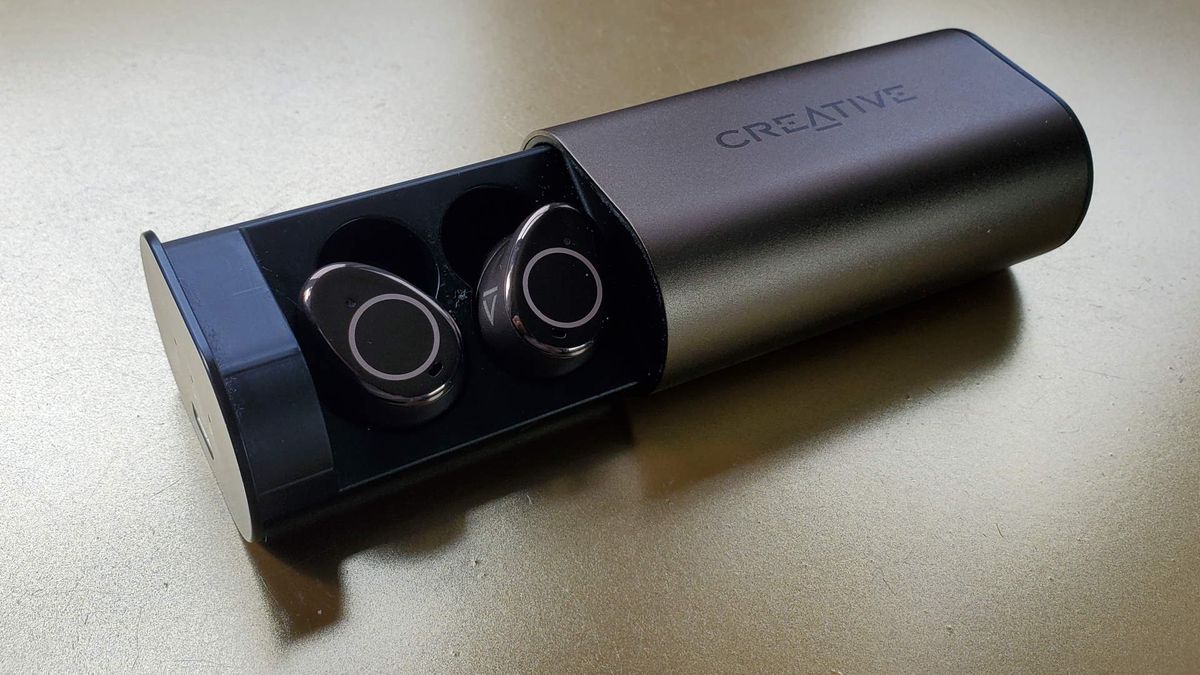
Image: pcgamer.com
Compact audio is splitting into two different player needs
Two recent compact audio reviews point in opposite but useful directions for players trying to shrink a gaming setup without giving up practical sound. Pocket Gamer’s TOZO PM1 review describes a pocket-sized Bluetooth speaker built around portability, durability, and personal listening. PC Gamer’s Creative XF1 speaker review frames Creative’s desktop speakers as a small package with strong sound, broad connectivity, and preset support, while still acknowledging the compromises that come with compact speakers.
That tension matters for anyone searching for compact gaming audio: small gear is no longer one category. A clippable Bluetooth speaker and a compact 2.0 desktop pair solve different problems. One is about carrying sound from a phone or handheld session into a room, park, commute, or shared space. The other is about reclaiming desk space while keeping a PC or console-adjacent setup anchored by dedicated speakers.
This is not a GameLoop hardware verdict. We have not tested the TOZO PM1 or Creative XF1 ourselves. The useful signal comes from how multiple outlets describe the same pressure point in gaming setup audio: players want less clutter, but the audio tradeoffs change sharply depending on whether the priority is mobility, bass, connectivity, voice clarity, app control, or immersion.
TOZO PM1 reads as a portable companion, not a desk speaker replacement
Pocket Gamer’s Jupiter Hadley calls the TOZO PM1 a small portable speaker that can clip onto a pocket or bag, with a hard-plastic build, a heavy clip, three physical buttons, waterproofing, USB-C charging, and up to 20 hours of battery life. The review says the speaker uses a 28mm dynamic driver and describes the sound quality as high for its size, without feeling distorted or projecting too far.
For players, that places the PM1 in a specific lane. It looks more relevant to handheld gaming, phone gaming, cloud streaming, or low-stakes background audio than to a fixed gaming desk speaker role. Pocket Gamer says it can be used for calls or conversations, and that the TOZO app adds features such as face-to-face translation, meeting recording, and AI chat access. Those app features may be useful around a phone, but the source does not present the PM1 as a positional gaming device, a surround substitute, or a latency-focused gaming speaker.
The gaming use case, then, is practical rather than cinematic. If your setup is a Steam Deck on the couch, a mobile RPG on a tablet, or a temporary multiplayer session where built-in device speakers are too thin, the PM1’s value is its portability and durability. If your main concern is hearing footsteps in a tactical shooter at a PC desk, the source material does not support treating it as that kind of upgrade.
Creative XF1 is aimed directly at the compact desktop gap
The Creative XF1 is the clearer candidate for players thinking about gaming desk speakers. PC Gamer’s verdict says the XF1 delivers strong sound for its size, robust connectivity, and useful presets, while noting that larger speakers will offer more power and that there is no included subwoofer. CNET describes the $180 Creative XF1 desktop speakers as compact while delivering rich audio with ample bass without a subwoofer.
The technical picture in the supplied sources is more detailed here than it is for the TOZO PM1. Best of High End describes the XF1 as a bi-amplified 72W desktop speaker with Hi-Res Audio certification, Bluetooth 6.0, USB-C, and app-based EQ control for work, gaming, and music at the desk. Music Photo Life’s review says the XF1 has 72W RMS with separate amplifiers driving a 0.75-inch tweeter and a 3-inch woofer, supports up to 24-bit/96kHz over USB, supports Hi-Res Wireless via LDAC, includes 3.5mm Aux-In, and has a dedicated subwoofer output.
Those details matter because compact speakers usually fail at the edges: not enough low-end weight, not enough input flexibility, awkward software, or no route to expand. The XF1 still carries some of those risks, especially if a player expects room-filling bass, but the listed USB-C, Bluetooth, Aux-In, app EQ, and subwoofer output suggest Creative is aiming at a small desktop system that can adapt over time rather than a disposable space-saving accessory.
The real choice is footprint versus role, not brand versus brand
For a smaller desk setup, the TOZO PM1 and Creative XF1 should not be compared as if they are substitutes. Pocket Gamer’s PM1 review emphasizes clipping, waterproofing, pocketability, durability, and phone-connected use. PC Gamer, CNET, Best of High End, and Music Photo Life describe the XF1 around the desk: wired and wireless inputs, presets, EQ, Hi-Res support, and a compact stereo form factor.
That creates a useful decision tree. If audio gear needs to move with you, survive a bag, handle rain, and provide personal sound away from a desk, the PM1 is the kind of product the Pocket Gamer review says it is built to be. If the setup is a PC monitor, laptop dock, handheld dock, or console in a small room, the Creative XF1 speaker is the one receiving coverage as a compact desktop answer.
The danger for buyers is expecting one compact product to cover both roles perfectly. A portable speaker can make a handheld session less tinny, but the source material gives no reason to expect the stereo separation, input range, or upgrade path of a desktop speaker pair. A compact desktop pair can clean up a desk, but it is still tethered to a desk logic: placement, power, cables, and software control matter.
The XF1’s app and EQ support could matter as much as raw wattage
Music Photo Life reports that the Creative XF1 uses a newer Creative Nexus app on Windows, Android, and iOS, rather than Creative’s older Acoustic Engine enhancements, and highlights a parametric EQ with up to 10 EQ points. That is one of the more important details for gaming setup audio, because small speakers often need tuning to fit the desk they are placed on.
In a strategy game, MMO, sim, or single-player RPG, a warmer preset may make music and ambient sound more enjoyable. In a competitive shooter, players often prefer clarity in the ranges where footsteps, reloads, and ability cues sit, although none of the supplied sources test the XF1 in that specific competitive context. PC Gamer’s note about presets and Music Photo Life’s praise for the parametric EQ suggest flexibility, but they do not prove esports-grade performance.
The subwoofer output is another long-term detail. PC Gamer lists “no included subwoofer” as a drawback, while Music Photo Life says there is a dedicated subwoofer output and comments that it is needed to elevate the audio experience. That is not a contradiction. It tells buyers that the XF1 may be a compact starting point rather than the final form for someone who eventually wants deeper bass from explosions, racing games, or cinematic campaigns.
Price and availability signals are useful, but region details differ
The supplied sources give two price signals for the Creative XF1. CNET lists the desktop speakers at $180. Music Photo Life says the XF1 retails in Singapore at S$249 and calls it the second most pricey 2.0 speaker under Creative’s catalogue. Those figures are region-specific and should not be blended into one universal price. They do, however, put the XF1 in the midrange desktop speaker conversation rather than the ultra-budget corner.
PC Gamer’s review adds useful context by arguing that the $100 to $200 range is where computer speakers often offer the best price-to-value ratio, with diminishing returns above that point. That is PC Gamer’s assessment, not a universal rule, but it frames why the XF1 is attracting attention: it appears to be competing in the zone where players often want a meaningful upgrade without committing to large speakers, a separate subwoofer, or a full audiophile chain.
For the TOZO PM1, the provided Pocket Gamer review does not include a price in the source text. That limits buyer guidance. Without confirmed pricing from the supplied material, the safest read is functional: the PM1’s appeal depends on how much a player values portability, waterproofing, battery life, and the TOZO app features compared with simply using earbuds, a phone speaker, or a larger Bluetooth speaker they already own.
Small audio upgrades now demand more deliberate planning
The useful takeaway from these reviews is that compact gaming audio has become a setup-planning question. A smaller footprint can help, but the player needs to identify the role first. The TOZO PM1, as described by Pocket Gamer, is a durable portable speaker with long battery life and app-linked extras. The Creative XF1, as described across PC Gamer, CNET, Best of High End, and Music Photo Life, is a compact desktop speaker system built around stronger connectivity, EQ, and fuller desk audio.
Players building a cleaner desk should look hardest at input needs and upgrade path. USB-C matters for a modern PC or laptop dock. Bluetooth matters for phones, tablets, and handhelds. Aux-In remains useful for older devices. A subwoofer output matters if you know you will eventually want more low-end weight. App EQ matters if the speakers will sit close to a wall, under a monitor, or on a cramped desk where placement is imperfect.
Players who mainly need sound away from the desk should judge the PM1 by the criteria Pocket Gamer emphasizes: clip strength, durability, waterproofing, USB-C charging, and 20-hour battery life. Those are strong signals for portable use, but they do not make it a replacement for dedicated gaming desk speakers. The compact audio category is getting better, yet the winning move is still choosing the smallest device that fits the actual job rather than the smallest device on the shelf.