
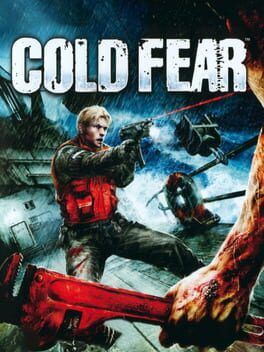
As survival horror surges back, Atari now holds the keys to Ubisoft and Darkworks’ cult shipbound chiller Cold Fear. Here’s why its violent Bering Sea nightmare, clumsy yet visionary design, and Resident Evil 4-adjacent ideas are perfect for a remaster today.
In 2005, the survival‑horror world was busy being rewritten by Resident Evil 4. Buried beneath the roar of chainsaws and Spanish cultists was another third‑person horror game that also shifted the camera over the shoulder, leaned into action, and tried to pull players into a more cinematic space. That game was Darkworks and Ubisoft’s Cold Fear, a brutal, icy descent into madness aboard a Russian whaling ship caught in a lethal Bering Sea storm.
Cold Fear never stood a chance commercially, scraping by with middling reviews and modest sales. Yet the further we get from 2005, the more it looks less like a forgotten Resident Evil clone and more like a prototype for ideas that modern horror is finally ready to do justice. With Atari now holding the rights and openly signaling its intent to revive legacy titles, Cold Fear is perfectly positioned for a second life.
A horror game that never lets the ground stay still
Cold Fear’s defining trick is simple to describe and still startling in execution. The entire game takes place on a storm‑tossed vessel whose deck is constantly pitching and rolling. Darkworks built a bespoke “Darkwave” system to independently simulate the ship’s movement, surrounding waves, and how objects respond. The result is a game where the level itself is always in motion, and the player is never fully stable.
In practice it changes everything. Fights are not just about lining up headshots on shambling horrors, they are about staying upright while the deck swings beneath you. Bodies slide across slick metal, loose crates slam into walls, and a badly timed reload can send you staggering into railings as the ship lists. Even in quiet moments, your eye is drawn to the horizon slipping diagonally across the frame, a subtle reminder that the environment is dangerous before a single enemy appears.
Modern horror games have dabbled in dynamic environments and environmental hazards, but few commit as hard as Cold Fear does to the fantasy of a vessel that might genuinely capsize at any moment. It creates a specific type of vulnerability that static corridors and abandoned mansions struggle to match. From the opening minutes, when Tom Hansen steps onto the creaking deck under a screaming blizzard, the ship is not just a backdrop; it is the primary antagonist.
More than a “waterlogged Resident Evil 4”
Because of its perspective shift and release window, Cold Fear is often reduced to a waterlogged take on Resident Evil 4. The comparison is not totally unfair. It adopts a similar over‑the‑shoulder aiming mode, borrows plenty from early 2000s action‑horror language, and fills its runtime with exploding barrels, ammo drops, and cinematic kill shots.
What makes it interesting in 2025 is how it diverges from Capcom’s template. Where Resident Evil 4 is relentlessly confident and forward‑driving, Cold Fear is jagged and uneasy. Its pacing lurches between methodical exploration and sudden bursts of chaos, and it is unafraid to frustrate. The lack of an in‑game map is the clearest sign. The whaler’s layout exists, but only in the physical manual, which forces players to internalize its tangled decks and cramped corridors instead of relying on a convenient button press.
It feels closer to old PC survival horror, where getting lost was part of the experience rather than a design failure. That friction frustrated critics in 2005. Today, in a post‑Signalis, post‑Tormented Souls landscape, that same friction reads as intentional texture. Many of the genre’s modern success stories deliberately lean into opacity, obtuse navigation, and imperfect combat as a way of emphasizing dread. Cold Fear was there almost twenty years early, it just did not have the vocabulary or the tuning to sell those decisions as anything but rough edges.
Ahead of its time, trapped in its own era
Cold Fear’s reputation is tangled up with its production values. On original hardware it was clunky in all the ways you would expect from a mid‑budget PS2 and Xbox horror title: stiff aiming, occasionally hostile checkpoints, and a camera that shifts between cinematic angles and player control in ways that sometimes work and sometimes do not.
Underneath that is a surprisingly modern design spine. The hybrid camera system, for instance, feels like a bridge between classic fixed‑angle horror and the fully player‑driven cameras of Dead Space. Tight corridors are often framed by evocative, filmic compositions until you raise your weapon, at which point the perspective snaps into a familiar over‑the‑shoulder view. Done right, that approach gives you the best of both worlds; done sloppily, it produces disorientation. Cold Fear does both, but the idea is potent.
Enemy design also anticipates later trends. The infected aboard the ship shift between shambling, bullet‑sponge monstrosities and faster, more aggressive threats. They can be knocked around by the ship’s movement, sometimes slipping or being crushed by loose debris, which adds a layer of emergent slapstick to otherwise grim encounters. In 2005 it played like a curious accident. Now, as games like The Callisto Protocol and modern Resident Evil remakes lean into contextual environmental kills and systemic interactions, you can see the line back to what Darkworks was trying to pull off.
A remaster would not have to hide or sand down these anachronisms. With thoughtful work, they could become selling points. Preserve the theatrical fixed cameras and the ship’s violent motion, but give players modern control responsiveness and options. Keep the unforgiving navigation, but integrate diegetic tools like wall‑mounted schematics, crew logs, and environmental signage that reward close observation instead of pure trial and error.
The survival‑horror boom Cold Fear missed
Timing is everything. Cold Fear launched into a market where survival horror was perceived as something to escape rather than something to celebrate. Many studios were pivoting toward pure action. Resident Evil 4 itself was hailed at the time as the series finally abandoning fussy tank controls and inventory anxiety for a broader audience.
Today the arc has bent back. Resident Evil 2 and 4 have received lavish remakes that trade heavily on tension and atmosphere. Dead Space returned with a definitive modern overhaul. Smaller projects such as Signalis, Madison, and Tormented Souls have shown that there is an audience hungry for slower, more deliberate horror that is not afraid to be awkward or mean. Even recent big budget titles flirt again with constrained resources, obscure puzzles, and claustrophobic level design.
In that landscape, Cold Fear’s core fantasy feels newly attractive rather than out of step. The idea of being trapped on a storm‑battered whaler, cut off from land and logic alike, slots neatly alongside current players’ appetite for contained, evocative settings. It is easy to imagine Cold Fear being reevaluated today in the same way that older cult titles like Haunting Ground or Kuon have been, but with the benefit of a proper technical overhaul and a wider release.
Atari now holds the wheel
The key difference between nostalgic wishful thinking and actual possibility is ownership. Ubisoft let Cold Fear slip into obscurity, and Darkworks itself no longer exists. That story changed when Atari acquired the rights to Cold Fear and I Am Alive, publicly stating its intent to bring these older titles to modern platforms and potentially grow them with new content.
Atari’s recent strategy has been built around careful, targeted revivals rather than indiscriminate mining of its catalog. Collaborations with specialist studios for remasters and reimaginings have produced respectful updates that preserve core identities while making them playable and attractive in the present day. Cold Fear is almost custom built for that approach.
A smart Cold Fear revival could take multiple forms. At the lightest level, there is room for a Nightdive‑style remaster: high resolution assets, reworked lighting, controller modernization, and full support for current platforms including PC and consoles. Fix the original’s technical pain points, sharpen the atmospherics, keep the pacing and structure largely intact, and you already have a compelling digital‑storefront release aimed at horror die‑hards and curious newcomers.
The more ambitious path is a full remake that treats Cold Fear less as a product to preserve and more as a blueprint to elaborate on. Rebuild the whaler with today’s environmental detail and dynamic physics, lean into systemic interactions between storm, ship, and enemies, and expand the narrative to give Tom Hansen and the doomed crew a little more personality without losing the game’s B‑movie edge. Think of how Resident Evil 2’s remake expanded its original while still feeling faithful, and apply that philosophy to a horror story at sea.
Designing Cold Fear for a new generation
For Atari, the creative opportunity is to lean into what no other major franchise is currently doing at scale. Aquatic horror exists, but there is still nothing quite like Cold Fear’s specific mix of maritime grime, bio‑weapons, and environmental instability. A remaster or remake could pitch itself on three interlocking strengths.
First, the ship. Modern hardware can sell the terror of a ship in distress to a degree that simply was not possible in 2005. Dynamic water on decks, volumetric fog, howling wind that rattles loose panels, and crew quarters that feel lived‑in and then violently abandoned would all transform the original’s evocative but limited spaces into something more oppressive. Audio design alone, with spatial sound capturing the groan of metal and the thud of loose containers, could carry half the horror.
Second, the storm. The Darkwave system was impressive for its time, but there is room today for something far more expressive and readable. Imagine a storm that escalates over the course of the game, not just as a background effect but as a mechanical layer. Early on, the roll of the ship might simply nudge your aim or send debris skidding; later, entire segments of the deck could become temporarily inaccessible, or enemies might be swept overboard mid‑fight. Players could be prompted to read weather instruments in‑world or listen to structural creaks to anticipate incoming surges.
Third, the horror itself. Cold Fear’s original story plays like a compact B‑movie, full of conspiracies, experiments, and gooey mutations. That works, and it should stay pulpy, but there is room to sharpen the writing, flesh out the Russian crew via logs and environmental storytelling, and give Tom’s journey a more defined arc. Modern horror has found success in embracing flawed, grounded protagonists; a remake could deepen Tom beyond the archetypal action hero without losing the game’s aggressive energy.
Modern control schemes, accessibility options, and difficulty tuning would do the rest. A photo mode that lets players capture the ship bathed in lightning flashes, a mode that slightly tames the ship’s roll for motion‑sensitive players, and quality‑of‑life improvements like optional objective indicators would allow the game to reach a broader audience without betraying its harsher roots.
Why now is the right moment
From a market perspective, the timing makes as much sense as the creative opportunity. Horror remakes and remasters have proven themselves as reliable mid‑budget hits, especially when they tap into cult favorites rather than titles that already dominate the conversation. Cold Fear has the advantage of being recognizable enough to spark curiosity but obscure enough that, for many, it will essentially be a new game.
Platform holders are also increasingly hungry for distinctive horror experiences to fill subscription services and seasonal promotions. A refreshed Cold Fear slotted into an October lineup on Game Pass, PlayStation Plus, or PC storefront sales could punch far above its budget, particularly if marketed with strong key art that leans into the visual hook of a lone figure on a violently tilted deck under crushing waves.
Beyond pure sales potential, there is the preservation angle. Darkworks as a studio is gone. If Cold Fear is left to languish as a 2005 curiosity locked behind old hardware and aging PC ports, it risks being remembered only through scattered YouTube uploads and secondhand accounts. A high quality remaster would not just be a cash‑in, it would be a way of saving a weird, ambitious slice of survival‑horror history and reintroducing it to a generation raised on the games that came after it.
Cold Fear was not the game that changed the genre in 2005. It did not need to be. Its value now lies in how it captured a crossroads moment: the old fixed‑camera traditions of PlayStation horror colliding with the cinematic action focus that would dominate the next decade. With today’s tools and an audience more receptive to its harsh, sea‑swept mood, Atari has the chance to steer this overlooked whaler back into the light.
If the survival‑horror boom has taught us anything, it is that sometimes the strangest, most specific ghosts are the ones worth calling back. Cold Fear has been adrift long enough. It is time to bring the storm in again.