
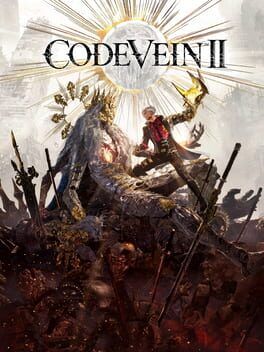
Producer Keita Iizuka explains why Code Vein 2 is steering clear of generative AI and doubling down on authored characters, companions, and a cohesive post‑apocalyptic vampire world.
Bandai Namco keeps talking about Code Vein 2 as a “dramatic exploration action RPG,” and that wording quietly reveals what the team thinks actually matters. Yes, it is still an anime‑styled take on the Souls formula, but in recent interviews the developers keep circling back to drama, authored moments, and the feel of a world that hangs together. That focus is also why Code Vein 2 is one of the first big soulslike successors to say outright that it is not using generative AI at all.
Producer Keita Iizuka tells PCGamesN that the sequel’s world and cast have been built entirely by human artists and writers, with no machine‑generated shortcuts. For a game that lives or dies on the strength of its characters and the cohesion of its post‑apocalyptic vampire mythology, that is not just a production detail. It shapes how the upcoming story, locations, and even individual bosses like the Blinded Resurgence Offspring are being conceived.
A new world built for drama, not systems
Rather than directly continue the first game’s story, Code Vein 2 is a full narrative reset. The Resurgence has rewritten the world into something stranger and more unstable, and the player steps in as the Revenant Hunter, a protagonist whose journey is explicitly about changing the future by diving into the past.
Across interviews with PCGamesN, Bandai Namco Europe and PlayStation, Iizuka keeps stressing that the sequel’s world is bigger yet also more cohesive. Where Code Vein sometimes felt like distinct “levels” stitched together, Code Vein 2 is designed to read more like a believable broken world. Environments now follow a clear internal logic, with ruins, settlements and warping Resurgence scars feeding into one another thematically as you move through them.
The team’s refusal to lean on generative AI sits right inside that goal. Iizuka talks about valuing consistency of art style and what he calls the game’s “world‑view experience” above all else. When every alley, alleyway poster and piece of worn armor is designed by an artist that understands how revenant society functions after the Resurgence, small details can echo story beats. Generated filler risks breaking that spell with elements that look right at a glance but ring hollow when you start pulling at them.
Why Code Vein 2 is avoiding generative AI
In the PCGamesN interview, Iizuka is unambiguous. Generative AI is not being used because the team wants the world, characters and visual language to come from a shared human understanding of the setting rather than a tool trained on other people’s work. Code Vein 2 is pitched as an “original world,” and he argues that the more you rely on AI textures, icons or concept pieces, the harder it becomes to maintain a unified aesthetic and lore logic.
This matters most for a series that sells itself on a very particular anime‑souls look. Code Vein’s appeal has always been its specific blend of glossy anime character design, elaborate weapons and tragic monsters. The sequel aims to step that up with more weapon types, more build variety and larger scale battles, but Iizuka’s comments make it clear that the team would rather scale back their ambitions than dilute that look with assets that do not quite belong.
It is also a writing concern. Code Vein 2 leans harder into cinematic storytelling and character‑driven drama, with the team even dropping online co‑op to focus on a more authored single‑player companion experience. That sort of structure depends on arcs that are seeded early and paid off hours later. If dialog barks, item descriptions or in‑engine cutscene concepts were stitched together from generative models, the risk is a story that feels like a collage rather than a throughline.
The companion cast as the core of the experience
While the first Code Vein was already known for its AI partners, the sequel is going all in on the idea that your relationships with companions are the real spine of its “dramatic exploration” pitch. Co‑op is gone. In its place is a more intricate buddy system and a cast that is more tightly woven into both the worldbuilding and the mechanics.
Holly Asturias is a good example of how that approach works. Introduced in Bandai Namco’s character teases, she is a revenant doctor who maintains a hidden clinic out in the forest. In purely mechanical terms she is a support‑leaning partner whose Luxuria Bloodline gifts feed into healing and sustain. In worldbuilding terms, she embodies a specific strand of post‑Resurgence life. Her forest clinic implies a population living far from central authority, a black‑market economy of blood and remedies, and an undercurrent of quiet resistance as she chooses to save both humans and revenants.
Valentin Voda sits on the other side of that spectrum. As an heir to the powerful Voda House and a descendant of the Progenitor, his presence instantly says something about how power is structured in Code Vein 2’s world. In combat he is one of the strongest bloodline wielders, but in the fiction he is also a node that connects you to the political order that survived the catastrophe. Travel with Valentin and you are not just changing your build options, you are letting the game steer you through the remnants of an aristocracy clinging to relevance.
These companions are being written and visualized by a team that can decide exactly how their silhouettes, idle animations and even minor combat barks reflect their past and culture. A generative workflow might have spat out plausible costume pieces or incidental dialog, but it could not guarantee that Holly’s medical tools always match the scavenged tech level of her clinic, or that Valentin’s family crest is consistently represented across banners, armor and architecture. Those are the tiny, human‑chosen threads that make characters feel like part of a single tapestry rather than a batch of cool designs sharing a menu.
Tragic bosses that feel like they belong
The most recent teaser for Code Vein 2 revolved around the Blinded Resurgence Offspring, a katana‑wielding enemy described as “a lamentable creature whose vision has long since faded.” It attacks the Revenant Hunter with sudden, invisible strikes, but the framing is less about aggression and more about the quiet horror of a being that has outlived the purpose that created it. The trailer originally promoted the fight with the line “Will you put an end to its suffering?” which signals that this is not just a skill check, but a small tragedy.
From a design perspective, that boss encapsulates what Iizuka is talking about when he emphasizes cohesiveness. Its blindness is not just a gimmick for telegraphed attacks; it hints at the Resurgence’s long tail, the way its mutations and experiments have produced lives that cannot be neatly classified as enemy or victim. The Offspring’s katana and movements echo the broader martial vocabulary of revenant fighters, while its warped body ties it back to the Resurgence’s more monstrous spawn.
It is the kind of character that is stronger for having been drawn by the same people who defined what Resurgence lesions look like on the environment walls, or how revenant bloodlines mark a body. A model pulled together from generative passes might hit the right mood in a single frame, but the coherence of the Offspring’s animation, sound design and environmental staging comes from a team sweating the details over months, revising until its tragedy fits exactly into the shape of the world’s history.
Time travel, player choice and authored consequences
Beyond individual bosses, Code Vein 2’s larger structure leans heavily on a time‑travel conceit. The Revenant Hunter partners with a mysterious character who allows travel back into key moments of the past. According to Iizuka’s interviews, the choices you make in those memories can alter the course of events and reshape the present in tangible ways. The developers talk about player choice less as branching morality and more as the slow rewriting of a doomed fate.
This kind of design thrives on tight authorship. If you promise that altering a choice ten hours ago will meaningfully recontextualize an NPC, a city or even a boss encounter, you need designers and writers who are tracking that web by hand. Generative AI could draft variations of a scene, but it cannot reliably uphold the deeper logic of a timeline where, for instance, saving a minor character in the past means a new settlement appears or a later dungeon takes on a different tone because that NPC’s community survived.
The same applies to Code Vein 2’s approach to level design. Iizuka references Soulslike inspirations such as Demon’s Souls and Dark Souls, but keeps returning to the idea that exploration here is in service of drama. Levels are not just obstacle courses. They are stagecraft, built to move you through revelations about how humans and revenants learned to coexist after the Resurgence. That kind of emotional pacing is very hard to outsource to any automated system without it feeling like a series of disconnected cool ideas.
What this might mean for its anime‑souls feel at launch
All of this circles back to how Code Vein 2 might feel to play when it launches on PS5, Xbox Series X|S and PC in late January 2026. Mechanically, impressions from previews suggest a faster, more expansive take on the first game’s combat, with more weapon types and builds to explore. But the intangible texture of the experience may be defined more by the team’s decision to keep every aspect of the world in human hands.
The anime‑souls aesthetic lives or dies on commitment. It is not enough to have stylish key art or a few flashy cutscenes. The mood has to survive mundane moments: the way your partner leans against a wall between fights, the signage on a half‑collapsed metro station, the color of the blood vials tucked into NPC belts. By refusing generative shortcuts, Code Vein 2 is betting that players will notice when those details line up, when the art direction, lore and character arcs all tell the same story.
The risk is obvious. Hand‑crafted worlds are slower and more expensive to produce, and they can still miss the mark if the ideas at their core are not strong enough. Yet for a sequel trying to stand out in a crowded soulslike field, a coherent, authored anime apocalypse full of tragic bosses and sharply written companions might be exactly the edge it needs. If Code Vein 2 can make good on Iizuka’s promise of a more dramatic, cohesive world, its decision to stay human in every sense could be what makes its return to the Resurgence worth the wait.