
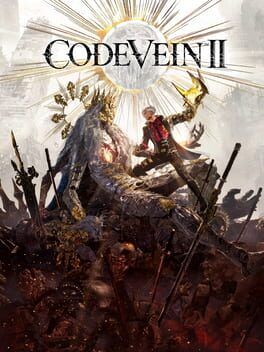
Breaking down the Blinded Resurgence Offspring trailer and what it reveals about Code Vein II’s combat, storytelling and place in the Soulslike landscape.
Bandai Namco’s latest Code Vein II trailer does not just show a flashy new monster. The Blinded Resurgence Offspring is a compact thesis statement about where the sequel is heading, how it has learned from the original Code Vein, and how it wants to stand out in an increasingly crowded Soulslike space.
A tragic blade in a ruined cathedral
The trailer presents the Blinded Resurgence Offspring as “a lamentable creature whose vision has been lost to time.” Visually, it sits right in the overlap between Code Vein’s gothic anime identity and a more classically grotesque Soulslike boss. The body is hulking and almost cocoon-like, its face shrouded or malformed, with its blindness signaled by scars and bandages more than explicit gore.
The arena appears to be a vast, cathedral-like space, lined with towering pillars and fractured stained glass that sells both reverence and decay. Code Vein’s first game often favored narrow walkways and compact arenas where the camera struggled, but here the framing emphasizes open floor, strong silhouettes, and readable lines of attack. The way the boss is always staged center frame with clear sightlines suggests the sequel is more conscious about blending spectacle with practicality.
Importantly, the Offspring fights with a great katana rather than another massive club or claw. That weapon choice immediately communicates range, precision, and the potential for delayed slashes and directional feints. It is a visual promise that this boss will not rely on sheer hit-box size but timing and spacing.
Reading the moveset: swiftness over spam
Bandai Namco describes the Blinded Resurgence Offspring as striking “with unseen swiftness.” The trailer reinforces this with several key animations that hint at broader combat goals.
The opening sequences show deliberate, poised stance work. The boss holds the blade low and to the side, then transitions into fast, lunging cuts that cover surprising distance. It looks closer to a duelist than a lumbering giant. For players, this indicates a fight built around intermediate range footsies, where rolling into the boss and circling its flanks may be safer than backing away.
There is also a subtle rhythm to its combos. Instead of constant flailing, the Offspring chains two or three strikes, then pauses or repositions. These windows are likely where Code Vein II wants you to engage with risk reward: commit to a couple of hits during the lull or stay patient to bait the next flurry. That is a marked shift from some of the original game’s bosses, which could feel like they spammed large tracking strikes that left little room for confident aggression.
The blindness motif suggests another layer. Without eyes, the creature seems to telegraph incoming attacks through body language and audio design rather than exaggerated glowing tells. Its head cocks toward the player, its torso twists before a sweep, and its footing shifts before a dash. For a Soulslike, that is crucial. It teaches you to read posture and sound cues, not just flashes of light or UI prompts.
Lessons from Code Vein’s first bosses
The original Code Vein carved out its niche with Blood Veil powers, anime theatrics, and a flexible partner system, but its bosses were inconsistent. Some fights, like the Butterfly of Delirium or the Successor battles, nailed spectacle but suffered from camera issues, erratic hit boxes, and AI allies that trivialized difficulty if you built around them.
The Blinded Resurgence Offspring trailer suggests three specific lessons the sequel is trying to apply.
First, encounter clarity. The wide arena, strong contrast between the boss model and the background, and smoothly tracked camera angles all hint at a push for legibility. Bosses are easier to respect when you can actually see what they are doing.
Second, distinctive silhouettes and weapons. Many Code Vein bosses borrowed familiar Soulslike archetypes. Here, tying a great katana to a blind, hulking frame creates a more memorable identity. It also lets the designers build a moveset around long, arcing traces that play well with dodge rolls and parry mechanics.
Third, emotional framing. Branding this creature as “lamentable” in marketing copy gives it narrative weight before you even lock on. Code Vein flirted with tragedy in its Successor designs, but the sequel seems intent on making that melancholy central instead of incidental. Fighting the Offspring looks like putting down something that has already suffered, not just another monster on the way to better loot.
Anime gothic that leans into horror
Code Vein’s art direction has always walked a fine line between stylish anime and blood-drenched apocalypse. The Blinded Resurgence Offspring leans harder into horror without abandoning the series’ flair. Its flowing katana strikes and cloak-like anatomy feel distinctly anime, but the way it lurches and screeches keeps it grounded in body horror.
Compared to the original, where boss arenas sometimes felt like dressed up boxes, this space feels authored around the creature. The high ceilings amplify its roars, the broken glass scatters light across the blade, and the neutral stone floor makes red particle effects and blood trails pop. This is boss-as-stage performance, similar to how FromSoftware frames its marquee encounters, but filtered through Code Vein’s saturated palette.
It also points toward a sequel that wants a more coherent visual language. The Offspring’s blindness is echoed in its covered head, the wrappings on its arm, and even in the way it occasionally swings slightly off target in the trailer. It gives the impression of a creature fighting from memory and sound rather than perfect omniscience, which may translate into exploitable blind spots if you are bold enough to get behind it.
Mechanical clues about Code Vein II’s direction
For all its mood, the trailer also reveals some practical shifts in design philosophy.
One is a greater emphasis on mid-range duels. The Revenant Hunter protagonist seen in previous footage typically wields blades and firearms, and here the dance with the Offspring looks almost symmetrical. Both combatants step, feint, then commit. That is closer to the feel of a one on one duel than a traditional raid-style Souls boss that dominates the room with circular area attacks.
Another clue is the restraint in particle noise. Original Code Vein fights could drown the screen in effects from player Gifts, partner abilities, and boss magic. In this showcase, attacks are flashy but controlled. You can track the boss’s sword, the impact flashes, and your own retaliation without losing the silhouette. It is a small thing that can significantly reduce visual fatigue during long attempts.
There are also hints that the partner and Gift systems might be tuned to highlight openings rather than erase danger. The trailer focuses on the boss’s aggression, not overpowered player spell spam. If Bandai Namco is confident enough to show extended clips where the player is mostly on the defensive, that suggests a sequel where positioning and stamina management matter first, and build exploits come second.
Standing apart from the Soulslike pack
Soulslikes have only multiplied since the first Code Vein released. For Code Vein II to stand out in 2026, it cannot simply be “anime Souls” again. The Blinded Resurgence Offspring shows a few ways Bandai Namco is trying to avoid that trap.
The first is aesthetic tone. Instead of going purely grim or purely stylish, Code Vein II is doubling down on melodramatic tragedy. The word “offspring” in the boss’s name implies a lineage or failed creation, evoking a family of experiments or corrupted kin. It feels less like nameless eldritch horror and more like a being with a specific place in the world’s history, which fits the series’ focus on memory, loss, and revenant rebirth.
The second is characterization of enemies. Many Soulslikes tell their stories through item descriptions and cryptic cutscenes, while bosses remain abstract threats. By framing the Offspring as a character with a backstory, the sequel edges closer to something like an anime rival fight, where even monsters are rooted in drama. If this approach extends across the roster, Code Vein II’s bosses could help drive the narrative instead of merely punctuating it.
The third is combat flavor. The great katana choice taps into a fantasy that other Soulslikes often reserve for the player. Here, the enemy also fights with an elegant, high risk weapon, which might push encounters toward stylish, readable duels rather than chaotic attrition. Combined with the Revenant Hunter’s own mobility, this points to a brawler-like pace that plays to Code Vein’s strengths instead of trying to mimic FromSoftware’s more methodical timing.
Building hype before release
Beyond the boss itself, this trailer fits into Bandai Namco’s broader plan for Code Vein II. It follows a series of character spotlights for Valentin Voda, Holly Asturias, Lyle McLeish, Josée Anjou, Noah G. MagMell, and Lou MagMell, and it arrives just ahead of the character creator demo. That demo, which lets you design up to 64 characters and carry them into the full game, suggests how much the studio understands the importance of personalization to this audience.
The Blinded Resurgence Offspring fits right into that push. It is a designed to be a trailer boss that players will screenshot, clip, and share, a creature that looks as good in a thumbnail as it does during a desperate last hit. For Code Vein II, that level of visual identity is not just a flourish but a competitive requirement.
If the rest of the boss lineup follows this template of strong silhouettes, readable movesets, and tragic framing, Code Vein II may finally deliver on the original’s promise: a Soulslike that embraces anime spectacle and heartfelt melodrama without sacrificing clarity or challenge. The Blinded Resurgence Offspring is not just another enemy. It is a mission statement, and right now it is a compelling one.