
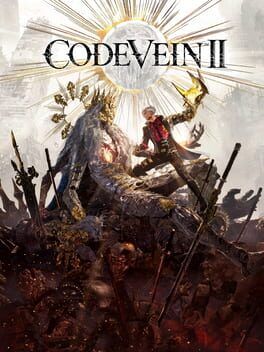
Breaking down the Blinded Resurgence Offspring trailer to see how Code Vein II is evolving its Soulslike boss design, combat pacing, and anime-styled spectacle.
Bandai Namco’s new Blinded Resurgence Offspring trailer for Code Vein II is short, but it is dense with clues about how the sequel is refining its boss design and, by extension, its Soulslike identity. Where the first Code Vein often leaned on aggressive particle spam and occasionally messy attack readability, this showcase suggests a more disciplined approach to pacing, spectacle, and attack clarity while still embracing the dramatic anime flair that defined the original.
A tragic duelist instead of a lumbering monster
The Blinded Resurgence Offspring is framed less as a grotesque brute and more as a tragic, highly skilled duelist. Lore snippets describe it as a creature that has gradually lost its sight, compensating with exceptional combat intuition. Visually, it carries a great katana, wears a porcelain mask that covers its ruined face, and moves with a deliberate, almost ritualistic grace.
That silhouette tells you a lot about the sequel’s priorities. In the first Code Vein, many early and midgame bosses were large, flailing creatures built around sweeping limbs and wide arcs. They were readable, but often traded nuance for volume. Blinded Resurgence Offspring sits closer to the Sekiro or Elden Ring school of humanoid boss design. You are facing a blade specialist, not just a wall of HP.
The shift to a fast, lightly built swordsman puts more pressure on timing and spacing rather than just learning where not to stand. It signals that Code Vein II wants more duels that feel like true tests of mechanical mastery instead of just pattern memorization.
Reading intent through animation and spacing
One of the clearest points of evolution is how the boss communicates its intent. The trailer repeatedly shows quick-draw great katana attacks that start from a clean, centered stance. The offhand hangs at its side, body weight slightly coiled as the mask faces the player. There is a brief, consistent anticipation before each flash cut.
In the original Code Vein, some boss strings blurred together as hitboxes, afterimages, and particle effects overlapped. Here the animation language seems more segmented. Stance, tell, and strike read as three distinct beats instead of a single blur. The anticipation windows do not look generous, but they look consistent, which is exactly what a skill-forward Soulslike needs.
The arena framing supports this readability. The camera shows mid-range spacing between player and boss, leaving room to see the full sword arc without excessive environmental clutter. If this carries over into the actual encounter, it should make Code Vein II’s hardest fights feel less visually noisy and more about micro decisions, like when to step in for a punish versus when to stay just outside draw range.
Faster combat cadence without losing stamina tension
Code Vein already had a quicker baseline pace than most FromSoftware Soulslikes, especially when leaning into lighter weapons and Gifts. The Blinded Resurgence Offspring trailer suggests the sequel is pushing even further while trying to preserve that feeling of stamina-driven risk management.
The boss’s great katana strings are rapid, but they are expressed as short sequences broken by half-beats where either fighter can reset footing. Instead of one enormous multi-hit combo that forces pure defense, the duel is built around pocket windows where a dodge, parry, or special ability can turn the tide.
This creates a rhythm that sits between Code Vein’s original aggression and the more deliberate pacing of Dark Souls. You are under constant threat, but there is still room to make responsible, measured choices instead of permanently holding the dodge button. If other bosses follow this pattern, Code Vein II could thread an important needle. It could feel faster and more expressive than many Soulslikes without collapsing into unreadable chaos.
Spectacle that enhances, not replaces, boss clarity
Spectacle was both a strength and a weakness for the first game. Particle-heavy special attacks looked impressive, but they could bury crucial telegraphs under layers of visual noise. The Offspring trailer shows Bandai Namco trying to refine that balance.
When the boss draws the great katana, you see sparks and motion blur, but the white blade and porcelain mask always stay clearly visible. The camera work favors sideways tracking shots and clean over-the-shoulder framing rather than chaotic zooms. Even when the environment darkens and effects light up the arena, the boss remains the visual anchor.
This restraint suggests that Code Vein II is not dialing back on anime drama so much as reorganizing it so that FX support the action instead of replacing it. Soulful duels live or die on whether the player can see and interpret fleeting animations. The trailer sells the idea that every flash and particle burst is wrapped around that core instead of drowning it out.
Voice, lore, and emotional framing of the fight
The “Resurgence Offspring” naming ties directly into Code Vein II’s broader lore about the Resurgence event and the twisted progeny it left behind. The “Blinded” modifier, combined with the porcelain mask and withdrawn posture, frames this boss as more than a random monster. It feels like a fallen guardian or weapon that outlived its purpose.
Code Vein’s best encounters were the ones that connected boss mechanics with character tragedy. The Queen’s Knight and various Successor fights stood out because their move sets echoed who they were. Blinded Resurgence Offspring fits that mold. Losing sight but gaining preternatural combat sense is a character trait expressed through gameplay. You are learning to read a foe that cannot see you, but somehow never misses.
This attention to thematic cohesion hints that Code Vein II is leaning harder into bespoke, lore-rich bosses rather than leaning on more generic humanoid variants. It supports the idea of a sequel that wants each major fight to feel authored, distinct and emotionally loaded.
Refining the Soulslike identity instead of imitating FromSoftware
The original Code Vein walked a tightrope between clear Soulsborne inspiration and its own anime-RPG leanings. Sometimes it hewed a bit too close to FromSoftware’s shadow, and at other times it felt like a completely different kind of action game bolted onto Soulslike scaffolding.
Blinded Resurgence Offspring points toward a clearer identity. On the structure level, this is still a dodge, punish, and pattern-recognition boss. But the moveset is sharply tuned around one weapon style and one emotional concept. The fight’s flashiness draws from anime sword duels, not European knight duels, and that is important. Code Vein II is not trying to tone down the anime, it is trying to systematize it.
If this boss is representative, you can expect a sequel that treats its Soulslike underpinnings as a grammar rather than a script. Parry windows, if present, should favor snappy, clear frames around those quick-draw slashes. Stagger opportunities will likely be tied to baiting risky finishers from this highly skilled opponent. Defense and offense become a conversation instead of a one-sided lecture.
What this hints at for the rest of Code Vein II
With just one boss trailer you cannot map out the entire game, but there are some plausible takeaways for Code Vein II’s broader boss design.
First, the emphasis on a nimble, mid-sized duelist suggests more fights built around weapon mastery rather than distant spell spam or pure HP sponges. If Bandai Namco continues to design around tightly scoped move sets with clear visual identities, repeat attempts should feel less frustrating and more like sharpening your understanding of a rival.
Second, the camera work and animation rhythm hint at a higher baseline difficulty that leans into aggression without compromising clarity. This could place Code Vein II more directly alongside titles like Steelrising or Lies of P as a faster, more flamboyant interpretation of the formula.
Third, the tragic framing of the Offspring underlines that Code Vein’s emotional storytelling is not going away. Bosses are still people or once-people, and their monstrosity still reflects the world’s collapse and the cost of survival. That emotional throughline gives all the parries, dodges, and finishers a weight that goes beyond raw challenge.
Code Vein II’s Blinded Resurgence Offspring might not be the largest or flashiest boss the sequel has to offer, but it is an important statement of intent. It shows a studio that has learned from the first game and is now doubling down on readable aggression, emotionally grounded spectacle, and duels that feel like clashes with tragic legends instead of anonymous beasts. If the rest of the boss lineup follows its lead, Code Vein II could carve out a sharper, more confident identity within the crowded Soulslike space.