
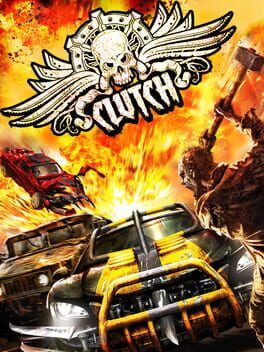
Former Forza Horizon leads are back with Clutch, a cinematic open‑world racer that fuses festival cruising with heist‑movie chases, PvPvE chaos, and a character‑driven story set on the French Riviera.
Maverick Games has finally lifted the curtain on Clutch, a “cinematic open‑world action‑driving game” that looks determined to sit somewhere between Forza Horizon, classic Need for Speed, and a Fast & Furious heist movie.
Founded by former Forza Horizon creative director Mike Brown and a crew of Playground Games veterans, Maverick is using its debut to ask a pointed question: what if the best parts of open‑world driving, street racing, and chase movies all existed in the same living online space, tied together by an actual story you’re meant to care about?
Clutch is aiming to be that answer, and it might just be the shake‑up the genre needs.
A Riviera playground where the pro circuit meets the midnight underground
Clutch’s open world is set on a stylised French Riviera, with sun‑bleached coastal highways, dense city streets, and twisting hillside routes. If Horizon’s Mexico was a festival postcard, this feels closer to a crime thriller backdrop, where beautiful scenery hides something a lot messier.
At the heart of the game are two clashing worlds. On one side there’s the prestigious, century‑old R1K pro series, a legitimate racing championship that gives you the “clean” side of car culture: grandstands, TV cameras, and corporate glamour. On the other is the Midnight Collective, an underground network that treats the same roads as a canvas for illegal runs, high‑stakes chases, and off‑the‑books jobs.
The hook is that your characters live in both at once. Rather than a faceless avatar parachuted into a party, you’re inhabiting sibling driving prodigies whose careers pull them between the R1K spotlight and the Collective’s darker economy. Maverick is pitching the world as a “living PvPvE action‑driving space,” where official events, underground contracts, and opportunistic chaos bleed into one another in real time.
Narrative first: a driving game built like a TV drama
The biggest break from Forza Horizon is how much of Clutch is built around narrative. The story centers on two siblings trying to climb the pro‑racing ladder while getting dragged deeper into the French Riviera’s criminal underbelly. Scripted by Jamie Brittain, co‑creator of UK teen drama Skins, the campaign is aiming for grounded, character‑driven drama rather than just banner text between races.
Clutch’s story campaign threads through both the R1K and the Midnight Collective, with missions that frame races as heists, escapes, or botched jobs rather than simple “win the event” checklists. Brown’s team talks about “handcrafted missions” interwoven with the open world, so your big narrative beats can spill directly into freeform driving instead of cutting back to a menu.
That approach could be where Clutch most clearly steps away from Forza Horizon’s festival‑tourism vibe and Need for Speed’s often disposable plots. If Maverick can actually deliver a season‑style arc with evolving relationships and consequences, it gives players a reason to care who’s behind the wheel, not just what they’re driving.
PvPvE as the glue between racing and chasing
Underneath the storytelling is a structure built around PvPvE, where players compete with each other while also contending with the world itself. In practice that means you’re not only racing other crews for position, rep, and cash, you’re also dealing with AI‑controlled threats that treat everyone as fair game.
Imagine barreling through an R1K street stage when a job for the Midnight Collective suddenly crosses your route, dragging police and rival crews into the same space. Or sprinting away from a botched heist with three other human players who could either block for you or sell you out to save themselves. Maverick talks about “shifting alliances” and “escalating pursuits,” hinting at scenarios where cooperation is temporary and betrayal is a viable tactic.
Forza Horizon’s world is full of other cars, but they rarely matter beyond leaderboards and occasional co‑op. Need for Speed’s cops have historically been the main antagonist, yet other players often sit in their own bubbles. Clutch is trying to fuse those roles so that players and AI share the same dynamic ecosystem, which could make even routine drives feel volatile.
Chase sequences built like action set‑pieces, not just police timers
Where Need for Speed has long leaned on cop meters and escape circles, Clutch wants its pursuits to feel like fully staged action scenes. The reveal leans heavily on the idea of “blockbuster” chases, with cars treated more like stunt performers than simple physics objects.
Maverick describes its missions as combining pro‑racing structure with crime‑movie tension: escort runs that turn into ambushes, getaways that punch straight through a scheduled race route, or convoy jobs where the outcome changes depending on how selfish or supportive other players are. Because the world is shared, those set pieces can bleed into free drive, leaving AI pursuers and rival crews hunting you even after the mission marker is gone.
If it works, that could make Clutch’s chases less predictable than classic Need for Speed, where you can often feel the underlying system ticking away. Here, the chase is supposed to be part authored sequence, part emergent chaos, held together by the PvPvE structure.
Gadgets and driving stunts instead of pure sim precision
You can feel the Forza DNA in the way Clutch presents its cars, but the moment action kicks off, Maverick is much happier drifting into heist‑movie fantasy. One of the standout gadgets shown so far is a grappling device that lets you hook onto anchor points and whip your car around hairpins or obstacles at absurd angles, turning street corners into stunt ramps.
Rather than a deep sim, Clutch is leaning toward what the team calls “action‑driving.” That means responsive handling and believable weight, but with enough flexibility to pull off moves that would total a real‑world chassis. Gadgets, shortcuts, and environmental interactions are tools for improvisation in a chase, not just cosmetic flair.
This is where the comparison to Forza Horizon is sharpest. Horizon celebrates expression through driving lines, paint jobs, and car collections, but keeps moment‑to‑moment mechanics grounded in realistic performance. Clutch is chasing a different fantasy: being the hero of a chase scene, using the car like a stunt rig to out‑think and out‑maneuver your pursuers.
A lived‑in car culture, inside and out
For all its cinematic flair, Clutch is surprisingly obsessed with mundane detail. Built on a customized version of Unreal Engine 5, its cars are designed to look used: dust on the paint, carbon build‑up around exhausts, worn seat bolsters, sun‑bleached plastics, and clutter stuffed into cupholders.
Maverick talks about the garage as a storytelling space. Customization goes beyond the expected wheels, bumpers, and aero to include interiors, lighting, and even the kind of junk you leave lying around. Drinks, crumpled receipts, spare clothes, stickers, and small props can all help define who a car “belongs” to. The idea is that when you jump into another character’s ride during the story, you can read their life from the cabin.
For players used to Horizon’s pristine showrooms and Need for Speed’s neon‑slick exteriors, that interior focus could be a subtle but powerful differentiator. It treats the car less as a trophy and more as an extension of its driver, something that changes and wears with the choices you make.
How Clutch could stand apart from Forza Horizon
Given who is making it, comparisons to Forza Horizon are inevitable. Both are open‑world driving games with a sunny setting, a love of car culture, and a focus on accessibility. But philosophically they seem to be moving in different directions.
Horizon is ultimately about celebration. It is a never‑ending festival where you build a garage, tick boxes on a giant map, and live in a consequence‑free automotive paradise. Narrative is light and mostly there to push you toward the next spectacle.
Clutch aims to be about friction. Your choices in the story matter because they push the siblings deeper into danger. The PvPvE structure means other players are part of that tension rather than background dressing, and the Midnight Collective’s jobs give the world a moral gray zone. Where Horizon wants every player to feel like a winner all the time, Clutch is flirting with the idea that you might make mistakes, betray people, or get in over your head.
If Maverick sticks to that, Clutch can coexist with Horizon instead of competing with it directly. One is a vacation, the other is a drama set in a place where people happen to drive very fast.
How Clutch could out‑chase Need for Speed
Need for Speed is the obvious reference point for cops‑and‑robbers driving, but the series has struggled to define itself consistently. Some entries lean into arcade spectacle, others flirt with grounded handling, and narrative quality swings wildly from game to game.
Clutch’s pitch is more focused. Its chase fantasy is rooted in the collision between pro racing and organized crime, not just “run from the sirens.” The PvPvE layer means that in any pursuit, the most dangerous element might be another crew trying to cash in on your failure instead of the police AI. And the emphasis on gadgets and staged set‑pieces suggests a more authored feel than NFS’s fairly standard pursuit loops.
If successful, Clutch could carve out its own corner of the genre as the game that treats chases the way shooters treat set‑piece firefights: heavily choreographed, spectacular, and knitted into a larger narrative arc.
The big questions before launch
For all its promising ideas, Clutch still has to answer a few key questions before its planned Spring 2027 launch on PS5, Xbox Series X|S, and PC.
First is balance. Building a world that supports competitive racing, co‑op heists, and story missions without one mode cannibalizing the others is notoriously hard. The danger is ending up with three shallow systems instead of one deep one. Maverick’s talk of handcrafted missions inside a shared sandbox is encouraging, but execution will be everything.
Second is progression. The game’s narrative ambitions and lived‑in customization imply a long‑term relationship with your cars and characters. How Maverick structures unlocks, upgrades, and cosmetic rewards in a PvPvE economy will determine whether Clutch feels like a true automotive RPG or just another FOMO‑driven service grind.
Finally there is the social layer. Shifting alliances sound great in a press release, but they need tools: crew systems, communication options, maybe even opt‑in rulesets for how cutthroat you want your world to be. If Maverick can nail that, Clutch’s open roads could feel genuinely alive instead of merely populated.
A bold first step from familiar talent
With Clutch, Maverick Games is not trying to out‑Forza Forza or out‑arcade Need for Speed. It is trying to fuse the strengths of both into something with a stronger narrative spine, a more reactive online world, and a sharper sense of identity.
There is still a long road between reveal trailer and release build, but the blueprint is clear. If the studio can align its cinematic ambitions with responsive handling and robust online systems, Clutch could easily become the next big name in open‑world driving.
For now, it stands out as one of the most intriguing racing projects on the horizon, built by people who helped define the modern open‑world racer and are now trying to move it somewhere new.