
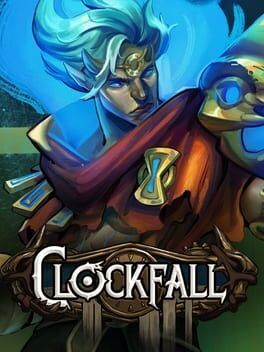
Clockfall turns the clock into your main resource, blending frantic dungeon runs with tense village defense. We break down what makes this indie roguelite stand out and whether its time-pressure hook feels fresh or just like a sharp pitch ahead of Early Access.
Clockfall is arriving in a genre where “one more run” is practically a lifestyle, so it needs more than good pixel art and random loot to stand out. Developer Rever Games, with publisher Radical Theory, is taking a swing at that problem by treating time as the true currency of its world. Every second you spend swinging a sword, poking into a side room, or lingering over an upgrade screen matters. If the pitch holds up, Clockfall could be one of the more interesting indie roguelites on the 2026 calendar.
A looping nightmare built around a broken clock
Clockfall’s setup is simple but strong. You are trapped in a repeating nightmare loop orbiting a shattered village and a mysterious clock tower. Runs send you into hostile dungeons and twisted zones around the village to fight monsters, gather resources, and push the story forward. Fail or let the clock run dry and the world snaps back, resetting the loop and throwing you back to the village hub.
That loop structure would be familiar in almost any modern roguelite, but here the fiction reinforces the central mechanic. The world is literally built on a broken sense of time, and the village is both your refuge and a reminder that the clock is always ticking. It is not just a menu space between runs, it is a place that can be fortified, upgraded, and eventually overrun if you mismanage your precious seconds.
Time as your real health bar
Plenty of games put a timer on a mission. Clockfall goes further by turning time into the main resource binding everything together. Each run starts with a limited time pool, and almost every meaningful action tugs at that number. Exploring deeper zones, engaging in fights you could have avoided, or taking the long way around a level all push you toward the dead stop at zero.
The twist is that you can fight back against the clock. Certain choices and rewards let you refuel time, but the tradeoffs are severe. Spend currencies on immediate power to make the current run safer, or cash progress in for more time at the cost of losing upgrades. Push one room further for a possible time-extension shrine, or cut your losses and sprint back to the exit. Clockfall wants every room to feel like a risk calculation, not just another step in a long corridor of enemies.
If it works, that focus could change how you play compared to classics like Hades or Dead Cells. Runs would be less about clearing every corner and more about learning when to disengage, which targets are worth your time, and how to route through levels with ruthless efficiency.
Where the village fits into the loop
Between runs, you return to the village, which functions as Clockfall’s second pillar. Here, your banked resources shift from personal survival to community defense. Build fortifications, unlock new structures, secure helpful NPCs, and purchase permanent upgrades that bend future loops in your favor.
The village is not just a cozy upgrade hub. It is under constant threat from the same nightmare forces you fight during dungeon runs. Fail badly enough or neglect its defenses and you are not only losing progress on your character, you are watching structures and allies fall. That creates a tug of war between spending materials on personal power for the next dive and investing in the long term safety of your home.
It is a structure that recalls bits of Darkest Dungeon’s hamlet and some survival base builders, but placed inside a tight roguelite rhythm. Clockfall wants you to care about more than your own build. If the village systems are deep enough, they could give runs a strong sense of context, where a desperate sprint to grab just enough resources to finish a wall upgrade feels as meaningful as a boss kill.
Combat that lives or dies by pacing
On the action side, Clockfall promises a mix of melee and magic with evolving abilities. The early descriptions point to agile, real time combat where you string together attacks and abilities to carve through enemies quickly. That need for speed lines up with the time pressure concept. Kiting a single enemy around a room for thirty seconds might technically keep you safe, but those seconds are a real resource you cannot refill easily.
Build variety is framed around letting you lean into different responses to that pressure. You might focus on pure damage to erase threats before they eat time, bulk up defensively to survive risky pushes into higher level areas, or chase builds that specifically extend or manipulate the timer. The best case is a system where your loadout feels like a philosophy about how you handle the loop, not just a pile of stat boosts.
The unknown is how reactive enemies and arenas will be. For the time hook to feel essential, the combat encounters will need to demand smart positioning and prioritization instead of devolving into rote slash and dodge patterns. With so many action roguelites already teaching players to play fast and aggressive, Clockfall has to translate its ticking clock into decisions that actually feel different in the moment.
How Clockfall tries to stand out from a crowded field
Clockfall arrives in a space crowded with heavy hitters. Games like Hades, Dead Cells, Vampire Survivors, Returnal, and countless smaller experiments have all toyed with the value of time, pacing, and iterative runs. That makes the question unavoidable. Is Clockfall genuinely fresh, or is it just a cleverly phrased pitch?
The strongest distinction is how aggressively it surfaces time as a first class resource. Many roguelites encourage speed indirectly through score multipliers, decay mechanics, or long term opportunity costs. Clockfall ties nearly every decision, from combat to exploration to town building, to a visible, draining pool of seconds. The idea that you might sacrifice a potent upgrade to claw back another minute or two is not something most genre peers have built around.
The second promising angle is the hybrid structure. Dungeon runs feeding village defense and back again gives every session a sense of purpose beyond chasing a new weapon drop. Instead of chasing only personal mastery, you are also working on the survival of a place that grows and can be visibly damaged. That emotional anchor could make the inevitable failures more bitter and the clutch, last second saves more satisfying.
Visually and thematically, Clockfall is not trying to blow the doors off the genre, but the broken clock motif, repeating nightmare framing, and focus on a single, threatened village give it a clean identity. It leans more into clarity and readability than wild stylistic swings, which suits a game that wants you to constantly weigh risks at a glance.
Fresh idea or just a sharp hook?
Right now, Clockfall exists in that tricky pre release space where everything sounds compelling in a feature list. Time as a core resource, a living village that you can defend, and a tight action loop all read well, but they are the kind of promises that live or die in the details.
The concept does feel more than just a marketing buzzline. Treating time like a shared health bar, currency, and story pillar at once is a strong foundation. The question is whether the developers can keep that pressure present without turning the game into a pure stress test. Too little time tension and it becomes another solid but familiar roguelite. Too much and players may feel smothered before they get a chance to appreciate the buildcraft and village systems.
As it heads toward a planned Steam Early Access launch in 2026, Clockfall is absolutely an indie roguelite worth watching. The pitch is clever, but there is enough structural ambition in the loop and the village defense layer that it has a real shot at feeling distinct once players get their hands on it. If Rever Games can make every second count as much in play as it does on paper, Clockfall could wind up as one of the genre’s more interesting time traps rather than just another run at the clock.