
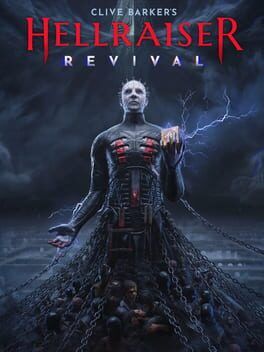

Saber Interactive says Clive Barker's Hellraiser: Revival is performing extremely well on PC and console, but its strongest signal may be what it says about AA horror games, price, risk, and future support.
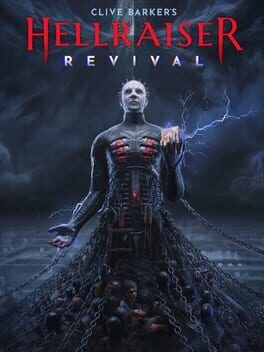
Image: IGDB
Store links: Clive Barker's Hellraiser: Revival on Steam
Saber says Hellraiser is landing, even without sales numbers
Saber Interactive CEO Matthew Karch says Clive Barker's Hellraiser: Revival has been “performing extremely well on PC and console” since its October 8, 2026 release, according to his LinkedIn post reported by IGN, Push Square, and FRVR. That is the concrete development at the center of the story, but it comes with an important caveat: Saber has not publicly shared unit sales, revenue, platform splits, or retention data in the provided material.
That makes “Hellraiser Revival sales” a story about signals rather than hard totals. Karch is pointing to the game's launch performance, user scores, and controlled production model as evidence that mid-budget licensed games can still cut through. The tension is that Clive Barker's Hellraiser: Revival is not being described as a unanimous critical darling. PC Gamer's review called it “fine,” said its puzzles offer some fun, and argued there are better games in the genre. IGN scored it 6 out of 10. Wikipedia's summary also describes the game's critical reception as mixed.
Yet the player-facing picture looks stronger. IGN reported that the game had a “very positive” player score on Steam, while FRVR reported a 94% positive reception on Steam at the time of its article. Those are storefront and outlet-reported user signals, not a substitute for sales data, but they explain why Saber is comfortable using this particular horror release as a business example. The game appears to be converting a sharp IP identity, a lower price point, and a fan-ready premise into momentum, even while reviewers have been more restrained.
Karch's argument is about risk, not only Hellraiser
Karch's comments frame Clive Barker's Hellraiser: Revival as proof of a broader Saber strategy. In the LinkedIn post quoted by IGN and Push Square, he wrote that the game is “testament to the notion that an established IP and solid AA development with controlled costs can produce great results and high user scores.” He also argued for “a greater focus on these middle-market IP-driven products” instead of relying so heavily on “AAA behemoths.”
His business case is direct: a AA game that delivers an immersive experience at a lower price is, in his view, less risky and can generate stronger average returns than a larger production with a heavier budget. That is not a claim that AAA games are dead. Karch explicitly said there will always be room for a properly developed and budgeted AAA experience. Push Square also noted the other side of the market by pointing to large-scale projects such as Grand Theft Auto 6 and Marvel's Wolverine as examples of the blockbuster lane still existing.
The useful part of Karch's argument is how specific it is. He is not defending small games in the abstract. He is talking about recognizable IP, controlled costs, high user scores, and a lower price. PC Gamer listed Clive Barker's Hellraiser: Revival at $40 / £35, which puts it below the standard premium pricing tier. That price makes the rough edges easier for some players to accept, and it gives Saber a clearer path to profitability if production spending stayed within the AA range Karch describes.
Hellraiser gives AA horror a shape that budget alone cannot buy
As a horror proposition, Hellraiser is unusually well suited to the AA argument because its identity is specific. Saber's official site describes Clive Barker's Hellraiser: Revival as a new chapter in the series and a first-person action horror survival game. The story follows Aidan, who uses the Genesis Configuration, a mysterious puzzle box, to help his girlfriend Sunny escape the Labyrinth while surviving a bargain with Pinhead and fighting a cult devoted to the Cenobites.
That premise gives Saber a strong set of horror tools without requiring the scale of an open-world blockbuster. The official page emphasizes the box's hellish abilities, earthly weapons, masochistic enemies, cultists, wretches, and infernal priests. Wikipedia's gameplay summary adds that the player gathers resources, crafts healing items and ammunition, uses melee weapons and firearms, and sometimes has to sneak or flee because certain enemies cannot be defeated in combat.
For AA horror games, those systems matter. Survival pressure does not need the biggest map in the industry. It needs limits. Breakable melee weapons, ammunition scarcity, enemies that cannot always be killed, and a hostile space like the Labyrinth create tension through denial and consequence. If the audio, encounter pacing, and resource economy hold together, a smaller production can feel oppressive in the right ways. That appears to be the bet Saber made with this Saber Interactive horror game: spend around the IP's strongest sensations, then let the systems make players feel exposed.
The audience response is stronger than the review consensus
The split between critic response and player response is central to understanding why Saber is talking this loudly about the launch. PC Gamer's verdict said Clive Barker's Hellraiser: Revival does not do anything outstandingly well or offer much innovation, while still allowing that Hellraiser fans may enjoy the nostalgia. IGN's review score of 6 out of 10 sits in similar territory: playable and notable, but not framed as a genre benchmark.
Players, at least on Steam according to the reports available, have been warmer. IGN cited a “very positive” Steam player score, and FRVR reported 94% positive reception. Those user-score references are snapshots from public reporting, and they can shift over time, but they support Karch's point about high user scores better than the critical reviews do.
There is also the matter of content. IGN reported that the game leaned into the sex, blood, and gore associated with Hellraiser, and that some content creators were permanently banned despite censoring their playthroughs. IGN also quoted narrative director Antony De Fault saying it was an unofficial team goal to be “banned, unrated, or restricted” somewhere as one measure of whether the team had done its job. That kind of extremity can narrow a game's mainstream reach while deepening its appeal to the exact audience that wants Hellraiser to feel dangerous. In horror, audience self-selection can be powerful. The people who show up for Cenobites are usually not asking for sanitized shadows.
“More to come” sounds like a Saber roadmap, not confirmed DLC
IGN reported that Karch called Hellraiser: Revival “the first in a series of releases by Saber that will continue to prove out our methodology,” and said there is “more to come in just a few short weeks.” That line is already being read as a sign of confidence, but the confirmed wording matters. The sources provided do not announce Hellraiser DLC, a sequel, a content roadmap, a patch schedule, or an expansion.
The safest reading is that Saber intends to keep demonstrating its AA, IP-driven approach through upcoming releases or announcements. FRVR connected Karch's comments to Saber's wider slate, mentioning projects such as Jurassic Park: Survival, a new John Wick game with a targeted 2028 release, Warhammer 40,000: Space Marine 3, and the Star Wars: Knights of the Old Republic remake, while also noting that release timing remains unknown for some of those games. Push Square similarly pointed to Saber's recent strength with Hellraiser and Warhammer 40,000: Space Marine 2 as evidence that the studio's model is working for it.
For Hellraiser Revival more to come speculation, that distinction is important. Strong launch performance can lead to patches, DLC, sequels, or licensed follow-ups, but none of those have been confirmed in the supplied material. What is confirmed is confidence from Saber's CEO and a public attempt to position Hellraiser as the first proof point in a repeatable production strategy.
Should horror players buy now or wait?
The practical picture is clearer than the business one. Clive Barker's Hellraiser: Revival is out now. Wikipedia lists its platforms as Nintendo Switch 2, PlayStation 5, Windows, and Xbox Series X/S. PC Gamer lists it as a singleplayer game developed and published by Saber Interactive, priced at $40 / £35, with no multiplayer, and marked Steam Deck Playable on Steam. Saber's official site also requires visitors to affirm they are at least 18, which fits the mature content being reported around the game.
If you are coming for a polished, consensus-leading survival horror release, the reviews suggest caution. PC Gamer found enjoyable puzzle elements but did not consider it exceptional, and IGN's 6 out of 10 points to a game with clear limitations. Waiting for patches, a sale, or more detailed platform performance reports is reasonable if rough edges bother you.
If you are coming for Hellraiser specifically, the calculation changes. The official premise centers Pinhead, the Genesis Configuration, Cenobites, cultists, the Labyrinth, and a story positioned as a new chapter in Hellraiser's canon. The reported Steam response suggests many players are accepting the tradeoff between ambition and imperfection. That is exactly the space AA horror can occupy when it works: focused, nasty, priced below the premium tier, and built around a mood strong enough to survive some scuffed edges.