

Looking back at Claude Guillemot’s role in founding Ubisoft, the rise of the Guillemot brothers from rural distributors to blockbuster tastemakers, and how his passing reframes the publisher’s legacy.
Claude Guillemot’s name rarely appeared on E3 stages or investor slides, but the modern Ubisoft story does not exist without him. With his brothers Yves, Michel, Gérard and Christian, Claude helped turn a small Breton mail‑order business into one of the most powerful publishers in video games, home to Assassin’s Creed, Far Cry, Rainbow Six and some of the most influential open‑world design of the last 20 years. His passing in a plane accident at 69 has prompted the industry to look back not only at his life, but at the unlikely path Ubisoft took from French countryside to global powerhouse.
From farm supplies to floppy disks
The Guillemot family’s story starts far from software. The brothers grew up in Brittany, where the family ran an agricultural supplies business serving local farmers. That background taught them logistics, margins and the realities of running a low‑margin, high‑volume operation. When home computers began trickling into Europe, the brothers saw something familiar: a fragmented supply chain, expensive imports, and a huge gap between what hardware and software cost wholesalers and what French customers were paying at retail.
In 1984 they founded Guillemot Informatique, a mail‑order company focused on computer hardware and software at sharply reduced prices. Claude was central to that pivot, applying the family’s distribution know‑how to a very different kind of product. By negotiating directly with UK and US suppliers, cutting out middlemen and leaning on mail‑order catalogues instead of storefronts, the brothers could undercut traditional retailers by up to half the price on some titles. Within a couple of years they had scaled beyond their rural roots, supplying stores across France as well as direct customers.
This period is easy to overlook next to Ubisoft’s later blockbusters, but it is where the company’s DNA was forged. The Guillemots learned how quickly tastes shifted, how to move stock, and how crucial it was to build relationships with developers and rights holders long before a disc ever hit a shelf. Claude’s work here laid the operational foundation that would make a dedicated game publisher viable.
Founding Ubi Soft in a young console world
By 1986 the brothers saw that selling other people’s games was only part of the opportunity. If they handled distribution so efficiently, why not retain more value by publishing and eventually creating software themselves? That spring, in Carentoir, they founded Ubi Soft, short for “ubiquitous software.” Claude, already deeply embedded in the supply side of the business, shifted along with his brothers from pure distribution toward curation and development.
The European market of the late eighties was still dominated by microcomputers like the Amstrad CPC, Atari ST and Commodore platforms. Ubi Soft’s earliest efforts reflected that. The company licensed and localized games for the French market, pushing budget titles and family friendly software even as it began tentatively financing its own projects. For a time the line between distributor and publisher was blurry, but the Guillemots were deliberately moving up the value chain.
Claude’s exact daily responsibilities were less public than Yves’ eventual CEO role, yet his experience with Guillemot Informatique continued to matter. He understood how to price aggressively without burning relationships, how to spot emerging hardware trends, and when to take inventory risk on a platform. In a market where one bad bet on the wrong system could crush a young publisher, that operational caution gave Ubi Soft room to experiment creatively.
Early creative bets and a European identity
The company’s first original projects were modest by today’s standards but bold for a regional upstart. Early releases such as Zombi in 1986 placed Ubi Soft among a wave of European studios willing to chase genre experiments rather than strictly license existing arcade hits.
Ubisoft’s first decisive creative leap came in the nineties with Rayman. Designed by Michel Ancel and released in 1995, Rayman became a defining European platformer, notable for its lush art and character work on platforms that were still dominated by mascots from Sega and Nintendo. For the Guillemot brothers, Rayman proved they could cultivate iconic IP rather than just localize existing hits.
Here, Claude’s behind the scenes work again mattered. Moving from one hit to a sustainable label requires patient investment in technology, marketing and distribution. Ubisoft expanded offices, grew internal teams and built better relationships with console makers, especially Sony in the PlayStation era. Those moves depended on someone willing to think in terms of long term catalog value rather than just quarter to quarter margin, a mindset that had grown out of the brothers’ years running lean distribution operations.
Scaling into a global publisher
The late nineties and early 2000s were the period where Ubisoft transformed from a successful European publisher into a global force. The company opened and acquired studios in Montreal, Shanghai and beyond, chasing both cost efficiencies and creative variety. This is when the Ubisoft name began to sit alongside EA and Activision in retail aisles around the world.
Strategically, Ubisoft leaned hard into two ideas. First, it embraced multi‑studio development, building large internal networks that could share technology and support annualized or near annualized series. Second, it focused on acquiring or building franchises that could span hardware generations. Claude, operating more in corporate leadership than public messaging, was part of the group that backed these expansion moves while still running other parts of the family’s tech empire, including hardware maker Thrustmaster and Guillemot Corporation.
The purchase of the Tom Clancy license at the turn of the millennium was one of Ubisoft’s most important bets. Games like Rainbow Six, Ghost Recon and Splinter Cell gave the publisher a strong presence in tactical and stealth action right as console online play and more realistic shooters were gaining traction. Clancy games built Ubisoft’s reputation for systems driven design and competitive multiplayer, a counterweight to the more whimsical Rayman and licensed catalogue titles.
The birth of modern Ubisoft franchises
The mid 2000s saw Ubisoft shift from an agile European player to one of the architects of the open world blockbuster. Assassin’s Creed, which debuted in 2007, is the clearest example of how the Guillemots’ ambitions had evolved.
Assassin’s Creed fused historical tourism with stealth and parkour, leveraging Ubisoft Montreal’s tech and the company’s willingness to fund multi year, high risk projects. It would become one of the most recognizable franchises in gaming, spanning everything from medieval Syria to Renaissance Italy, the American Revolution, ancient Egypt and feudal Japan. Annualized releases, transmedia tie ins and a heavy emphasis on systemic open world design turned Assassin’s Creed into a template not just for Ubisoft, but for the wider AAA industry.
Alongside Assassin’s Creed, Far Cry grew from a Crytek developed PC shooter into Ubisoft’s flagship sandbox shooter series. After acquiring the IP, Ubisoft steered Far Cry toward sprawling map design, emergent encounters and charismatic villains, from Vaas to Pagan Min. That structure, with checklists of outposts, collectibles and side quests, came to define “the Ubisoft formula” and spread to many other franchises, from Watch Dogs to post reboot Ghost Recon.
These games did not spring from nowhere. They were built on a corporate culture the Guillemot brothers shaped over decades, one that valued reusable tech, shared tools and a global studio network able to scale content. Claude’s role within the broader Guillemot ecosystem, including steering Guillemot Corporation and Thrustmaster, reflected a belief in building enduring platforms rather than short lived products.
Leadership, control and the family business model
One of the more unusual aspects of Ubisoft’s history is how much control the Guillemot family retained as the company grew. Through various shareholdings and cross holdings, the brothers remained central figures long after many contemporaries had sold out or ceded power to outside executives.
Claude’s business influence extended through Guillemot Corporation, which controlled stakes in Ubisoft and managed other hardware and accessory lines. This web of companies helped the family defend Ubisoft against hostile advances, most notably from Vivendi in the mid‑2010s. While Yves was the public face leading the campaign to preserve Ubisoft’s independence, Claude’s position in the ownership structure and his experience running parallel tech businesses made him a critical part of that defense.
For developers and fans, the upside of that family control was a publisher willing to invest over very long time horizons in risky new IP, from the original Assassin’s Creed to experimental titles that did not always land. The downside, as later controversies around workplace culture made clear, was that change at the top could be slow and accountability diffuse. Yet even those debates are part of the Guillemot legacy, illustrating how rare it is for a single family to guide a major publisher across multiple hardware eras.
The franchises that defined an era
Under the Guillemot brothers’ leadership, Ubisoft assembled one of the most recognizable portfolios in gaming. Assassin’s Creed and Far Cry are the most obvious pillars, but they sit alongside Rainbow Six, The Division, Just Dance and long running strategy and racing efforts.
The Tom Clancy banner alone reshaped expectations around tactical shooters and co‑op play, stretching from realistic counter terrorism in Rainbow Six Siege to more accessible looter shooters in The Division. Just Dance turned what could have been a short lived motion control fad into an enduring, annually updated brand that still sells millions of copies across aging platforms.
Across these series, familiar design philosophies emerged. Large maps, systemic AI, progression loops tied to collectibles and side activities, and a blend of historical or near future settings with grounded, often aspirational heroes. These were not solely Claude’s ideas, but they flourished inside a publisher he helped build and defend.
A quiet co‑founder in a loud industry
Unlike Yves, Michel Ancel or some of Ubisoft’s creative leads, Claude rarely sought the spotlight at game shows or press conferences. His work played out in boardrooms, ownership structures and supply chains, areas that are easy for players to overlook but foundational for developers trying to ship ambitious projects.
He was instrumental in making sure Ubisoft had the financial and operational base to sustain its global studio network and absorb the inevitable misses that came with chasing new trends. From the transition to HD consoles to the push into live services and free to play experiments, Ubisoft’s ability to pivot rested partly on the distribution, manufacturing and pricing instincts Claude had been refining since the Guillemot Informatique days.
That more reserved profile is part of why the news of his death has prompted such a strong response from industry veterans. Many remember their first Ubisoft contract, localization deal or distribution partnership being negotiated with a Guillemot brother who was not necessarily the one on stage at E3. Claude represented a kind of old school European entrepreneurship that bridged family business roots and globalized entertainment.
How his passing reframes Ubisoft’s future
Claude Guillemot’s death arrives at a moment when Ubisoft is already in transition. The open world template that defined its 2010s output is under pressure from rising development costs, shifting player expectations and competition from live service giants and nimble indie studios. Internally, the company has been restructuring teams, reevaluating long running franchises and cautiously rethinking its release cadence.
Without Claude, the Guillemot family’s presence in the broader tech ecosystem is inevitably altered. While day to day creative decisions at Ubisoft rest with producers and studio heads, the question of long term ownership and strategic direction hovers over the publisher. Investors and rivals will be watching for any sign that the intricate web of family holdings might change, potentially making future acquisition attempts more feasible.
Yet there is also a sense that the structures Claude helped put in place are built to outlast any one individual. Ubisoft’s cross studio tech platforms, its global distribution network, and its deep bench of IP are all products of a 40 year strategy that began with discount floppy disks in Brittany. Those fundamentals continue to shape how the company greenlights projects, where it opens studios and how aggressively it pushes into areas like mobile and subscription services.
A legacy written in back catalogs and worlds
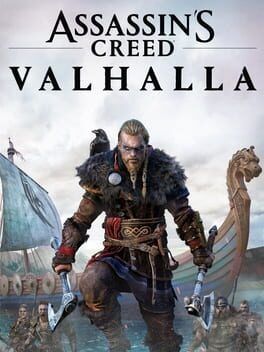
For players, Claude Guillemot’s legacy is not a single quote or public appearance. It is the experience of cresting a hill in Assassin’s Creed Valhalla and seeing a vast world stretch to the horizon. It is the tension of a last operator standing round in Rainbow Six Siege, the first time a family played Just Dance on a living room camera, or the stubborn joy of revisiting Rayman’s colorful worlds decades after release.
Every one of those games relied on a publisher willing to fund ambitious technology, take regional risks and fight to remain independent in a consolidating market. Claude was one of the people who made those choices possible, even if his name was not on the box.
As the industry reflects on his passing, Ubisoft’s early history takes on fresh clarity. A group of brothers who once sold floppy disks by mail helped define how massive, globally coordinated game development works today. Claude Guillemot’s career traced that arc from rural entrepreneurship to big budget spectacle, and the worlds built under his watch will continue to shape what players expect from blockbuster games for years to come.