
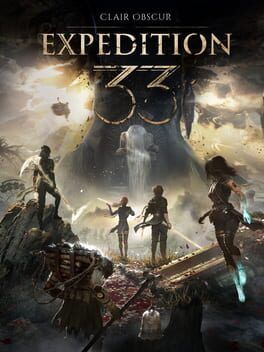

Shuhei Yoshida advised Sandfall and Kepler not to lead with the turn-based RPG label. Expedition 33’s success now exposes how cautious publishers can misread combat trends.
Image: IGDB
Store links: Clair Obscur: Expedition 33 on Steam
A warning that lands differently after the hit
Former PlayStation executive Shuhei Yoshida says he advised the team behind Clair Obscur: Expedition 33 not to market the game primarily as a turn-based RPG because the phrase itself could make players skip past it. The comment, reported from Yoshida’s Busan Indie Connect Festival 2026 lecture by 4Gamer and covered in English by Automaton, VGC, Eurogamer, and IGN, is striking because Expedition 33 later became one of the clearest recent counterarguments to the idea that turn-based combat cannot sell at scale.
Yoshida’s line, as reported by 4Gamer and translated by Automaton, was blunt: “It’s incredibly well-made, but it would be better not to call it a turn-based RPG. That alone might cause players to overlook it.” According to those reports, he gave that advice while working as an advisor to publisher Kepler Interactive, after playing a demo roughly two years before the game’s April 2025 launch.
The tension is not that Yoshida failed to understand the game. By his own account, he was impressed early. The tension is that he understood both the combat system and the market prejudice around its genre label. Clair Obscur: Expedition 33 could be built around turn order, timing, and party tactics, but Yoshida believed the first words used to describe that structure might narrow the audience before anyone saw a parry, dodge, or damage window.
The label Yoshida thought would cost the game attention
Yoshida’s remarks came during a lecture aimed at indie developers about choosing publishers and pitching games, according to Automaton’s account of 4Gamer’s report. In that context, he framed Expedition 33 as a case study in how publishers think about trends. He said publishers that acquire nearly finished games tend to care more about current market trends, while publishers involved earlier in development may be less trend-led because a popular trend can fade before release.
That distinction matters for Clair Obscur: Expedition 33. Yoshida described playing a demo about two years before launch and seeing a battle system that combined turn-based JRPG mechanics with real-time action inputs. Eurogamer and IGN both note that he compared the feel to The Legend of Dragoon, a PlayStation RPG he produced. His objection was not to the underlying system. It was to the sales shorthand.
At the time, Yoshida said turn-based JRPGs were often treated as outdated. VGC’s report says he told Sandfall Interactive the game was very well made, but that calling it a turn-based RPG risked having players ignore it based on the term alone. Automaton reports that the branding was consequently adjusted toward phrases such as “reactive turn-based battles.”
That phrasing did two jobs at once. It kept the turn-based foundation in view, but it moved the emphasis from waiting to responding. For a game whose early footage drew attention partly because its combat looked unusually active for a turn-based RPG, as Eurogamer observed, “reactive” was not empty marketing decoration. It pointed players toward the part of the system that separated Expedition 33 from the slower, menu-forward image some players associate with the genre.
How reactive turn-based battles changed the pitch
The phrase “reactive turn-based battles” works because it describes a hybrid expectation. Based on the reporting, Expedition 33’s combat was presented as a blend of traditional turn order and real-time inputs such as parrying and dodging. Eurogamer describes those real-time mechanics as part of what made the combat one of the game’s most praised elements after release.
For RPG players, that distinction is substantial. A classic turn-based structure asks the player to solve the fight through party composition, resource use, status effects, targeting, sequencing, and build identity. Real-time defensive inputs add another layer: execution becomes part of mitigation, not a replacement for planning. Yoshida’s reported concern was that “turn-based RPG” alone would communicate only the first half of that equation to a skeptical audience.
That is the marketing lesson hidden inside the anecdote. Expedition 33 did not need to pretend it was an action game. It needed to make clear that its turns were not passive pauses between animations. For a player weighing whether to try the game, “reactive” suggests that attention during enemy turns matters, that defense has a timing skill component, and that battles may reward both character building and moment-to-moment reads.
There is a risk in this kind of repositioning. If a publisher softens a genre label too far, the audience that loves that genre can feel dodged rather than courted. In this case, the available reports suggest Kepler and Sandfall threaded that needle by retaining “turn-based” inside the new phrase. The message was not that Expedition 33 was something else. It was that this Expedition 33 RPG had a specific rhythm inside a familiar framework.
The JRPG question was bigger than a combat tag
The debate around Expedition 33 was never only mechanical. VGC cites Famitsu’s pre-release impressions, in which the Japanese publication described Clair Obscur: Expedition 33 as “the best love letter from France to Japanese RPGs,” using machine-translated wording. Famitsu’s write-up, as quoted by VGC, characterized it as a “foreign-made JRPG” influenced by Japanese RPGs, while arguing that it had enough visual quality and scope to stand alongside major works in the genre.
Famitsu’s framing helps explain why Yoshida’s warning was so sensitive. “JRPG” can describe combat lineage, party-driven storytelling, pacing, aesthetics, or a relationship to Japanese design history. Famitsu’s quoted analysis emphasized a difference between Western RPGs that often focus on role-playing within a world and Japanese RPGs that prioritize developer-created characters driving the story forward. In that reading, Expedition 33’s RPG identity was tied to authored characters and narrative momentum as much as combat menus.
That complicates the idea that “turn-based RPG” is a simple descriptor. For some players, it signals strategic clarity and party expression. For others, as Yoshida reportedly warned, it carries a stigma of being old-fashioned. For some JRPG fans, the label is an invitation. For a broader audience trained by years of action-heavy trailers and prestige RPG marketing, it may sound like friction.
Sandfall’s challenge, then, was to communicate lineage without letting a stereotype define the first impression. Expedition 33 could be read as French, Japanese-influenced, turn-based, reactive, cinematic, and systems-led. Marketing had to choose which of those truths opened the door.
The success challenged a publisher reflex
The clearest evidence that the old assumption was incomplete is what happened after launch. Eurogamer reports that Clair Obscur: Expedition 33 sold 3.3 million copies in its first month and reached 5.5 million copies by October 2025. IGN reports that the game received major awards recognition across The Game Awards, BAFTA, DICE, and IGN’s own awards coverage, while Eurogamer says it placed second on the outlet’s 50 best games of 2025 list.
Those figures do not prove that avoiding the plain “turn-based RPG” label caused the game’s success. The sources do not provide a controlled comparison, and player reception depends on many factors, including art direction, story, combat quality, price, release timing, platform availability, subscription placement where applicable, and word of mouth. But Yoshida’s anecdote does show that a respected industry veteran believed the label carried commercial risk, and Expedition 33’s reception shows that the combat style itself was not a ceiling.
Automaton reports another important detail from Yoshida’s lecture: after Expedition 33 became a breakout hit, publishers apparently began receiving a steady stream of pitches for turn-based RPGs. That is the industry reflex in miniature. Before the hit, the tag was something to soften. After the hit, the tag became something other developers could cite.
For anyone who follows RPG publishing, that swing should feel familiar. Publishers often treat genres as cold or hot depending on the most recent visible success. Yoshida’s broader point, according to Automaton, was that chasing trends does not guarantee success. Expedition 33 strengthens that argument because its result can be read in two opposite but compatible ways: the market may underrate turn-based combat, and simply attaching “turn-based” to a pitch after Expedition 33 will not recreate Sandfall’s execution.
A sharper read for players and the next wave of pitches
For players coming to Clair Obscur: Expedition 33 through this renewed discussion, the most useful expectation is the one Yoshida described before release: a battle system rooted in turn-based JRPG mechanics, with real-time action inputs layered into the flow. If the phrase “turn-based RPG” made you imagine static exchanges, the reporting around Yoshida’s demo impressions and Eurogamer’s description of parrying and dodging indicate that Expedition 33 was marketed differently because its combat asked for active defense as well as party planning.
For developers, the lesson is narrower than “hide your genre.” Expedition 33’s case suggests that a pitch should name the player experience, not only the taxonomy. “Turn-based RPG” tells a publisher where to shelve the game. “Reactive turn-based battles” tells a player what they will do during a fight. That difference is especially important for RPGs, where progression systems, encounter pacing, and combat verbs can vary wildly under the same genre umbrella.
For publishers, Yoshida’s warning now reads as both pragmatic and cautionary. He was likely right that some players would have dismissed the game on the label alone, based on his reported comments about stigma at the time. Yet the game’s sales and awards reception, as reported by Eurogamer and IGN, challenge any blanket assumption that turn-based combat is commercially stale. The audience did not reject turns when the system was presented with a clear identity and backed by strong execution.
The unanswered question is whether the next wave of Expedition 33-inspired pitches will learn the right lesson. If publishers only conclude that turn-based RPGs are trendy again, Yoshida’s Busan anecdote becomes another cycle of genre chasing. If they conclude that players respond to precise systems, strong presentation, and honest positioning, then Clair Obscur: Expedition 33 may have done something more durable for JRPG marketing: it made the old label worth interrogating instead of automatically avoiding.