
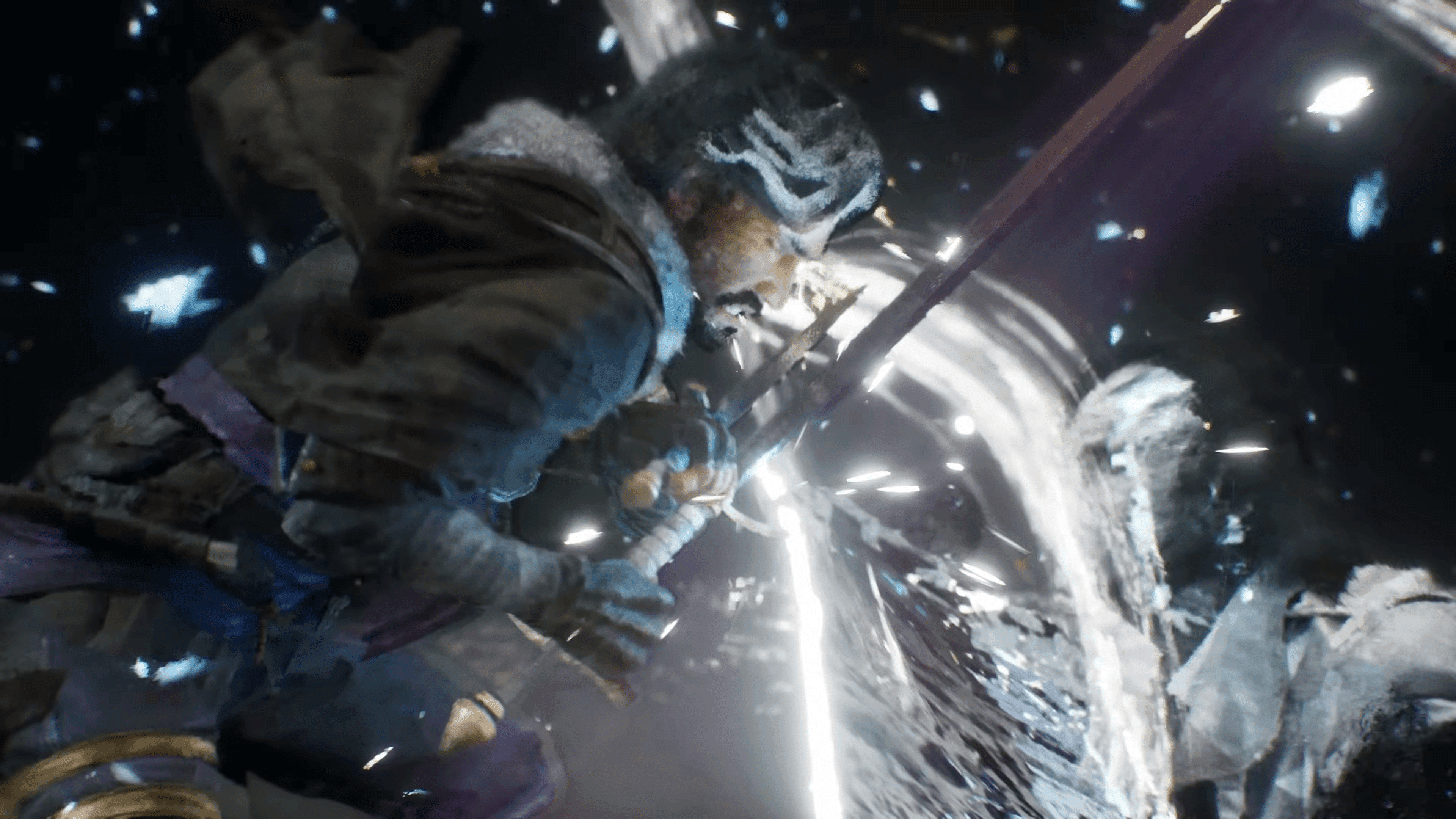
Sandfall Interactive says its follow-up to Clair Obscur: Expedition 33 is too early to detail, but CEO Guillaume Broche wants the small studio to dream again, stay focused, and accept that some players may not follow.
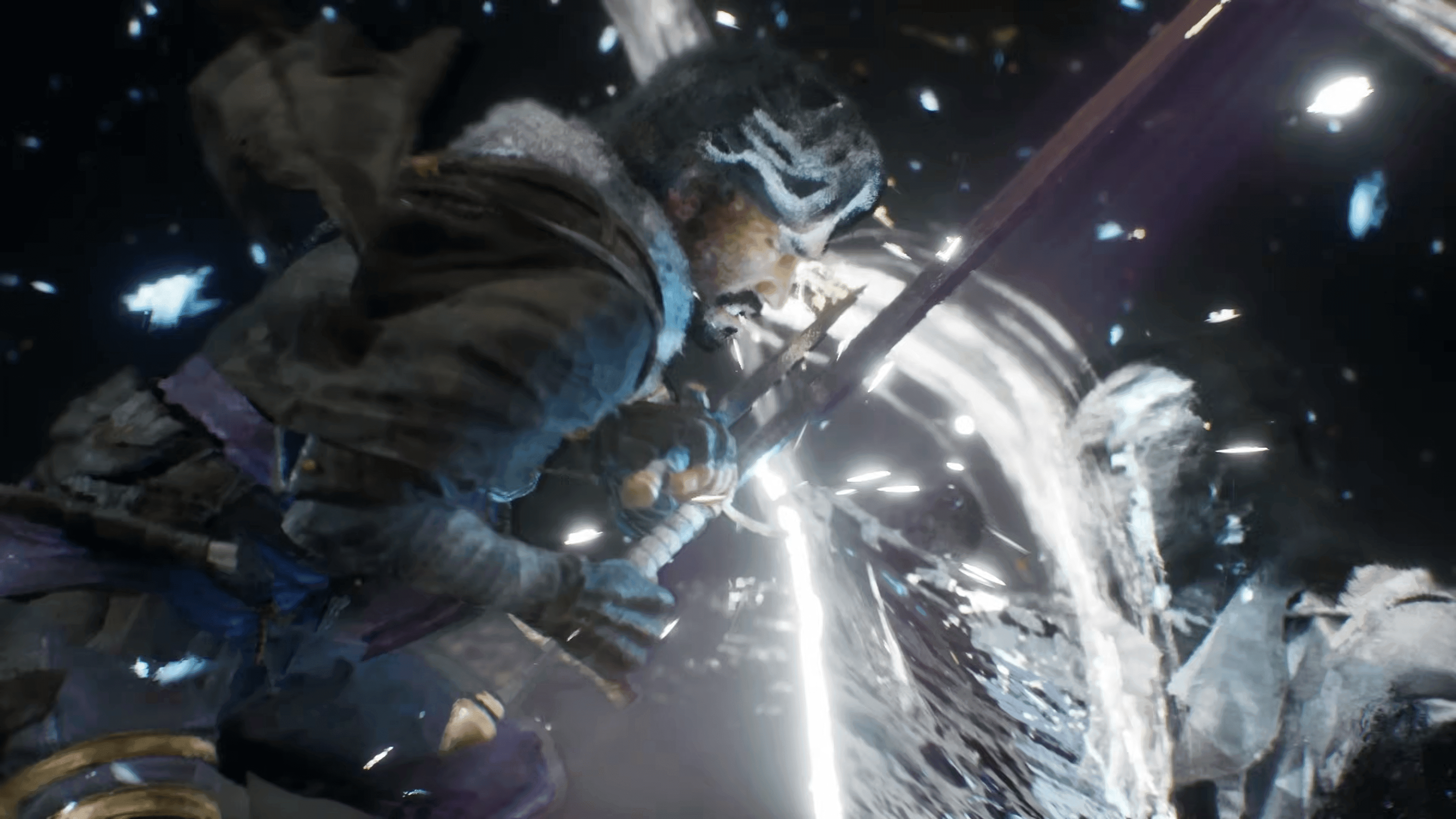
Image: mp1st.com
Sandfall’s follow-up begins with ambition, not a reveal
The clearest update on the Clair Obscur Expedition 33 next game is also a warning against expecting a safe victory lap. In an interview with Automaton, reported by GamingBolt and Push Square, Sandfall Interactive CEO Guillaume Broche said it is “too early to say anything precise” about the studio’s next project, but added that the team wants to “find this flame” it had while making Clair Obscur: Expedition 33. His punchline was the quote that has followed the interview around the RPG community: “We’re going to go a bit crazy.”
That is the concrete development. Sandfall is looking beyond Expedition 33, the next game is not being presented yet in terms of title, genre, platforms, price, release window, or even whether it is a direct sequel, and the studio is framing its follow-up as a creative reset rather than a production-line continuation.
The tension is obvious. Clair Obscur: Expedition 33 became a rare debut RPG that converted strong identity into awards and sales momentum. GamingBolt reported that the game had sold 8 million copies as of April 2026, while other coverage, including Eurogamer earlier in the year, had described its sales in more cautious terms as probably over 6 million at that point. Either way, the sources agree on the shape of the story: Sandfall is no longer an unknown French studio making an ambitious first game in relative obscurity. It is now an RPG developer with an audience waiting to see whether lightning can be designed twice.
Broche is resisting the obvious industry response to a hit
The standard commercial response to a breakout success is expansion. Hire more people, broaden scope, reduce the chance that a sequel misses expected feature checklists, and make the next thing bigger in ways that are easy to market. Broche’s comments push against that instinct.
According to GamingBolt’s account of the Automaton interview, Broche said Sandfall has around 26 employees and that this is “more than enough people for the pre-production of our next project and the things we want to accomplish.” Push Square’s report adds that the next project had yet to enter pre-production, so readers should treat this as an early directional statement rather than a hidden announcement of a game deep in development.
Broche’s argument is that constraints are part of Sandfall’s creative method. He told Automaton, as quoted by GamingBolt, that when a studio has more money “it’s very easy to just bring a lot of people” and chase bigness, including trying to “fix every single little pain point” from Expedition 33. He called that “a big mistake” because “limitations are what breed creativity.”
For RPG fans, that matters in a practical design sense. A small team usually has to make harsher calls about progression economy, quest density, combat variants, animation scope, world size, party structure, and narrative branching. A studio cannot include every build archetype, every relationship route, every dungeon format, and every cinematic flourish without paying for that scope somewhere else. Broche is saying, at least at the level of philosophy, that the Sandfall Interactive next game will be shaped by selection rather than accumulation.
“A bit crazy” does not necessarily mean larger
The phrase “go a bit crazy” can be easy to misread as a promise of sheer scale. The rest of Broche’s interview points somewhere more interesting: creative looseness inside a deliberately narrow container. He said Expedition 33 was a long project, lasting six years for him, five and a half for co-founder Tom Guillermin, and between four and five years for most other team members, according to GamingBolt and Push Square. After that kind of development cycle, “dream again” reads less like a marketing beat and more like a studio trying to avoid becoming trapped by the expectations created by its own first success.
That distinction is important for anyone hoping for a new RPG from Sandfall. A less restrained follow-up could mean stranger combat pacing, riskier party roles, a more abrasive narrative premise, a different approach to character progression, or an entirely different genre framework. None of those possibilities has been confirmed. What has been confirmed is that Broche wants the studio to avoid making choices purely to please an imagined audience.
That attitude also appeared in a separate Konbini Video Game Club interview covered by Polygon and Eurogamer. Broche said, “Maybe people won’t like it. That’s life,” and added that Sandfall “didn’t make the first game to please anyone.” Polygon reported that he sees no reason to change that ethos despite pressure after Expedition 33’s success. NeoGAF’s discussion of the comments, citing GameObserver, focused on Broche’s line that the studio may make “drastic decisions” some players do not like, although the forum thread itself correctly shows the community uncertainty around what those drastic choices refer to.
That uncertainty is the point. There is no confirmed combat system, no confirmed setting, and no announced structure. Sandfall’s public posture is not “we found the formula.” It is closer to “we do not want the formula to become the boss fight.”
The sequel question is still unresolved
The most immediate fan question is whether the Expedition 33 developer is making an Expedition 33 sequel. The provided reports do not confirm one. Polygon noted that Broche has previously described “Clair Obscur” as the franchise name and Expedition 33 as one story within it. Polygon interpreted that as leaving room for an anthology approach in the vein of Final Fantasy, with new worlds and casts across entries, while also noting that a direct return to Expedition 33’s world could require Sandfall to choose a canon ending, something the studio has avoided.
That is interpretation, not an announcement. The confirmed status is narrower: Sandfall is working toward a next project, Broche says the team wants to rediscover the passion that powered Expedition 33, and the studio has not disclosed whether the next game is a direct sequel, a spiritual successor, an anthology entry, or something outside Clair Obscur entirely.
For lore-minded players, that restraint is healthier than it may look. A direct sequel to a choice-sensitive or ending-sensitive RPG can create pressure to flatten ambiguity. An anthology model can preserve a setting’s thematic identity without treating one player’s conclusion as less valid. A new IP can let the studio keep its taste for stylized, authored RPG design without carrying continuity debt. Each path has tradeoffs, and Sandfall has not publicly chosen one.
The safest reading is that the name “Clair Obscur” may have a future beyond Expedition 33, but the shape of that future remains unannounced. Fans should be wary of treating franchise speculation as a confirmed sequel plan.
RPG fans should watch the systems, not only the spectacle
Expedition 33 drew attention partly because it arrived at a moment when turn-based RPGs were once again commanding a large mainstream audience. Eurogamer’s coverage pointed to the game’s cited influences, including Persona 5 for camera work and UI, and Lost Odyssey and Blue Dragon for quick-time mechanics in turn-based battles. That context helps explain why Broche’s comments have landed so strongly with RPG players: Sandfall’s debut was associated with a very specific systems conversation, not simply a visual one.
If the Sandfall Interactive next game is less restrained, the RPG questions become sharper. Will the studio keep a turn-based foundation and push reaction timing further? Will it separate itself from Expedition 33 by changing how parties develop, how equipment creates build identity, or how encounters test player execution? Will “drastic decisions” apply to story structure, combat readability, difficulty tuning, or the relationship between authored characters and player choice?
None of those design moves is confirmed. They are the areas where Broche’s philosophy would become tangible. “Everything has a purpose,” as he told Automaton according to GamingBolt, is an especially demanding standard for RPG design. It implies fewer redundant mechanics, less padding, and stronger pressure on every upgrade path, quest chain, and battle gimmick to justify its place.
That can be thrilling, but it can also be divisive. RPG players often build attachments to friction: a specific menu rhythm, a beloved party composition, a favorite damage type, a late-game class fantasy, a familiar camp structure. A studio that says it is willing to make decisions some people may dislike is implicitly asking fans to accept that the next game may not preserve their personal version of what Expedition 33 should become.
The practical guidance: expect a wait and resist preorder-brain speculation
There is no announced release timing for the Clair Obscur Expedition 33 next game. There are no confirmed platforms. The first game released on PC, PS5, and Xbox Series X/S, according to GamingBolt and Polygon, but that history does not confirm the platform plan for Sandfall’s follow-up. There is no confirmed price, edition structure, performance target, storefront listing, trailer, or upgrade path.
Push Square reported that Broche said the project had yet to enter pre-production, while GamingBolt framed Sandfall’s current 26-person team as sufficient for pre-production and the studio’s intended goals. Taken together, the reporting suggests readers should not expect near-term specifics. Sandfall is publicly talking about philosophy before product details.
That is useful guidance for RPG fans deciding how much emotional energy to spend now. If you want another Expedition 33, the honest answer is that Sandfall has not promised that. If you want another turn-based RPG from the same team, that is also unconfirmed. If you want a studio willing to treat success as permission to take risks rather than a mandate to repeat itself, Broche’s comments are the strongest signal available.
The follow-up to Expedition 33 will be judged eventually on the unglamorous things that make RPGs last: encounter design, progression pressure, quest consequence, pacing, party identity, and whether its strangest ideas become playable systems instead of mood alone. For now, Sandfall is telling players to expect ambition under constraint. That may be exactly where its next risk begins.