
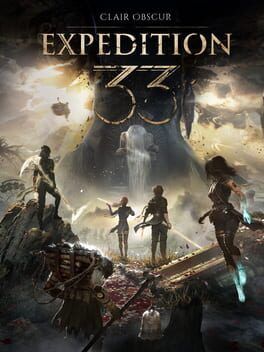
Jennifer Svedberg-Yen has left Sandfall Interactive after shaping Clair Obscur: Expedition 33 from its earliest days. Her next move points to a bigger fight over how narrative games get funded.
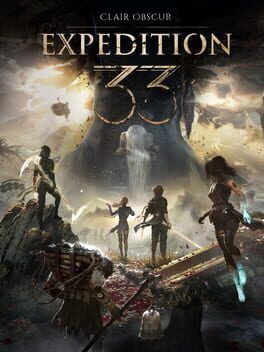
Image: IGDB
Store links: Clair Obscur: Expedition 33 on Steam, Clair Obscur: Expedition 33 – Deluxe Edition on Steam
Jennifer Svedberg-Yen has left Sandfall after finishing Expedition work
Jennifer Svedberg-Yen, the lead narrative designer and lead writer associated with Clair Obscur: Expedition 33, has confirmed that she is no longer with Sandfall Interactive. In a GamesBeat interview cited by Eurogamer, Polygon, VGC, Push Square, and Screen Rant, Svedberg-Yen said, “I left Sandfall in July, after wrapping up some final stuff for Expedition. We’ve parted ways.”
The timing makes the departure sharper. The news surfaced after Svedberg-Yen won a BAFTA Breakthrough US award for her work on Clair Obscur: Expedition 33, according to Eurogamer and VGC. It also lands while Sandfall’s next move is under intense scrutiny, because the studio’s first release became one of 2025’s biggest critical and awards stories. VGC reported that Expedition 33 won Game of the Year at The Game Awards and was the most nominated game in the show’s history. Eurogamer likewise described it as a history-making awards contender.
What is confirmed is simple: Svedberg-Yen left Sandfall in July after final work on Expedition 33. What is not confirmed is equally important. Sandfall has not revealed its next project, its writing team for that project, a release window, platforms, price, or whether Svedberg-Yen contributed any early narrative groundwork before leaving. Push Square noted that unless she had already helped establish that groundwork, she would not be involved in the studio’s next game. That is an inference based on her departure, not an announcement from Sandfall.
Her role began before Sandfall formally existed
This is not a routine staff change for a studio whose identity is already fixed across several releases. Svedberg-Yen told GamesBeat, as quoted by Push Square, that she was “the third person on the team” and that, when she joined, “the team didn’t exist” in its final studio form. She described the earliest version of the project as two Ubisoft developers and herself, before the composer, art director, a third co-founder, and the formal studio structure came into place.
That origin matters because Clair Obscur: Expedition 33 was framed by Svedberg-Yen as a narrative-first game from the start. Push Square quoted her saying, “We came up with the idea together from the very start. It was always, from the very beginning, a narrative-focused game. It’s a narrative-first game.” She also said the creative director’s view was that “Narrative is king.”
For an RPG, that kind of early authorship can shape far more than dialogue. A party-based story lives or dies by when characters join, how combat cadence supports emotional beats, how quests escalate conflict, and whether progression feels tied to the journey rather than laid over it afterward. The sources do not provide a design document or a breakdown of who wrote every scene, so the credit should not be flattened into a single-author myth. Still, the reporting consistently identifies Svedberg-Yen as a foundational creative voice on the game’s story, tone, and characters.
Sandfall’s next project now has a clear narrative question
The open question for Sandfall Interactive is not whether the studio can make another game without Svedberg-Yen. Studios change personnel all the time, and the reported history of Expedition 33 was collaborative. The sharper question is whether Sandfall can preserve the same degree of narrative cohesion on whatever comes next, especially if the studio is working under larger expectations after a breakout success.
Eurogamer previously reported that Sandfall described its guiding “North Star” as its own personal taste and what the team enjoys, rather than fan pressure. The same Eurogamer piece cited Svedberg-Yen’s view that creative works can lose their heart when they are swayed too heavily by trying to please everyone. That position sits in tension with the sequel-era pressure around Clair Obscur. Polygon reported that Sandfall CEO and creative director Guillaume Broche has said Clair Obscur is the franchise name and that the studio wants to tell more stories set in its world. Eurogamer also reported that Expedition 33 is “not the end” of the franchise.
Those statements confirm a future for Clair Obscur as a broader property, but they do not confirm that the next game is a direct sequel, that it will follow Expedition 33’s exact structure, or that it will repeat the same character priorities. For players, the safe read is that Sandfall has signaled more stories in the world while the shape of those stories remains unannounced.
That uncertainty is where Svedberg-Yen’s absence becomes meaningful. If Expedition 33’s identity came from building narrative, art direction, music, and systems around a shared premise from the earliest stage, Sandfall’s next project will need an equally early and equally empowered narrative process. The concern is not whether a new writer can imitate a voice. The concern is whether the production pipeline leaves room for story to steer structure, pacing, and party dynamics before those systems harden.
Svedberg-Yen’s next plan targets the funding gap for story-led games
Svedberg-Yen’s post-Sandfall plans are not limited to writing. In the GamesBeat interview cited by Eurogamer and Polygon, she said she wants to work on her own projects and stories, including projects for film and TV. She also described a plan to build “a narrative investment fund to focus on narrative-focused game creators.”
Eurogamer quoted her explanation of the problem she wants to address: creators often need publisher money to make a demo, but they need a demo to get publisher money. Her proposed fund would help bridge the gap between the seed stage and publisher conversations, giving smaller narrative-focused teams a way to de-risk themselves in the eyes of larger investors.
That is a practical business point, not a vague call for better storytelling. In game development, a narrative-heavy RPG or adventure project can be difficult to pitch if investors see story as a late-stage content layer rather than a production foundation. Svedberg-Yen told GamesBeat, according to Eurogamer and Polygon, that many studios do not know how to integrate narrative into their pipelines and tend to see it too narrowly, even though it can influence many parts of development. She also discussed an incubation component that would help studios develop those narrative foundations.
The phrase “BAFTA game talent fund” may be how some readers search for this story after her BAFTA Breakthrough US recognition, but the sourced material does not describe an official BAFTA fund. What Svedberg-Yen has discussed is her own proposed narrative investment fund and incubation effort, following the visibility created by the BAFTA honor.
The departure also reframes Expedition 33’s awards story
Awards can make a studio look inevitable from the outside. Clair Obscur: Expedition 33’s success, as described across VGC, Eurogamer, and other outlets, has been tied closely to its writing, characters, and emotional impact. Polygon wrote that players enjoyed the old-school turn-based combat and painterly environments, but that the emotional writing was what captivated many of them. Push Square similarly described the story as one of the game’s greatest assets.
Svedberg-Yen’s own comments complicate the usual breakout-hit narrative. She told GamesBeat, as quoted by Push Square, “I don’t think I could have written something like Expedition in my 20s, or even my 30s.” She connected storytelling craft to lived experience, observation, and understanding people. Polygon also reported that she previously discussed how a brief NASA simulation influenced her thinking about the kind of people who would be sent on an expedition.
For a lore-aware RPG audience, that matters because Expedition 33’s appeal has been discussed less as a lore dump and more as a character ensemble shaped by pressure, mortality, and the demands of a mission. The sources do not support claiming that one biographical experience explains the whole game, and they do not give enough detail here to break down specific plot turns. They do support a broader point: Svedberg-Yen’s contribution was rooted in a philosophy that treated character design, group dynamics, and narrative premise as early pillars.
What RPG players should watch before Sandfall’s next reveal
There is no practical buying decision to make yet. Sandfall has not announced the next game’s release timing, platforms, price, editions, upgrade path, or PC requirements in the provided source material. The useful guidance for Clair Obscur: Expedition 33 players is to be careful about assumptions when Sandfall eventually returns with a trailer or teaser.
Do not assume the next Clair Obscur project will carry the same narrative authorship simply because it carries the same franchise name. Do not assume the loss of Jennifer Svedberg-Yen means Sandfall cannot produce another strong story, either. Both readings go beyond the evidence. What can be said is that one of the earliest creative figures behind Expedition 33’s narrative-first approach is no longer at the studio, while Sandfall’s future remains partly framed by its own stated preference to follow internal taste rather than fan pressure.
The most revealing details to watch will be who is leading narrative, when story is discussed in relation to mechanics, and whether Sandfall describes its next game in terms of systems and character arcs together. For RPGs, progression design and storytelling are strongest when they speak the same language: party growth, quest structure, combat rhythm, and world rules all need to reinforce the emotional contract with the player.
Svedberg-Yen’s departure leaves Sandfall with a creative continuity challenge, and her proposed fund points at the industry problem underneath it. Narrative-led games need money early enough for story to shape the build, not late enough to decorate it. Expedition 33 is now the proof point in both directions: a success Sandfall must follow without one of its key narrative founders, and a case study Svedberg-Yen can use as she tries to help the next generation of game storytellers get funded.