
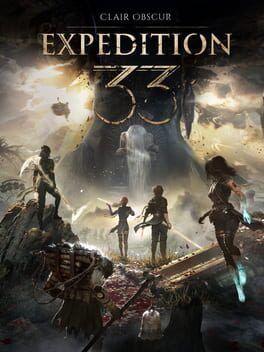

Clair Obscur: Expedition 33 did the impossible, surpassing Elden Ring’s Game of the Year count. Here’s how its combat, art direction, and narrative structure turned a relatively new AA team into record‑breaking RPG heavyweights, and what that means for the future of ambitious mid‑sized games.
Clair Obscur: Expedition 33 did not look like the game that would dethrone Elden Ring.
A debut title from Sandfall Interactive, built by a comparatively small team, positioned as a stylish turn‑based RPG rather than a sweeping open‑world juggernaut, it had all the makings of a cult classic instead of a historic smash. Yet by early 2026, Expedition 33 had done what once felt untouchable: it climbed past FromSoftware’s giant to claim the all‑time record for Game of the Year awards.
Across global outlets, reader polls, and major ceremonies, Sandfall’s first full release amassed 436 GOTY wins, edging out Elden Ring’s 429 and cementing itself as a generational RPG. For a studio that still talks openly about staying “small” and embracing constraints, the achievement is more than a feel‑good story. It is a blueprint for how AA‑scale projects can compete with and even surpass the biggest games in the world.
This is how Clair Obscur: Expedition 33 did it, what critics kept praising again and again, and why its success matters for the future of mid‑sized and indie‑leaning RPGs.
A record built on focus, not scale
Awards tallies are imperfect, but taken in aggregate they reveal what resonated across wildly different audiences. From The Game Awards to the Golden Joystick Awards and a huge spread of outlet‑specific GOTY lists, critics converged on a clear picture of why Expedition 33 stood out.
The common thread was not raw scale. It was focus.
Where most blockbuster RPGs chase bigger maps, denser content, and endless side systems, Expedition 33 narrows in on a few pillars and pushes them as far as possible: a hybrid turn‑based/real‑time combat system, a distinctive Belle Époque‑inspired art direction, and a narrative that folds its structure directly into its core premise of numbered doomsdays.
Sandfall’s creative director Guillaume Broche has spoken openly about avoiding studio bloat even after the game crossed 5 million copies sold. Rather than using its success to chase something “bigger than Expedition 33,” the studio sees limitations as a creative asset. It is an attitude that clearly shaped the game that just broke a GOTY record set by one of the most acclaimed titles of the last decade.
Combat that turns a familiar genre inside out
Turn‑based combat has long been considered a niche taste next to real‑time action, but Expedition 33’s battle system became one of its most praised elements precisely because of how it refuses to sit still.
Instead of static menus and passive waiting, Sandfall fuses classic turn‑based structure with constant, timing‑based interaction. Attacks and defensive moves often require real‑time inputs: carefully timed parries, perfectly spaced dodges, and active reload‑style windows turn what could be a passive loop into something that feels as tense as an action game.
Critics repeatedly highlighted three design choices in particular.
First, enemies signal attacks clearly but not trivially. Telegraphs are readable enough that players feel responsible for their own mistakes, yet varied enough to stay engaging over dozens of hours. Reviewers often compared this rhythm to the mental flow of action combat in Soulslike games, where learning attack patterns and tells is half the fun.
Second, Expedition 33 treats its hybrid system as a storytelling tool rather than a novelty. Your party’s identity as doomed members of an expedition against the mystical Paintress is reflected through mechanics that emphasize risk, sacrifice, and timing. Some high‑impact abilities trade away future safety for present power, while defensive techniques can save a run if executed under pressure. The push and pull of those decisions under real‑time stress helps sell the desperation of fighting against a numbered apocalypse.
Third, the game keeps combat snappy. Sandfall smartly avoids bloat: no fifteen‑layer upgrade webs, no chore‑like trash encounters that sponge time. Encounters are curated, enemy designs are mechanical puzzles as much as stat obstacles, and the game trusts players to keep up. This restraint became a recurring point of praise in reviews that contrasted Expedition 33’s lean combat design with the more diffuse sprawl of typical AAA RPGs.
The result is a battle system that feels both approachable to players who grew up on JRPGs and surprisingly physical to those used to pure action games. That dual appeal is a major part of why the game hit so hard with critics who often have to play every big RPG in a year.
Art direction that makes a smaller world feel monumental
Expedition 33 is not the largest RPG on the market, but through art direction it often feels like it is.
By committing to a highly stylized Belle Époque‑inspired setting, Sandfall sidesteps the visual fatigue that accompanies yet another grim fantasy or photoreal world. The cities, interiors, and battlegrounds channel French architecture, ornate ironwork, and painterly skies, all infused with a faintly surreal, almost theatrical quality. It is fantasy, but filtered through posters, galleries, and grand stages rather than medieval mud.
Critics routinely highlighted two strengths in its presentation.
The first is cohesion. The central myth of the Paintress, whose numbered paintings dictate who dies each year, permeates everything you see. Environments feel curated around that concept: murals, statues, pigments, and canvases recur in level design and enemy silhouettes. Foes often look like paintings broken loose into motion, and major setpieces lean into staged lighting and framing that make them feel like live‑action tableaus.
The second is the use of detail for emotional moments rather than checklist density. Instead of littering the map with collectibles for their own sake, Expedition 33 leans on visual storytelling. A half‑finished mural in a quiet alley, a subdued palette shift as you move closer to the Paintress’s influence, a single room that tells you everything about a doomed character without a word of dialogue. These touches travel well in screenshots and trailers, which certainly helped the game stand out in awards season, but they also make the game feel authored in a way many open worlds do not.
When critics talk about how the game “looks like a big budget RPG” despite its AA roots, what they are responding to is not raw polygon count. It is intentionality. Sandfall picks its visual battles, and it wins them loudly.
A narrative structure that turns countdown into momentum
If Expedition 33 had only great combat and stylish art, it might have been a strong cult favorite. Its GOTY‑dominating reputation, though, is closely tied to how much critics connected with the way its narrative is structured.
The core premise is stark: every year, the mystical Paintress creates a new painting marked with a number. Everyone depicted in that painting dies that year. You are part of Expedition 33, the final mission in a long line of doomed attempts to reach and stop her before she paints number thirty‑three.
That structure gives the game a built‑in countdown, and Sandfall leans into it in several ways reviewers consistently praised.
The story is framed in arcs tied to each step of the journey, with escalating stakes as the number creeps higher and the scope of the Paintress’s work becomes clearer. Each major story beat circles around the question of what it means to live under a literal expiration date. Side characters talk about numbered years the way people talk about birthdays or anniversaries, and the script uses that shared language to build a culture out of its premise.
Critics also called out the game’s willingness to be melodramatic without irony. In a landscape crowded with quippy dialogue and meta jokes, Expedition 33 plays its tragedy straight. Relationships within the party are drawn with broad emotional strokes, then shaded in through quieter vignettes and optional scenes. The structure of the game gives these relationships a visible clock, which makes even simple conversations feel tense and meaningful because time is always running out.
Finally, the narrative pacing benefits from the same restraint that defines the combat and art. Rather than chasing endless quest lines, Expedition 33 chooses a more directed route that most reviewers described as refreshingly concise for a modern RPG. It is long enough to feel like an epic journey, but short enough that the countdown never loses its pull.
That tightness makes the emotional crescendos feel earned. When critics named Expedition 33 their Game of the Year, many referred specifically to how the ending landed, and how the game’s structure ensured that the finale felt like a culmination rather than a fade‑out.
A new template for AA and indie‑scale RPGs
The awards tally is impressive on its own, but for developers working at AA or expanded‑indie scales, Expedition 33’s real legacy may be the design philosophy behind it.
Despite record‑breaking acclaim and millions of copies sold, Sandfall talks about its future in terms that fly in the face of the usual “grow or bust” narrative. The team is not aiming to balloon into a multi‑hundred‑person studio or chase a larger and larger scope. Leadership has said outright that the next game will not be bigger than Expedition 33 and that constraints are good for creativity.
That stance matters for two reasons.
First, it shows that you can achieve top‑of‑the‑industry critical recognition without mimicking AAA production values across every vector. Expedition 33 succeeds by picking a few axes to excel on and aligning everything around them: a combat system that refuses to be passive, an aesthetic that stands out at a glance, and a narrative frame that gives its structure urgency.
Second, it offers an alternative success story for mid‑sized studios. The traditional path for a breakout AA hit is to staff up, chase broader appeal, and slowly morph into the kind of studio that must take on high financial risk to sustain itself. Sandfall’s public commitment to staying lean suggests another route. If your game is built from the ground up around constraints and focus, you can carry that DNA forward instead of abandoning it as soon as you taste success.
For other AA and ambitious indie RPG teams, Expedition 33 is likely to be studied not just as a piece of craft, but as a business and creative case study. Expect to see more games that:
Lean into distinctive, tightly scoped art direction rather than trying to match photoreal blockbusters on their own turf.
Fuse traditional RPG systems with one or two bold mechanical twists that keep players engaged every second rather than every menu.
Tie narrative structure to a clear, high‑concept premise that can shape worldbuilding, pacing, and even combat.
In other words, follow the same playbook: identify a few pillars, build everything around them, and have the discipline to say no to the rest.
Life after a record‑breaking debut
After shipping a “Thank You” update, Sandfall Interactive has already started work on its next game. Details are scarce, but the team’s comments suggest a similar mindset: make what they think is cool, not what a record‑shattering GOTY haul might seem to demand.
That approach may be Expedition 33’s quietest but most important legacy. It proves that a relatively new studio can step onto the biggest stage in the industry without ceasing to be the kind of thoughtful, constraint‑driven team that made their first hit possible.
Elden Ring redefined what an open‑world action RPG could be. Clair Obscur: Expedition 33 now stands beside it as proof that there is another path to the top, one that runs straight through the heart of AA and indie‑scale ambition, where focus, style, and structure can matter more than sheer size.