
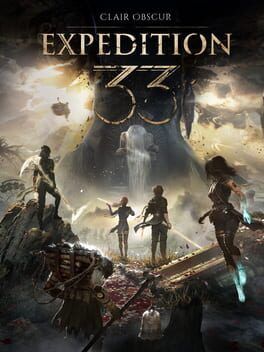
Sandfall’s surprise at players over‑leveling Clair Obscur: Expedition 33’s final boss says a lot about modern JRPG pacing, side content, and why finishing everything before the credits is the new default.
Sandfall Interactive did a lot right with Clair Obscur: Expedition 33’s endgame. It gives you a compact main story, then quietly hides a lavish spread of optional hunts, superbosses, and character quests around the final stretch. On paper, that is a dream for JRPG fans.
In practice, the studio accidentally created one of 2025’s most interesting balancing misfires. A huge portion of players are reaching the final boss heavily over‑leveled, rolling through what was supposed to be a climactic encounter in a couple of turns. Lead designer Michel Nohra has already admitted they “messed up a little” by putting so much great content right next to a final boss tuned for a much leaner critical path.
Taken as a postmortem case study, Expedition 33’s endgame is a sharp snapshot of where modern JRPGs are at: an audience trained by decades of open maps and quest logs to “clear everything” before seeing credits, and designers still trying to reconcile that instinct with hand‑authored difficulty curves.
The final boss that turned into a victory lap
If you follow Expedition 33’s story at a brisk pace, the last boss lands roughly where you expect. Its attack patterns demand real mastery of the game’s blend of turn‑based planning and real‑time parries, and its numbers are calibrated around a reasonable late‑20s to low‑30s party.
That is not how most people are playing.
Across interviews with GamingBolt, GameSpot, PC Gamer and others, Nohra and lead programmer Tom Guillermin describe being caught off guard by just how many players cleaned out the map before stepping into the final dungeon. Optional bosses, lengthy side quest chains, late‑game dungeons that are technically off the critical path: all of that content pours experience and powerful gear into your party. By the time completionist‑leaning players meet the Paintress, their expedition is often so strong that the supposed apex of the game collapses.
From the developers’ side, this was not some cynical way to deliver an easy win. Guillermin has been blunt that they did not expect that level of engagement. They tuned the finale under the assumption that a lot of players would mainline the story. Instead, the opposite happened: the very fact that Expedition 33 turned out “that good” pushed people to squeeze every last drop out of it before they dared to end it.
How the endgame structure quietly invites over‑leveling
The way Expedition 33 structures its late game almost guarantees this outcome.
By Act 3, the main objective narrows to a single clear task that will end the game once you commit. Around that central thread, the map blossoms with optional activities that are very obviously bespoke. These are not throwaway errands. They are new areas with unique enemy types, narrative payoffs for party members, optional bosses with custom mechanics, and systems that only fully unlock here.
Crucially, nothing in the game strongly communicates, “If you do all of this first, the finale will be trivial.” There is no big level recommendation screen bracketing the final dungeon, no explicit warning that you are stepping into victory‑lap territory, and no dynamic scaling on the final boss to respond to outlier parties.
The result is a subtle but important misalignment between structure and tuning. The structure screams: “This is the good stuff, savor it now.” The tuning quietly assumes: “You probably will not do all of this before the boss.” When those two assumptions collide, it is the dramaturgy that suffers. Players feel like they did what the game implicitly encouraged them to do and were punished with an underwhelming ending.
Optional quests as the real climax
The irony is that a lot of Expedition 33’s most demanding and inventive fights sit outside the main path.
Optional hunts and side bosses push its real‑time guard timings and elemental systems much harder than most required encounters. Some of the most memorable battles occur in hidden arenas or tucked‑away regions that only completionists see, and they demand a tighter grasp of build crafting and reaction windows than the final story boss ever does.
When you approach the game this way, the traditional arc flips. Instead of the story climax being the hardest test, the optional gauntlets become the true summit of mechanical difficulty. The final boss, approached at level 40‑plus with late‑game equipment earned from that content, feels more like a curtain call.
This inversion is not unique to Expedition 33. Many modern JRPGs effectively treat side content as a second, parallel difficulty curve that extends beyond the main story. What makes Sandfall’s game a compelling case study is how compressed and visible that curve is. In a relatively short JRPG, where 30 extra hours of optional content sit right beside the final dungeon, it is far easier for players to hit that parallel peak before they roll credits.
A pacing problem born from success
One detail in the developers’ comments stands out. They were not just surprised that players over‑leveled. They were surprised that players loved the game enough to do so.
Nohra has talked about underestimating how strongly people feel the need to “finish everything” before they let a story end, because they know their motivation to mop up drops hard after the credits. That instinct has been conditioned over years by open worlds and checklist‑heavy RPGs. The moment the main story is done, many players’ relationship with a game changes. It is harder to care about a side story when the central question has already been answered.
Expedition 33’s team took that behavior seriously enough to pack most of their best side content into the orbit of the final boss. They wanted players to see it. They simply did not build a difficulty curve or communication layer that assumed players would see almost all of it in a single pre‑ending binge.
Ironically, if the game had been less compelling, their tuning might have worked. A more average JRPG might see players skip half the side content, hit the finale at the projected level band, and walk away thinking the balance was fine. It is the game’s success, and players’ desire to stay in its world, that exposes the cracks in the curve.
What this says about modern JRPG players
The Expedition 33 endgame controversy crystallizes a few broader trends in how people play JRPGs in 2025.
Players are increasingly completionist by default. Widespread trophy and achievement culture, better in‑game tracking, and social spaces filled with guides all nudge players toward “doing it all” on a first run. When a quest log exists, many feel an implicit obligation to clear it before they can consider a game finished.
They also front‑load their engagement. The emotional core of a story sits before the credits, so anything optional that is time‑sensitive or narratively rich feels safest to consume before the ending. Even when developers insist there is post‑game content worth seeing, players often assume that is secondary in quality, or that life will simply pull them away once the story is over.
Finally, players bring expectations from other genres. The rise of Soulslikes, roguelites, and character‑action games has recalibrated what a “final boss” should feel like. Many JRPG fans now anticipate a climactic difficulty spike that demands mastery of every system. When that encounter instead melts under the weight of their completionism, it feels not just easy but out of step with what the genre’s top peers are doing.
Lessons for future difficulty curves
Viewed as a postmortem, Expedition 33’s endgame suggests several design lessons that will likely ripple through Sandfall’s next project and other JRPGs.
First is the need for explicit communication in late game. If your endgame wraps a dense ring of content around a single story trigger, you probably cannot rely on implied pacing. Clearer signalling about level bands, stronger warnings before the point of no return, or even suggested ordering of major side arcs can help players decide how much to bite off before the finale.
Second is rethinking where to place the true mechanical peak. If side bosses are going to be harder than the final story encounter, that needs to be framed as an intentional hierarchy rather than an accident of tuning. Some games do this with labelled superbosses or post‑game trials that are clearly positioned as “beyond the ending.” Expedition 33 blurs that line, putting its toughest tests shoulder‑to‑shoulder with the main finale without clearly marking them as a separate track.
Third is designing systems that give players more control over their challenge level. The fact that some Expedition 33 players resort to “de‑levelling” or self‑imposed restrictions to restore tension suggests a demand for formal options: enemy level scaling toggles, harder difficulty presets that raise damage and HP ceilings across the board, or modular challenge modifiers that can be flipped on before the last act.
Finally, there is the simple but harsh reality that you have to balance around the most engaged players, not the laziest path. Sandfall tuned their final boss for a mainline run that a surprisingly small fraction of the audience actually took. The next wave of JRPGs will likely treat “people will do everything” as the default assumption, then make conscious choices about how to protect their finales from that gravity.
Expedition 33 as a blueprint and a warning
For all of its missteps in endgame tuning, Clair Obscur: Expedition 33 is not a failure of design. If anything, its problem comes from having too much good content bunched up against the last chapter. The side quests are strong enough that players feel compelled to devour them before the end, then discover too late that they have eaten the difficulty curve along with the story.
In that sense, Expedition 33 is a useful blueprint for where the genre is heading. It shows how to build a compact, story‑driven JRPG that respects players’ time while still offering a deep optional layer. It also serves as a cautionary tale about assuming that layer will be consumed in the “right” order.
Modern JRPG players are organizers. They clean their quest logs, wring maps dry, and walk into final bosses with every possible advantage. Sandfall’s next expedition, and the work of every studio watching this conversation, will need to start from that reality. The era of quietly hoping players will leave some side quests for later is over. If the finale is meant to be a high point, it has to be built with completionists in mind from the start.