
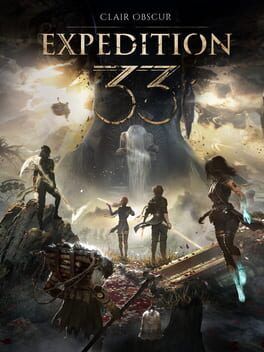

How Sandfall’s breakout RPG rode a French cultural knighthood and record-setting awards buzz into the same conversation as the most decorated role-playing games ever made.
Clair Obscur: Expedition 33 is not just having a good awards season; it is being treated as a watershed moment for both French games and prestige RPGs in general. In late 2024, 28 members of Montpellier studio Sandfall Interactive were made Knights of the Ordre des Arts et des Lettres, one of France’s highest cultural honors usually reserved for long-established artists, authors and filmmakers. That ceremony put the game in a different spotlight than even its record-setting awards run had already achieved, and it raised a provocative question for the industry: is Clair Obscur on track to become one of the few games that can plausibly sweep the so-called “Big Five” game of the year awards?
A cultural knighthood for a first game
The Ordre des Arts et des Lettres is not handed out lightly. Previous honorees from games include figures like Shigeru Miyamoto and Eiji Aonuma, whose careers span decades and whose characters are part of global pop culture. Sandfall’s collective knighthood is striking not only because Clair Obscur is the studio’s debut title, but because the award explicitly recognizes a young team whose average age is barely into the thirties.
At the ceremony, France’s Minister of Culture characterized the recognition as a celebration of a collective rather than a few auteur figures at the top of the credits. She called Clair Obscur “a major moment in the history of French video games,” pointing to its resonance with critics and players around the world and its record performance at The Game Awards, where it pulled in thirteen nominations and nine wins. That is not just a strong showing; it is the kind of tally that recalibrates expectations for what a new RPG IP can do on the awards circuit.
The speech also framed the game as proof that video games are fully accepted within France’s cultural institutions. Games were described as a synthesis of visual art, writing, performance, music and design, and Sandfall’s success was positioned as a case study in how government-backed support for ambitious interactive works can pay off both culturally and commercially. The message for the global industry was clear. A debut RPG about a doomed expedition in a surreal Belle Époque world is now sitting in the same symbolic category as canonical French cinema and literature.
The Big Five: from long shots to a live possibility
Awards season discourse around Clair Obscur has increasingly focused on one very specific achievement: the prospect that it could claim the “Big Five” game of the year trophies from The Game Awards, DICE, BAFTA, the Game Developers Choice Awards and the Golden Joystick Awards. No single title has ever managed to sweep all five in a single year. Even among giants like The Legend of Zelda: Breath of the Wild, The Witcher 3, Elden Ring or Baldur’s Gate 3 there is usually at least one organization that breaks consensus.
In that context, Clair Obscur’s performance so far stands out. Its nine wins at The Game Awards already put it near the summit of year-end recognition. On the critical side, it has landed in the high 80s to low 90s on aggregate sites, backed up by word of mouth that frames it as a rare blend of mechanical precision and emotional storytelling. That consistency across critics and early awards bodies is the foundation that any Big Five bid needs.
Each award body brings its own criteria and preferences. DICE, driven by developers, tends to favor mechanical innovation and polish. BAFTA traditionally rewards strong writing, performance and distinctive art direction. The Game Developers Choice Awards lean into peer recognition of design craft and production bravery, and the Golden Joysticks are heavily influenced by audience sentiment. Clair Obscur’s crossover appeal is that it meaningfully checks every one of those boxes.
The game’s combat system uses a hybrid of turn-based structure with real-time inputs, timing windows and positional play, giving DICE and GDC voters clear mechanical hooks to rally around. Its painterly take on Belle Époque aesthetics, along with orchestral music that has already made the jump to concert halls, gives BAFTA voters a concentrated package of art, audio and performance work. The strong narrative concept of a numbered expedition marching toward an inevitable year of death, delivered through a relatively tight runtime compared with sprawling RPGs, plays well with both critics and players who have limited time.
If there is a risk factor, it is the crowded field in its release window. Any Big Five campaign depends not just on quality, but timing and voter fatigue. Multi-platform launches across PC, PlayStation 5 and Xbox Series X|S give it broad reach, but they also place it directly alongside more established franchises. In that sense, Clair Obscur’s early momentum and the aura of the French cultural knighthood may function as differentiators that keep it at the front of ballot conversations when votes are actually cast.
Situated among RPG royalty
To understand how unusual Clair Obscur’s trajectory is, it helps to situate it among the small club of role-playing games that have achieved comparable critical anointment. The Witcher 3 leveraged years of franchise building and novel adaptations to arrive as a fully formed epic. Breath of the Wild had the weight of the Zelda name and Nintendo’s platform ecosystem. Elden Ring brought together FromSoftware’s established Souls design language with the global profile of George R. R. Martin. Baldur’s Gate 3 rode both the Dungeons & Dragons legacy and Larian’s early access runway.
Clair Obscur has none of those built in advantages. It is a new IP from a new studio operating in an aesthetic and tonal space that is much more niche on paper. Yet it is being spoken of in similar terms within awards coverage. That is partly because of how sharply defined its craft choices are. The visual language is consistent and memorable, filtered through a dreamlike interpretation of French art history. The combat system threads the needle between tactical depth and physical engagement in a way that speaks equally to traditional RPG fans and players who usually prefer action games. The story leans into melancholy and fatalism without sprawling into dozens of half-resolved side plots.
There is also the matter of how the game aligns with the current critical mood around RPGs. After several years of enormous open worlds that often prioritized scale over density, there is a growing appetite for focused adventures that achieve emotional impact in a more curated playtime. Clair Obscur delivers that sense of authored intent. It feels finite and replayable rather than infinite and exhausting. That alone sets it apart from many of its peers and makes it easier for voters at awards bodies to actually finish and fully evaluate.
The reputational halo of institutional recognition
One of the subtler dynamics in awards ecosystems is how institutional honors outside the games industry feed back into perception inside it. The Ordre des Arts et des Lettres ceremony may have been primarily a French cultural event, but its messaging rippled through international coverage. Seeing a national culture ministry talk about a game’s music being performed in philharmonic halls and its narrative treated as a piece of cultural heritage reinforces to global voters that this is a work of capital A art, not just a successful entertainment product.
That kind of framing matters when ballots require voters to make sharp distinctions between a crowded slate of excellent titles. Even seasoned awards jurors are not immune to the signaling effect of national honors, sold out concerts and cross media coverage. Clair Obscur benefits from having become a shorthand for “the elevated RPG” of its year, a role previously occupied by games like Disco Elysium or Planescape: Torment in earlier eras, though it is much more broadly accessible in its systems than either of those.
For Sandfall, the knighthoods also send a message to collaborators and potential hires. Working on Clair Obscur is now an instantly recognizable line on a CV, tagged not only with commercial success but with institutional artistic validation. In a talent market where top RPG designers and artists can pick their projects, that matters for whatever comes after Expedition 33, and by extension for the long term health of the European RPG scene.
Can it actually do the sweep?
So, can Clair Obscur: Expedition 33 truly become the first game to take home all five major game of the year crowns in one season? Statistically, history argues against it. Awards bodies have different compositions and values, and total consensus is rare. Even juggernauts with near universal acclaim have usually met at least one holdout institution.
Yet what makes Clair Obscur worth watching is that it does not rely on any single pillar to drive its case. It is not just the critic favorite that struggles in popular votes, nor only the audience darling that developers side eye. Its strengths are spread across design, performance, art, and emotional effect, and that multidimensional profile is exactly what a Big Five campaign demands.
Whether it achieves the outright sweep or not, the studio has already achieved something arguably more lasting. Between a record haul at one of the industry’s flagship awards shows and a collective cultural knighthood in its home country, Clair Obscur: Expedition 33 has entered the conversation alongside the most decorated RPGs of the last decade. For a first outing, that places Sandfall Interactive in remarkably rare company, and it ensures that the next chapter in its awards story will be watched closely by peers and competitors alike.