
How Clair Obscur: Expedition 33 turned a stylish debut into a BAFTA Best Game winner, and what that momentum means for its commercial and cultural life in 2026 and beyond.
In a year stacked with prestige sequels and heavyweight indies, Clair Obscur: Expedition 33 walking away with BAFTA’s Best Game award in 2026 feels like more than a simple trophy win. It reads like a verdict on the future of the game, a signal that Sandfall Interactive’s debut has the kind of staying power most new IPs can only dream of.
BAFTA’s Best Game category tends to reward experiences that feel definitive for their moment. To join past winners is to be quietly canonised as one of the medium’s touchstones. For Clair Obscur to do that while also taking Debut Game and a performance award for Jennifer English suggests critics and jurors see it not just as a strong first impression, but as a foundational work that will be talked about for years.
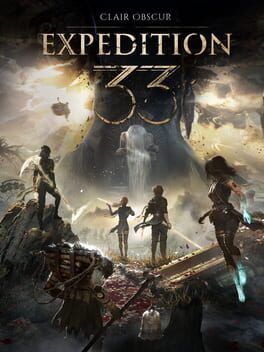
Part of that lasting appeal comes from how sharply Clair Obscur stands out in the current RPG landscape. Its Belle Époque inspired world of ornate balconies, fractured skylines and painterly architecture gives it an immediate visual identity. In an era of high fantasy and post-apocalyptic worlds, this romantic yet melancholic vision of a doomed city caught in a ritual of cyclical death feels distinct and instantly recognisable. Awards bodies respond to that sense of authorship, and so do players, who now have a strong shorthand for the game’s tone and setting.
The combat system has been another pillar of its critical momentum. On paper it is a traditional turn-based RPG, but the real-time timing windows, parries and aimed abilities pull in reflexes and spatial awareness usually reserved for action games. That hybrid design solves a problem many modern RPGs wrestle with: how to keep battles engaging for the full span of a long campaign without sacrificing depth or clarity. It is the sort of mechanical idea that ages well, because it feels both approachable today and flexible enough to inspire riffs and iterations in future games.
Then there is the story, which has quietly become the heart of most post-release discussion. Expedition 33’s march toward the Paintress and the looming certainty that the 33rd cycle is the last gives the narrative a ticking-clock structure that critics have latched onto. Rather than leaning on simple plot twists, the game invites players into a meditation on fatalism and resistance, on whether meaning can exist when doom feels inevitable. Those themes have proven incredibly timely in a cultural moment defined by climate anxiety and social uncertainty, giving the story a resonance that goes beyond the bounds of fantasy worldbuilding.
Jennifer English’s BAFTA win for Performer in a Leading Role crystallises how central character work is to the game’s identity. Her performance gives the protagonist a weary determination that grounds the more operatic story beats. In awards circles, strong acting is increasingly treated as a marker of prestige, the way standout cinematography or score once were. That a new RPG could walk into that space and claim a major performance prize suggests the characters of Clair Obscur will be remembered, quoted and revisited long after the last credits roll.
All of this feeds into the question of longevity. Awards recognition does not just validate what the game already is; it actively extends what the game can be. A BAFTA sweep in 2026 arrives at a crucial moment in Expedition 33’s life cycle. Post-launch word of mouth is still building, late adopters are deciding what to play next, and storefronts, subscription services and platform holders are curating their libraries for the year ahead. Best Game and Debut Game give Clair Obscur the kind of recommendation that cuts through the noise for years, not weeks.
Commercially, that matters. BAFTA winners often enjoy long sales tails, as their names become regular fixtures in seasonal sales, platform showcases and subscription catalogs. For a new IP, that extended runway can mean a larger, more stable player base, which in turn justifies deeper support. Extra patches, performance passes, quality-of-life updates and possibly content expansions all become easier to greenlight when there is evidence the audience is still growing months or even years after release. Awards do not guarantee that support, but they stack the odds heavily in its favor.
Culturally, the BAFTA coronation positions Clair Obscur as one of the reference points future RPGs will be measured against. Developers and critics will cite its combat, its art direction and its structure when pitching or reviewing new projects. That kind of influence is not an abstract accolade; it keeps the game alive in the discourse. When a later title borrows Expedition 33’s fusion of theatrical staging and tactical play, players will be nudged back toward the original, curious to see the blueprint for themselves.
The timing of the win in 2026 is also pivotal for Sandfall Interactive. As a debut studio with a breakout hit, the team now has leverage to shape its next move. Whether the future is a direct sequel, another story in the same universe or something entirely new, the BAFTA recognition gives investors and publishers concrete proof that audiences will show up for their work. That financial and creative confidence often leads to richer follow ups, which in turn keep the original game in circulation as the starting chapter of a larger body of work.
With Expedition 33, BAFTA voters have essentially signaled that this is not a game to be swept away by the next release cycle. It is a title built to be revisited, taught in game design courses, highlighted in “all time great” retrospectives and written about long after the news cycle has moved on. For a richly atmospheric RPG about a world trapped in repeating endings, there is a certain poetry in seeing it escape the usual limits of a single launch window.
As 2026 rolls on, Clair Obscur: Expedition 33’s Best Game win will likely function as a kind of passport, carrying it into new players’ libraries and new critical conversations. The jury’s verdict is in: this is not just one of the year’s finest games, but one of its most durable. Awards have given it a longer life. What players do with that time, and what Sandfall does next, will determine just how far this expedition ultimately goes.