
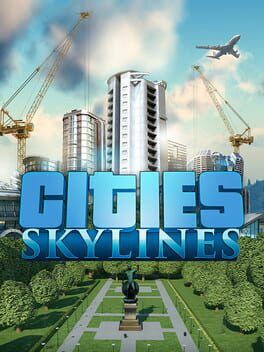
Paradox is celebrating 11 years of Cities: Skylines with a new Race Day expansion for the original game and creator packs for Cities: Skylines 2. Here is what the content actually adds and what the dual‑support strategy means for PC and console city‑builder fans heading into 2026.
Cities: Skylines has quietly become one of the longest running city builders in modern PC gaming, and its 11th anniversary is anything but a low‑key milestone. Instead of just a discount and a commemorative logo, Paradox is using the moment to do something unusual: launch a substantial new expansion for the original Cities: Skylines while also pushing fresh content to Cities: Skylines 2.
It is a split strategy that says a lot about where the series really is in 2026, and what city‑builder fans can expect over the next year.
Race Day brings one last big party to the original Cities: Skylines
The headline announcement is Race Day, a full expansion for the 2015 Cities: Skylines. Developed by Tantalus Media in collaboration with Paradox, it lands on March 10 and is the first proper expansion for the original game in years.
Race Day turns your usually sensible metropolis into a festival city. The core idea is simple: you can temporarily hand your road network over to spectacle. Motor races carve high‑speed routes through business districts, while running and cycling events snake their way through parks and waterfronts. Streets pack with cheering crowds, and the city shifts from commuting machine to entertainment venue.
On a mechanical level, Race Day is about large scheduled events layered on top of familiar traffic management. Designing a race circuit that feels spectacular but does not completely paralyse your city becomes a new kind of puzzle. You still need functional detours, police coverage and public transport to soak up diverted commuters and incoming tourists.
It is also tapping into a fantasy the base game only hinted at. People have long created ad‑hoc marathons or race circuits with mods and imagination. Race Day formalises that idea, gives it custom venues and systems, and lets mayors lean hard into their inner Vegas architect.
Outside the races themselves, the anniversary update for Cities: Skylines adds a few notable tools. Roadside fences offer extra control over how roads integrate with neighbourhoods, and an Employment Info View gives a much clearer picture of where citizens work and how effectively different districts are absorbing jobs. For a game so obsessed with traffic and land value loops, better visibility into employment finally closes a strange data gap.
Alongside Race Day, Paradox is also pushing two new Content Creator Packs for the original game, Iconic Brutalism and Renewed History, plus the 8 Gear Radio station. Combined in the Race Day Bundle or picked up one by one, they make this feel less like a token send‑off and more like a genuine late‑life expansion cycle.
Cities: Skylines 2 gets creator packs instead of a big expansion
On the Cities: Skylines 2 side, March 18 brings a different style of content. Rather than a Race Day‑sized expansion, the sequel is getting two Creator Packs and a pair of radio stations, bundled with a free anniversary patch.
Office Evolution focuses on the look and feel of your business districts. It adds a spread of office buildings that chart the visual jump from older, more traditional blocks to ultra‑modern glass and steel. For a game that leans heavily on its skyline, giving mayors more control over aesthetic progression is a clever, low‑risk way to make cities feel more lived‑in and less generically modern right out of the gate.
City Stations goes after one of the series’ core strengths: transport. The pack introduces compact depots, rail yards and revamped multi‑modal hubs. These smaller, denser facilities should help players create more intricate transit networks without devoting half a district to one mega‑station, which has been a sore point for some since launch.
Two new radio stations, Smooth Vibes FM and Skyrail Radio, round out the paid content. It is flavour more than systems, but it supports the game’s pleasant “build and listen” loop.
The more important part for many players is the free anniversary patch. It adds the Iceflake Arena signature building, a nod to Iceflake Studios taking over Cities: Skylines 2 development from Colossal Order, and continues the slow clean‑up of the sequel’s systems. Improvements to toggle zoning and another batch of bug fixes suggest that Paradox still sees the long‑term future of the franchise in this sequel, even if the road there has been far rockier than planned.
Why both games are getting content in 2026
The twin anniversary drops only make sense in the context of Cities: Skylines 2’s troubled launch and a PC audience that never really left the original game.
Cities: Skylines 1 remains stable, deeply moddable and absolutely stuffed with DLC. It is where thousands of custom assets and workshop cities live, it runs well on mid‑range hardware, and console and cloud versions have a huge installed base. For many players, especially on console or lower‑spec PCs, it is not a legacy product. It is the city‑builder.
Cities: Skylines 2, on the other hand, launched with performance issues and incomplete systems. Colossal Order and Paradox have spent the past year patching, rebalancing and communicating roadmaps, culminating in Colossal Order stepping away from active development and Iceflake taking the reins at the start of 2026. In that context, rushing out big, complex expansions for the sequel would risk repeating old mistakes.
So Paradox is effectively running the series as a two‑tier ecosystem. The original Cities: Skylines acts as the stable, content‑rich platform that can justify an old‑school expansion like Race Day. Cities: Skylines 2 receives smaller, more modular creator packs and targeted patches that can ship without destabilising performance.
It is a pragmatic acknowledgement that the “old” game is still where a lot of the audience actually plays, while the “new” game is still in rehabilitation.
What this means for PC city‑builder fans
On PC, the 11th anniversary strategy creates a clear split in how you might approach the series in 2026.
If you are already deep into Cities: Skylines 1, Race Day is less about starting fresh and more about remodelling your favourite cities around event tourism. Long‑running saves that already perfected traffic can suddenly host motor grands prix or city‑wide marathons, and the new Employment Info View gives veterans a reason to dive back into their economy graphs.
For newcomers pulled in by the free Steam weekend, the decision is trickier. The original game plus a decade of DLC still offers the most polished city‑builder sandbox on PC, especially if you enjoy modding and granular traffic optimisation. Cities: Skylines 2 has the more advanced simulation under the hood, but its content offering is thinner and it remains a moving target as Iceflake iterates.
The new creator packs for Cities: Skylines 2 feel aimed squarely at players who already committed and want better looking skylines and more detailed transit options, rather than at people deciding which game to buy. If you were waiting for a massive, game‑changing expansion, March’s announcements are not it. They are more like a statement: the sequel is still alive, but the original is not being retired.
What this means for console players
Console players sit in a different place than the core PC audience. The original Cities: Skylines has native versions on PlayStation, Xbox and Switch (plus the Remastered editions on newer hardware), and its DLC cadence on console has usually lagged behind PC but still delivered a substantial library.
The Race Day expansion and its associated creator packs fit neatly into that established pipeline. They are the kind of discrete, feature‑rich DLC drops that console storefronts are built around, and they give existing console mayors something tangible and exciting to buy without needing a hardware upgrade.
Cities: Skylines 2’s console release, in contrast, was delayed and then pushed back again after the PC launch struggles. By the time Iceflake’s 2026 updates land, the console audience will likely be looking at an either‑or choice that PC players do not have to make. On PC, you can keep both installed and treat them as parallel sandboxes. On console, the sequel has to be stable and clearly better out of the box if it is going to pull players away from the older game and its now‑considerable DLC catalogue.
In that light, Paradox’s decision to keep building substantial content for the original looks almost like risk management. If Cities: Skylines 2’s console versions need more time in the oven, they can still sell fresh content to the existing console player base through Race Day and beyond.
The bigger picture: a live‑service city‑builder
Step back from the specifics and the 11th anniversary lineup reads like a manifesto for how Paradox wants this franchise to operate long‑term. The original Cities: Skylines refuses to “age out,” and its expansion subscription on Steam is even dropping in price, making it easier to treat the game as a long‑lived platform rather than a boxed product. Race Day is proof that, a decade on, full‑fat expansions are still viable if your player base is large and engaged enough.
Cities: Skylines 2, meanwhile, is shifting toward a more cautious, iterative model. Smaller creator packs and steady patches give Paradox flexibility. If Iceflake’s work lands well and performance stabilises, those packs can ramp up into larger expansions later. If it does not, the company still has a thriving first game with an enormous library of content to lean on.
For city‑builder fans, that means 2026 is less about one definitive “next‑gen” upgrade and more about choosing which flavour of Cities suits you. Race Day might be the last big hurrah for a classic, or it might just be a sign that retirement is not coming any time soon. Either way, the 11th anniversary confirms one thing: for Paradox, Cities is not a single game on a release timeline. It is an ongoing city‑building platform spread across generations, and both halves are being kept very much alive.