
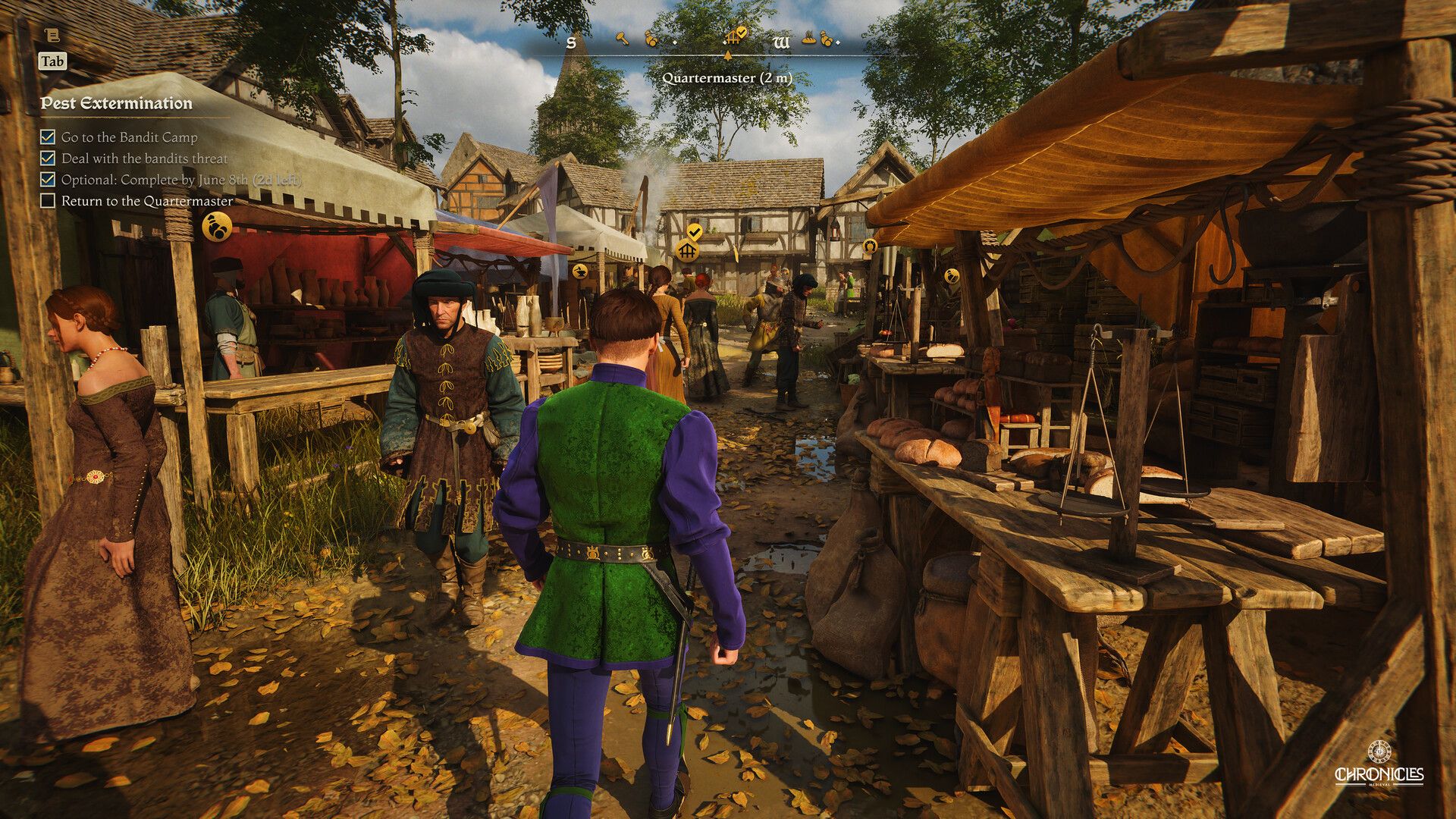

Chronicles: Medieval development continues after Raw Power Games’ bankruptcy, but Coffee Stain’s acquisition leaves key questions about scope, staffing, and the 2027 Steam target.
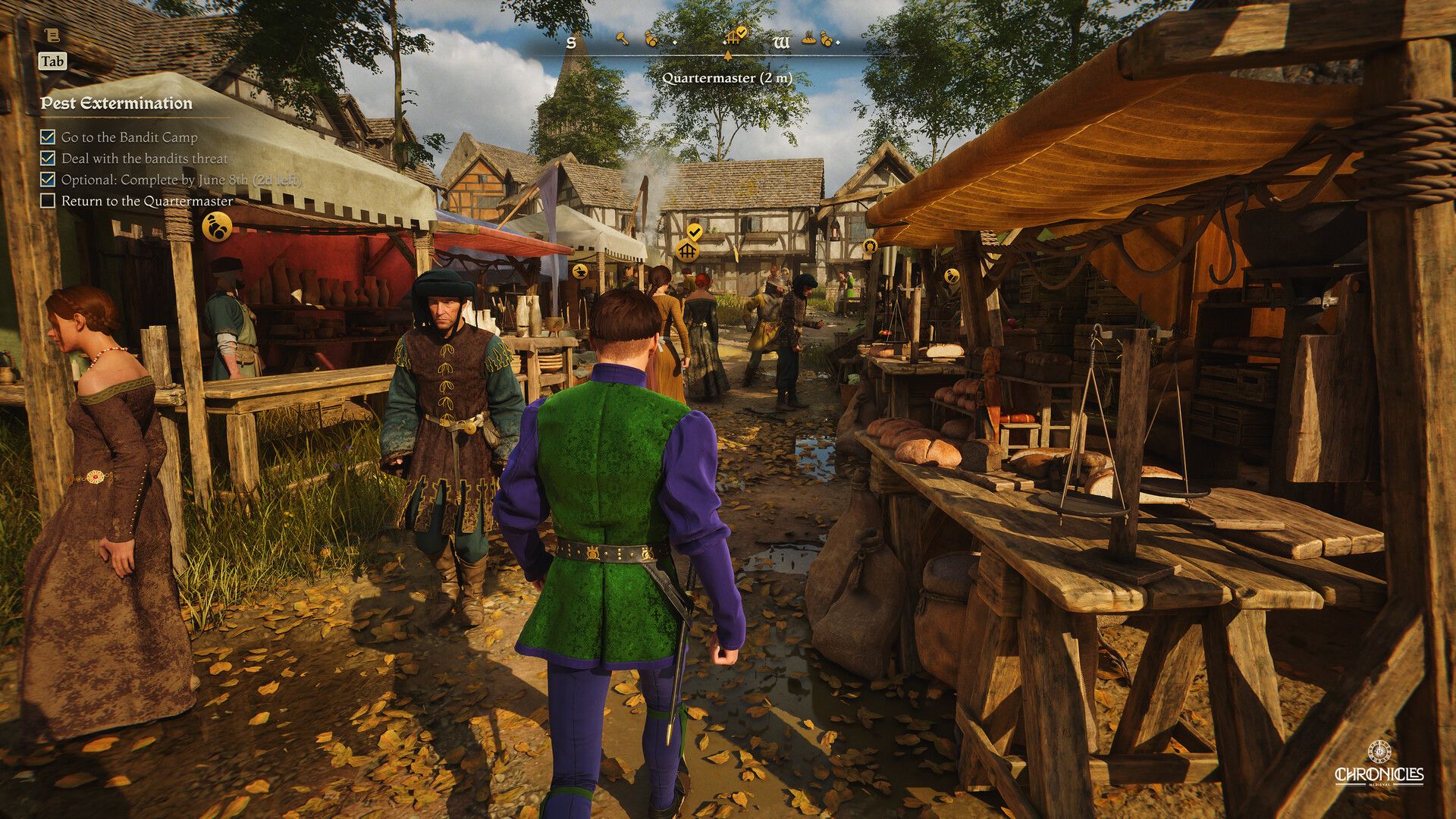
Image: spielemagazin.de
Coffee Stain has bought a bankrupt strategy project, not a finished rescue story
Chronicles: Medieval has a path forward after a sharp collapse in funding, but the rescue comes with unusual timing and several unresolved production questions. Coffee Stain Group announced on November 14 that it has entered into an agreement to acquire the intellectual property rights and related assets for Chronicles: Medieval from the bankruptcy estate of Raw Power Games. The purchase price is DKK 36.75 million in cash, which PCGamesN converts to about $5.42 million.
The key tension is that Raw Power Games, the Copenhagen studio behind the medieval strategy sandbox, was declared bankrupt on October 30, according to Coffee Stain’s own regulatory release. PC Gamer and BestGamesWorld report that this was the same day Raw Power announced it no longer had the funding needed to continue and faced a real risk of closing. That means the public warning and the legal bankruptcy process appear to have landed together, rather than after a long public wind-down.
Coffee Stain says the bankruptcy estate then ran a sale process for the studio’s assets, and Coffee Stain submitted the winning bid. That makes the current story less a standard publishing deal and closer to a post-bankruptcy asset acquisition: the game survives, but through a new corporate structure, a new funding source, and a development plan that has not yet been fully explained.
The new company structure keeps some original developers involved
Coffee Stain is not simply absorbing Chronicles: Medieval into an existing internal studio, at least not according to the announced structure. The assets will be acquired by a newly established company owned 75% by Coffee Stain and 25% by “a small group of key members of the game’s original development team,” Coffee Stain says.
That detail matters because strategy sandboxes are unusually dependent on institutional knowledge. Systems such as campaign simulation, battle AI, economy loops, morale, diplomacy, and character progression can be difficult to hand over cleanly if the people who understand the underlying design leave the building. Coffee Stain’s announcement confirms that some key original developers are attached to the new company, but it does not identify them, say how many are involved, or explain what happens to the rest of Raw Power’s staff.
Coffee Stain CEO Anton Westbergh said Chronicles: Medieval made a strong impression at its Summer Game Fest reveal and described it as having a chance to become “a strong long-term IP” for the group. He also said the short-term focus is figuring out “how best to complete the game” with the new company’s management team. That phrasing is important. Coffee Stain has committed to funding continued development, but it has not yet committed publicly to the same scope, schedule, or team size players may have assumed before the bankruptcy.
Development continues, but the 2027 target is still a question mark
The cleanest confirmed answer for players is that Chronicles: Medieval development continues. Coffee Stain says it will fund the full purchase price for the assets and the continued development of the game. TechRaptor also reports that cancellation fears are no longer the immediate concern after Coffee Stain’s winning bid.
The less settled answer is timing. Coffee Stain’s release says the game’s Steam page currently states a 2027 release window, and PCGamesN reports that the 2027 date remains provisionally in place. BestGamesWorld adds that the Steam page still lists an early access release in 2027. Coffee Stain has not confirmed whether the acquisition changes that target, saying further information about plans for the game, including the release timeline, will be communicated through the game’s own channels in due course.
For players tracking the Chronicles Medieval bankruptcy story, that distinction is the difference between “saved” and “scheduled.” The IP has been saved from the bankruptcy estate, and Coffee Stain has put real money behind it. The production plan, staffing model, and launch cadence are still pending. Until Coffee Stain or the new company updates the game’s channels, the 2027 window should be treated as a current store-page signal rather than a newly reaffirmed milestone.
Why the funding lifeline fits Coffee Stain’s portfolio
The Coffee Stain Chronicles Medieval deal makes strategic sense on paper. Coffee Stain Group includes both development and publishing operations, and PCGamesN points to its association with Satisfactory, Goat Simulator, Deep Rock Galactic, and Songs of Conquest. That history does not guarantee a clean delivery for Chronicles: Medieval, but it explains why Coffee Stain might see value in a systems-heavy game with long-tail potential.
Coffee Stain’s own language points in that direction. The company says Chronicles: Medieval “ticks many of the boxes” it considers fundamental for a great game and frames it as a possible long-term IP. The announced plan also starts conservatively: Coffee Stain says the new company begins with a limited cost base that is expected to increase gradually as the studio takes shape. In other words, this is not being described as an instant full-scale rebuild. It is being described as a staged restart.
From a strategy player’s perspective, that staged approach cuts both ways. A smaller cost base can protect the project from burning through money before the new team has stabilized. It can also imply a period of triage, where the new company decides which systems are essential for launch and which ambitions may need to wait. For a medieval strategy game promising character-driven sandbox play, large-scale battles, politics, trade, tournaments, and diplomacy, scope control may be the most important design decision after the funding itself.
The ambitious pitch is exactly where fans should apply pressure
Chronicles: Medieval has drawn attention because its pitch sits at the crossroads of several demanding genres. PCGamesN describes it as an upcoming historical sandbox game with deep roleplaying elements, evolving sandbox storytelling, character creation, backstory choices, occupations, talents, and skills. The same reporting points to trade, tournaments, diplomacy, politics, and a path toward power, with large-scale battles that can include thousands of soldiers.
That combination is exciting, but it is also where medieval strategy games often live or die. A campaign layer with politics and economy needs predictable rules that players can read. A character-driven sandbox needs enough authored and systemic events to avoid feeling empty. A battle layer with thousands of troops needs performance, AI, morale, formation behavior, and readable command feedback. If any one layer dominates the budget, the rest can become decorative.
Coffee Stain has not announced changes to the design, but its statement that the immediate focus is working out how best to complete the game suggests the new company must now turn an ambitious vision into a deliverable production plan. Fans should watch for concrete design updates rather than broad promises. The most useful signals will be whether Coffee Stain shows how campaign decisions affect battles, how player occupation and skills shape progression, how diplomacy and trade interact, and how large battles perform in real gameplay conditions.
The Steam wishlist signal is strong, but it should not be mistaken for stability
Coffee Stain says Chronicles: Medieval ranks among the top 30 most wishlisted games on Steam as of its November 14 announcement, while PCGamesN reports it had reached number 26 on Steam’s most-wishlisted chart. That is a meaningful commercial signal. A high wishlist position can help a game attract attention, prove demand, and justify continued investment.
It does not, by itself, solve the production risks exposed by the bankruptcy. Wishlists measure interest, not readiness. The game’s assets have changed hands through a bankruptcy estate. A new company is being formed. Some key original developers are involved, but the wider staffing picture is unannounced. The launch timing remains subject to future communication. For a sandbox strategy game, those unknowns matter because feature integration tends to be the expensive part, not the announcement trailer.
That is the practical advice before wishlisting or treating a wishlist as a buy signal: follow the next development updates for evidence of execution. A Steam page retaining a 2027 window is useful information, but a post-acquisition roadmap, named leadership, updated gameplay footage, system breakdowns, and early access scope would tell players far more about the project’s health. If Coffee Stain keeps the 2027 early access target, the next question is what version of Chronicles: Medieval will be ready for that date.
What is confirmed, and what remains unannounced
The confirmed facts are substantial. Coffee Stain has entered into an agreement to acquire the Chronicles: Medieval IP and related assets from Raw Power Games’ bankruptcy estate. The price is DKK 36.75 million in cash. Raw Power Games was declared bankrupt on October 30, according to Coffee Stain. A new company will hold the assets, with Coffee Stain owning 75% and a small group of key original development members owning 25%. Coffee Stain will fund continued development, and the transaction is expected to complete when the purchase price is paid to the bankruptcy estate in the coming weeks.
The unannounced parts are equally important for players. Coffee Stain has not named the key developers involved, confirmed how much of Raw Power’s staff will transfer, locked down a release date beyond the current Steam-page 2027 window, detailed platform plans beyond the Steam context cited in the announcement, announced a price, or explained whether the game’s scope will change after the bankruptcy.
For now, the best read is cautiously positive. The Chronicles Medieval funding problem has a real financial answer, and Coffee Stain’s involvement gives the project a stronger chance than it had when Raw Power’s funding collapsed. But for a medieval strategy game built on interlocking systems, the rescue is the opening move. The campaign will be decided by staffing, scope discipline, and whether the new company can turn a high-wishlist concept into a playable, coherent early access launch.