
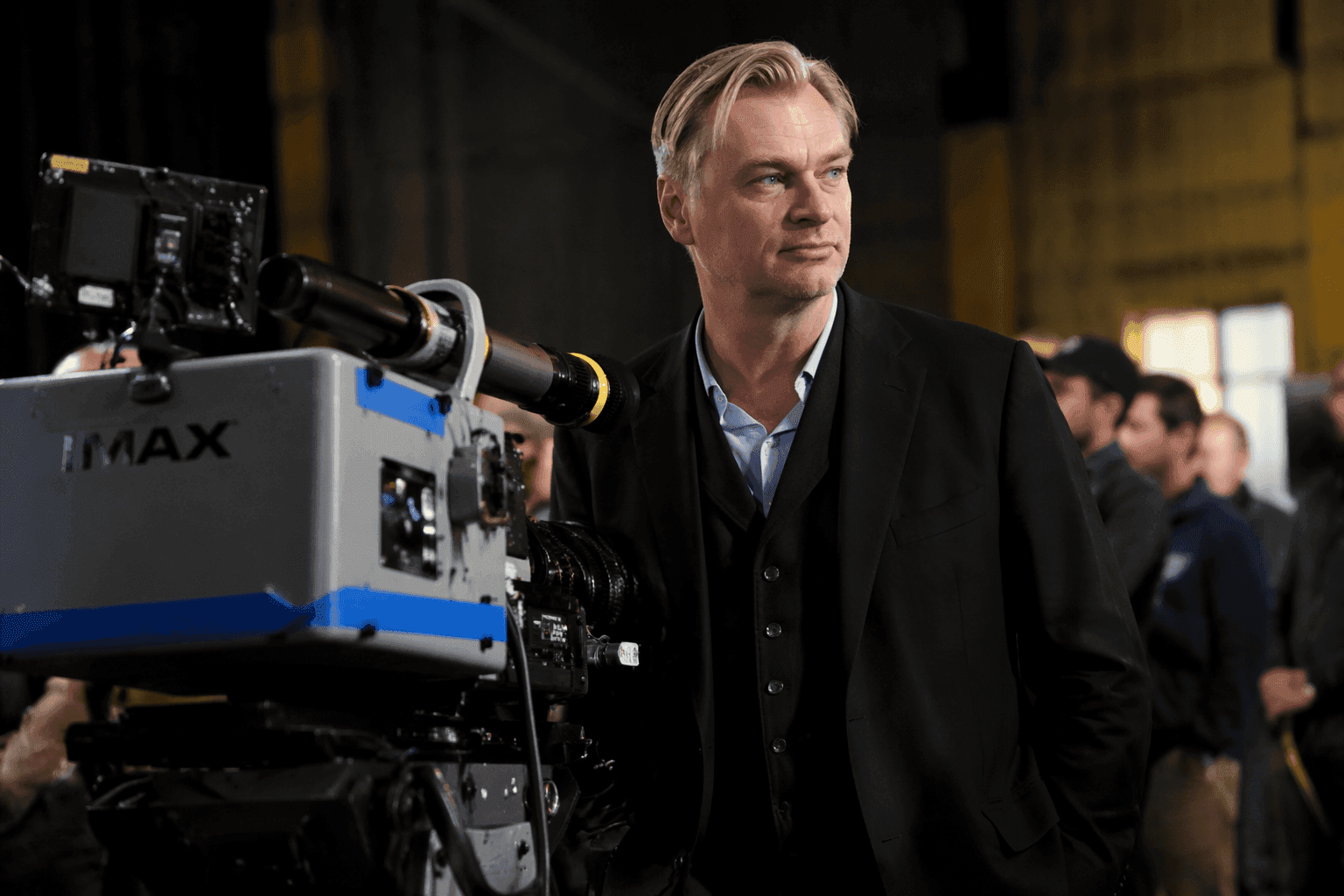

Christopher Nolan says younger audiences are rapidly rejecting AI slop. For games, the Backrooms praise points to a trust problem around synthetic-looking trailers, adaptations, and marketing.
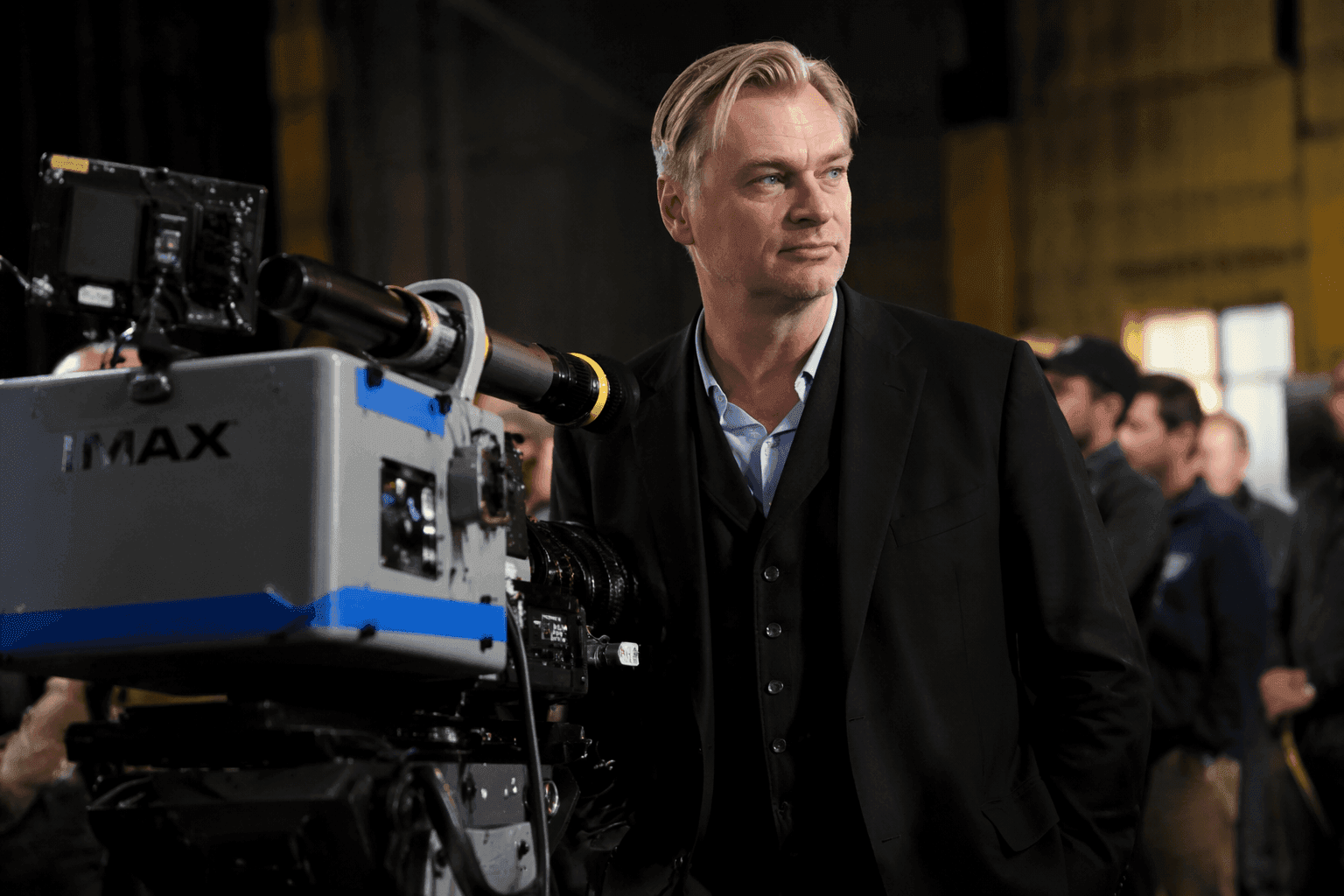
Image: prismnews.com
Nolan’s AI warning lands squarely in the trailer era
Christopher Nolan has put a blunt phrase around a sentiment many game audiences have been acting on for years: if something looks synthetic, young viewers catch it fast and judge it faster. In an interview with The Telegraph, as quoted by IGN, Deadline, Kotaku, PC Gamer, The Hollywood Reporter, and a widely shared Culture Crave post on X, Nolan said younger audiences are “utterly rejecting” AI and that their judgment of “AI slop” has been “immediate and harsh.”
The concrete news is film-side. Nolan was promoting The Odyssey, which IGN says was one week from its July 17, 2026 theatrical release when it covered the interview. He praised recent low-budget horror successes Backrooms and Obsession, both cited by IGN as films that drew attention for practical effects and sets. Deadline also reported that Nolan praised Obsession director Curry Barker and Backrooms filmmaker Kane Parsons for using practical effects when possible.
The games-culture tension is different but connected. Games sell themselves through images that are often contested before anyone touches a controller: reveal trailers, vertical slices, cinematic spots, in-engine claims, performance captures, storefront screenshots, adaptation teasers, influencer clips, and social ads. Nolan was speaking about filmmaking, not issuing a policy for game publishers. Still, his comments cut directly into AI in gaming marketing because younger players already watch media like detectives, pausing on texture detail, animation tells, lighting mismatches, UI absence, and suspiciously frictionless action. A trailer is a promise. If it looks machine-made or over-managed, the promise starts losing health before the campaign reaches its second beat.
The Backrooms praise matters because it rewards texture over polish
Nolan’s use of Backrooms as an example gives the story its sharpest edge for game-adjacent culture. IGN reported that Nolan pointed to Backrooms and Obsession as mysterious, ruminative low-budget horror films that young audiences embraced. He rejected the idea that young audiences are too attention-frayed for dense or slow work, saying parts of Backrooms are like “David Lynch at his most obscure,” while adding that young people “can’t get enough of them.”
That is important because Backrooms sits in the same visual language that games understand instinctively: spaces, thresholds, navigation anxiety, hostile emptiness, and the dread of a corridor that feels designed but wrong. The source material here does not establish Backrooms as a game release, so it would be wrong to treat Nolan’s praise as a games announcement or a direct comment on a specific playable project. The useful connection is cultural. The same audience that reads horror through found footage, liminal rooms, and uncanny production choices is also the audience trained by game trailers to ask whether a space has rules.
Nolan’s argument, as reported by IGN and Deadline, is that the audience’s familiarity with the online world makes AI slop easier for them to identify. That tracks with how game communities process marketing. Players do not only ask whether a shot looks expensive. They ask whether it looks playable, whether it has weight, whether combat rhythm can survive beyond a cut, whether traversal has recovery frames, whether enemies are reacting or posing, and whether the camera is hiding the seams. A polished synthetic image can impress for one second. A tactile image gives the audience something to test with their eyes.
A practical-effects argument becomes a games-trust argument
Nolan has spent a career making the case for physical presence, and the sources around this story reinforce why that stance matters now. Deadline quoted Nolan saying AI is “hitting at exactly the wrong time” in filmmaking, after years of movement toward heavily virtual environments and amid renewed interest in “more tactile, more real forms of storytelling.” IGN used the same line in its report. Polygon’s separate piece on Nolan’s debut Following adds a useful historical counterweight: before Memento, Nolan made a black-and-white 16mm film with limited means, daylight-heavy noir staging, and the kind of physical constraint that visibly shapes the movie’s form.
For games, the equivalent is not practical effects in the film sense. Games are built from simulation, animation, engines, tools, and layers of artifice. A game cannot simply escape the virtual. The relevant question is whether the marketing shows the player a legible system or a mood board pretending to be one.
That distinction is where game trailers AI backlash tends to form. A cinematic trailer can be valuable when it honestly sells tone, world, and stakes. A gameplay trailer can be valuable when it shows input, response, failure states, enemy behavior, interface, traversal, and combat cadence. The problem begins when synthetic-looking footage blurs the line between those two jobs. If a studio uses AI-like imagery, over-smoothed animation, or trailer language that seems detached from actual play, audiences often read it as evasion, even before any formal disclosure debate begins.
This is interpretation based on Nolan’s reported comments, not a confirmed industry trend from a publisher statement. But the pressure is visible in the logic of the medium. Players buy interactivity. If marketing hides interactivity behind flawless spectacle, trust becomes the first casualty.
Younger audiences are not rejecting ambition, according to Nolan
The easy misread of Nolan’s comments would be that younger viewers only want rough, cheap, anti-tech work. That is not what the reported quotes say. IGN’s account has Nolan explicitly pushing back on the idea that young audiences cannot handle a three-hour Greek epic, using Backrooms and Obsession as evidence that mystery and patience can still connect. Deadline similarly framed his comments around young filmmakers making the medium their own rather than around a retreat from scale.
That matters for games because big-budget publishers often confuse skepticism with hostility. Younger players are not automatically allergic to cinematic trailers, large worlds, photoreal rendering, or expensive adaptations. They are allergic to a lack of trust. The difference is combat-readable in action-adventure terms: spectacle works when the player can feel the blade connect, when the climb has risk, when the boss arena has rules, when the set-piece keeps spatial continuity. Spectacle fails when it becomes a fog machine covering missing mechanics.
Nolan’s own examples underline the point. Backrooms and Obsession are described by IGN as low-budget horror success stories, but Nolan’s praise is not merely about budget. It is about audiences responding to mystery, practical presence, and real texture. In game marketing, a modest trailer that clearly shows traversal, encounters, tool use, and atmosphere can land harder than a pristine synthetic montage that refuses to show the hands on the wheel.
The stronger reading is that younger audiences reject AI slop because they have a high tolerance for form and a low tolerance for fakery. That is a valuable distinction for studios planning reveals, adaptation teasers, and social campaigns.
Adaptations face the same authenticity test as games
Nolan was talking about films, and the film examples in the source material are specific. The Odyssey is his upcoming adaptation of the Greek epic, according to IGN and Kotaku. Backrooms and Obsession are the recent low-budget horror cases named across the coverage. Polygon’s Following piece shows how Nolan’s reputation for craft can be traced back to material limitations: black-and-white 16mm, daylight shooting because lights were unaffordable, and a small-scale noir structure built from available conditions.
Game adaptations operate under a similar credibility burden. A studio adapting a game has to convince audiences that it understands the source’s rhythm, not only its costumes and iconography. A horror adaptation needs space and silence. An action-adventure adaptation needs movement geography and escalating set-pieces. A shooter adaptation needs pressure, reload timing, cover logic, and consequence. When marketing for an adaptation looks synthetic, the audience’s suspicion is not only visual. It becomes narrative: does this team understand how the original experience feels moment to moment?
Nolan’s comments on Backrooms AI comments therefore land as a warning for adaptation campaigns. If the first trailer looks like an asset collage, a prompt-fed approximation, or a heavily virtual environment with no tactile anchor, younger viewers may treat it as evidence that the adaptation is chasing recognition rather than experience. That reaction can be unfair in individual cases, because trailers are compressed sales objects and finished films or games can differ from early marketing. Still, the first reveal often sets the tempo. Once the audience decides the footage has no weight, every later beat has to fight uphill.
The practical lesson for players and studios is disclosure plus evidence
Nothing in the supplied sources confirms a new game, a Backrooms game marketing campaign, a publisher policy, a release platform, a price, or a technical specification. The confirmed facts are Nolan’s Telegraph interview comments as reported by major entertainment and games outlets, his praise for Backrooms and Obsession, and the broader claim that younger audiences are rapidly rejecting AI slop while showing renewed interest in tactile storytelling.
For players, the useful guidance is simple: treat marketing as evidence, not proof. A trailer that says gameplay should show systems behaving under pressure. A cinematic trailer should be judged as tone-setting unless the studio clearly ties it to playable footage. Store pages, capture labels, developer statements, and later hands-on previews matter because they narrow the gap between image and product. If a campaign relies on synthetic-looking imagery while avoiding concrete details, waiting is the rational move.
For studios, Nolan’s comments suggest that the safest path is not to hide the machinery but to show the craft. If a trailer uses real gameplay, say so clearly. If it is in-engine, explain what that means without pretending it is the same as player-controlled footage. If AI tools were used in marketing materials, assume the most online part of the audience will look for tells and discuss them frame by frame. If the project is an adaptation, lead with the rhythms fans recognize: the route through the space, the timing of a fight, the dread before a door opens, the cost of a mistake.
Christopher Nolan AI slop is a film quote, but the pressure it describes is already familiar to games. Younger audiences reject AI when it feels like a shortcut around craft. The studios that understand that will build campaigns with weight, friction, and visible human intent. The ones that do not will keep discovering that a beautiful image can still fail the moment players ask whether anyone actually stood behind it.