
What CD Projekt RED’s unannounced 2026 project and the Hadar milestone really say about its future between Witcher, Cyberpunk, and a brand‑new IP.
CD Projekt RED is about to do something it has not done in a long time: ship a new game that is neither a mainline Witcher nor a mainline Cyberpunk.
Buried in the company’s 2025 management report is a deceptively simple line. In the coming quarters, CD Projekt plans to publish one of its “heretofore unannounced gaming projects.” Between the wording and the timing, investors and fans have locked onto 2026 as the likely window for this mystery release.
On its own that sounds like standard pipeline talk. Paired with a separate update that Project Hadar, CD Projekt’s completely new IP, has now “established the foundations” of its universe and moved into active prototyping, it starts to look like something more deliberate. The studio is not just making the next Witcher and the next Cyberpunk. It is trying to build an ecosystem of staggered, differently sized releases that stop the long droughts between tentpoles without sacrificing the prestige aura it has fought to regain after Cyberpunk 2077’s troubled launch.
The 2026 mystery project: a bridge, not a tentpole
CD Projekt’s documentation is very careful about how it describes this unannounced game. The company talks about focusing on ongoing projects like The Witcher 4, Cyberpunk’s follow up and Hadar, then adds that it will also publish one unannounced project in the coming quarters. There is no suggestion this is the long awaited Polaris Witcher sequel or Cyberpunk 2. Those are multi year, multi hundred person productions.
Everything about the language points to something smaller. It is being funded out of the same financial buffer that lets CD Projekt retain autonomy. It sits alongside mentions of bolstering the franchise portfolio rather than introducing a new pillar. And it is mentioned in the same breath as “unannounced projects” in the plural, which hints at a wider catalog of experiments in various stages.
Externally, speculation has settled on a new Witcher 3 expansion or a Witcher spin off. That is not unreasonable. The company has repeatedly reiterated that The Witcher is its largest team and its clearest commercial sure thing. It has also acknowledged the persistent fan interest in returning to that specific game, whether as a native current gen upgrade or through new narrative content.
Whatever the actual product ends up being, the key point from a strategy perspective is its role. This is a bridge release designed to land between tentpoles. It needs to be recognizable enough to sell without a massive awareness campaign, small enough in scope to be built quickly by a focused team, and polished enough to avoid reopening the wounds of 2020. Think of it as a calibration tool for the studio’s new production philosophy.
Learning from the Witcher 3 expansion model
To understand why CD Projekt sees smaller projects as strategically important, it is worth looking back at how the studio used expansions during The Witcher 3 era.
Hearts of Stone and Blood and Wine were not simple DLC packs. They were self contained campaigns that shipped after the base game with significant new areas, story arcs and mechanical wrinkles. Crucially, they:
Extended the tail of the base game, keeping Witcher 3 in the conversation for years after launch.
Gave designers and writers room to experiment with tone and quest structure in a lower risk environment.
Helped the studio practice shipping large content drops on a shorter cadence without reinventing the tech stack each time.
The current roadmap suggests that CD Projekt is trying to generalize that lesson. The 2026 game is almost certainly not on the scale of Blood and Wine, but it plays a similar economic role. It keeps one of the existing universes warm while the next generation of games is still in heavy production.
What is different this time is that CD Projekt is no longer just a one franchise studio. It has to manage overlap and fatigue across three brands at once.
Three pillars, three rhythms: Witcher, Cyberpunk and Hadar
The most important structural change in CD Projekt’s roadmap is philosophical rather than technical. In 2022 the company stopped describing itself as the Witcher studio that was also making Cyberpunk. Instead it framed Witcher, Cyberpunk and the then unnamed Project Hadar as three equal pillars.
Since then, each has taken on a distinct cadence.
The Witcher: The next main game, codenamed Polaris, currently has roughly 500 developers attached and is clearly the flagship. CD Projekt has been explicit that the new Witcher saga will be a multi game arc. Polaris is not just a sequel. It is the foundation for at least two follow ups that will reuse the technology and pipelines built now. That is a conscious attempt to amortize the costs of switching to Unreal Engine 5 and avoid another situation where years of engine work are tied to a single title.
Cyberpunk: Orion, the next Cyberpunk, is in pre production with a smaller but growing team. Phantom Liberty’s post launch redemption arc proved there is still tremendous demand for this universe when the game works, but CD Projekt appears wary of overcommitting too early. The cadence here looks slower, with one big sequel acting as a statement piece rather than a rapid fire franchise.
Hadar: The new IP has now “established its foundations,” which in practice means the studio has nailed down the broad setting, tonal pillars and long term franchise potential of the universe. A small team is building and throwing away Unreal Engine prototypes to stress test combat and systems. In other words, Hadar is at the point where early creative decisions will lock in the next decade of possibilities.
The 2026 project sits in the gaps between these rhythms. It allows CD Projekt to keep revenue flowing, test new pipelines in Unreal and keep one of its universes culturally present while the heavyweights stay in the oven.
Why smaller games now matter as much as tentpoles
For years CD Projekt’s identity rested on the idea of spending as long as it took to build a mammoth RPG, then riding the sales curve for years. Modern blockbuster development has strained that model. Development timelines are longer, budgets are higher and players have more alternatives. A pure tentpole or bust strategy amplifies risk.
The roadmap around the mystery project and Hadar shows CD Projekt trying to spread that risk across multiple release sizes.
Smaller projects can absorb experimental ideas. A mid scale Witcher side story or systems driven spin off can test new quest structures, combat tweaks or progression schemes before they are locked into Polaris. If they land, those mechanics can be promoted upward into the next mainline games. If they fail, the fallout is contained.
They also give the studio practice with shorter iteration cycles. Cyberpunk’s initial launch exposed weaknesses in tooling, QA and platform parity. Since then, the studio has talked about investing heavily in process, pipeline and test automation. A smaller, publicly shipped product forces those improvements to be battle tested without jeopardizing a multi hundred million dollar blockbuster.
Finally, these projects plug the gaps in audience attention. Phantom Liberty reminded the industry how much narrative DLC and expansions can rejuvenate interest in an older game. A fresh, tightly scoped release in 2026 would keep CD Projekt’s output visible at a time when Polaris, Orion and Hadar are not yet ready to carry the spotlight.
Balancing franchise management: avoiding overreliance on Geralt and Night City
The most delicate part of this strategy is psychological rather than technical. CD Projekt is trying to leverage the gravitational pull of Witcher and Cyberpunk without becoming trapped by them.
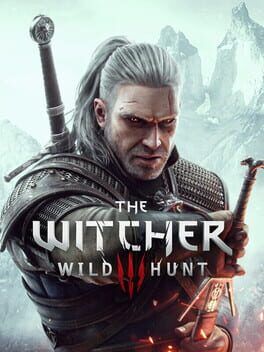
With Witcher, the risk is creative exhaustion. The universe is rich enough to sustain spin offs, anthology style stories and even the occasional mechanical pivot, but every return to that setting raises expectations. If the 2026 mystery game is Witcher related, CD Projekt has to show that the series can evolve beyond nostalgia while still feeling like part of the same lineage as Wild Hunt and its expansions.
With Cyberpunk, the risk is reputational. The franchise has recovered in terms of player sentiment, but another misstep would be costlier than the first. That is likely why the roadmap positions Orion on a slower burn, away from the short term pressure of unannounced releases. Cyberpunk is being treated as a prestige project that needs to arrive almost fully formed.
Project Hadar is the pressure valve. By openly framing it as a third pillar, CD Projekt is giving itself permission to build something that does not have to answer to comparisons with Geralt or V. That, in turn, can feed back into healthier decisions for the other two series. If Hadar lands, The Witcher and Cyberpunk can afford to take creative risks without feeling like the entire studio’s fate depends on each individual release.
The milestone update on Hadar is especially important here. Establishing the IP’s foundations is not just internal jargon. It means the team has identified what makes the universe unique, what themes it will explore, and how it can sustain multiple games and possibly cross media projects. In other words, CD Projekt is designing Hadar as a franchise from the outset, not as a one off experiment.
How Unreal Engine ties the roadmap together
One subtle but crucial detail in the Hadar update is that the prototypes are being built directly in Unreal. CD Projekt is now an Unreal Engine studio for all three pillars. That technical unification has big implications for how the roadmap works in practice.
Every new system built for the 2026 mystery project can, in principle, be reused or adapted by the larger teams. Animation tools improved for a smaller, melee heavy title could benefit Witcher combat. Dialogue and cinematics pipelines trimmed for a focused side story could reduce overhead in Orion. Even basic things like build systems, platform abstraction and performance profiling will benefit from having more shipped games under the same engine umbrella.
Conversely, the investment poured into Polaris and Orion can flow downward. If the 2026 release is Witcher adjacent, it might be the first public glimpse of the tools and workflows that will underpin the new saga, wrapped in a safer, more constrained package.
In this sense, the small project is a kind of live fire exercise for CD Projekt’s transition from a bespoke engine developer to a studio that builds identity entirely on content, systems design and narrative within a common third party toolset.
What to expect from CD Projekt’s next few years
CD Projekt is being intentionally vague about what the 2026 project is, but its strategic function is clear. It is a practical test of the studio’s new philosophy: multiple IP pillars, scalable release sizes and a unified technical base.
In that context, the simultaneous timing of the unannounced game and the Hadar milestone reads as more than coincidence. One product uses existing universes and fan goodwill to keep the lights bright. The other sets the stage for a future where CD Projekt is not defined solely by The Witcher and Cyberpunk.
If the plan works, the next decade of CD Projekt releases will not be a decade of silence punctuated by one giant RPG, then another. Instead we might see a rhythm where vast, saga defining games like Polaris and Orion are interleaved with smaller, sharply defined titles that explore corners of their worlds or introduce new ones altogether.
And somewhere inside that rhythm, between a comfortingly familiar logo and a completely new one, sits the mystery game scheduled for 2026. We do not know what it is yet. From a franchise management perspective, we already know what it has to do.