
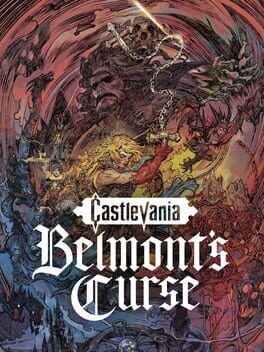

Konami’s next 2D Castlevania finally has an October 15 release date, with Evil Empire helping modernize the classic formula, a staggered Switch launch, and a new Belmont heir taking the whip.
Konami has finally put a date on its long‑teased return to traditional 2D Castlevania. Castlevania: Belmont’s Curse arrives October 15, 2026 on PS5, Xbox Series X|S and PC, positioning the series’ comeback squarely in spooky‑season territory. A Nintendo Switch version is confirmed, but fans on that platform will be waiting past launch while Konami and partner studio Evil Empire finish the port.
A Halloween‑ready return to the original timeline
Belmont’s Curse is framed as a true sequel to Castlevania III: Dracula’s Curse, set in 1499, twenty‑three years after Trevor and company brought down Dracula. This time the spotlight falls on Rose Belmont, Trevor’s daughter and heir to the Vampire Killer whip. The October 15 date lines the game up neatly with Halloween marketing, but it also signals how Konami wants this to be a tentpole moment for the brand, timed with Castlevania’s 40th anniversary celebrations.
The announcement trailer leans into that celebratory angle. Classic imagery like moonlit castle spires, burning villages and stained glass interiors return, but they are rendered in a sharp, modern 2.5D style that has more in common with contemporary action platformers than the NES originals. There is a sense that Konami wants Belmont’s Curse to be both a homecoming for lapsed fans of the ‘IGAvania’ era and an onboarding point for players who discovered the series through the animated shows.
Evil Empire’s role and what that means for Castlevania
Perhaps the most intriguing part of the announcement is the studio Konami has entrusted with this revival. Belmont’s Curse is co‑developed with Evil Empire, the team currently shepherding The Rogue Prince of Persia and known for years of post‑launch support on Dead Cells, with Motion Twin on advisory duties.
Evil Empire’s background is in building fast, responsive action games with tight combat loops and strong meta‑progression. Bringing that expertise into a more traditional, stage‑based Castlevania hints at a few things about how Belmont’s Curse is being shaped. Expect a focus on snappy inputs, animation cancelling and readable enemy patterns rather than the deliberate stiffness of the earliest Belmont adventures. At the same time, Konami has been clear that this is a story‑driven entry in the original timeline rather than a roguelite experiment, so Evil Empire’s influence looks more like a modernization of feel and pacing than a genre overhaul.
The partnership also suggests a new operating model for legacy Konami brands. After years of farming out Castlevania mostly for cameos and crossovers, collaborating closely with a proven action specialist shows a willingness to let outside talent reinterpret the formula while Konami steers the lore, audiovisual identity and overall direction.
Modernizing classic 2D Castlevania
Belmont’s Curse does not abandon the side‑scrolling roots of the series. Instead, it tries to thread the needle between the rigid, stage‑based design of the earliest games and the exploratory ‘Metroidvania’ structure that defined later hits. Early footage and descriptions highlight interlinked areas within Dracula’s castle and beyond, including the catacombs beneath Paris, with multiple routes, secrets and optional challenges. It is not pitched as a fully open castle like Symphony of the Night, but there is more room to backtrack, hunt for upgrades and tackle side paths than in the straight‑line NES adventures.
Combat is where the modernization is most obvious. Rose wields the Vampire Killer with faster swings and more air control than the classic Belmonts, including responsive mid‑air attacks and what look like dodge or dash options to weave through enemy patterns. Sub‑weapons like holy water and throwing axes return, but they are integrated into fluid combos rather than the single‑use, stiff tosses of old. That shift preserves the iconic toolset while making encounters closer to modern character‑action design.
Visually the game leans into detailed 2.5D environments layered with parallax effects, dynamic lighting and expressive character animations. Instead of the stark, tile‑based look of the 8‑bit and 16‑bit titles, Belmont’s Curse aims for a richly lit gothic world, closer to contemporary indie Metroidvanias but with the budget and sheen you would expect from a mainline Konami production. The soundtrack is treated as a major feature as well, with a 71‑track digital album included in the Midnight Edition that suggests a mix of new compositions and re‑imagined series staples.
Narratively, centering Rose Belmont lets the game echo and reframe familiar beats from Dracula’s Curse and the Netflix adaptation without retreading Trevor’s story. The 1499 Paris setting moves the action away from the usual Transylvanian countryside into denser urban spaces, giving designers room to create new kinds of side‑scrolling set pieces while still looping back to ominous castle interiors.
Special editions and how Konami is positioning the release
Konami is backing Belmont’s Curse with a collector‑style Midnight Edition in both digital and physical formats. Alongside the base game it packs in the sprawling soundtrack and an art gallery, plus a set of cosmetic throwbacks like Trevor Style and Sypha Style costumes for Rose and an Alucard Style outfit as a pre‑order bonus. Physical buyers get a SteelBook and a Rose Belmont tarot card that reinforce how hard Konami is leaning into Rose as the face of Castlevania’s future.
Those touches, combined with the anniversary timing and the focus on the series’ original timeline, make it clear Belmont’s Curse is not just another spin‑off. It is being treated as a statement piece about what 2D Castlevania looks like in 2026 and beyond.
The staggered Switch release and what it signals
The biggest wrinkle in the announcement is platform timing. While PS5, Xbox Series X|S and PC all hit the October 15 date, the Nintendo Switch version has been pushed to an unspecified later window. Konami has reiterated that the game is coming to Switch, but has stopped short of committing to a particular month or even a year, which has quickly become a talking point among fans.
Given Evil Empire’s history with Nintendo hardware on Dead Cells, the delay is unlikely to stem from unfamiliarity with the platform. Instead it suggests Belmont’s Curse is pushing its 2.5D presentation, enemy counts and effects enough that getting a stable, visually comparable result on aging Switch hardware requires extra optimization work. In an era where many publishers are more willing to let cloud versions or compromised ports stand, Konami and Evil Empire seemingly prefer to take the extra time rather than ship a subpar handheld version alongside the main launch.
There is also the practical marketing angle. Tying the initial wave to current‑gen consoles and PC allows Konami to focus messaging on higher‑end visuals and smooth performance, then re‑ignite interest again when the Switch build is ready. That is a frustrating prospect for players who grew up with Castlevania on Nintendo systems and want to be there day one, but if the trade‑off is a more polished port, the delay may ultimately benefit the audience most invested in playing portably.
A careful blend of heritage and reinvention
Taken together, the October release date, Evil Empire partnership and modernization push paint a picture of a very deliberate revival. Belmont’s Curse is not chasing roguelite trends the way Castlevania’s Dead Cells crossover did, and it is not a low‑budget nostalgia play. It is a fully fledged 2D action game that respects the series’ roots, restores the original timeline and hands the whip to a new protagonist while updating the feel, pacing and presentation for a modern audience.
If Konami and Evil Empire can stick the landing on that balance, October 15 could mark not just a Halloween‑friendly launch, but the beginning of a sustained new era for 2D Castlevania.