
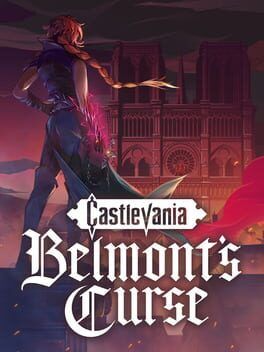

Konami has confirmed Castlevania: Belmont’s Curse is a classic 2D action‑exploration game, not a roguelike. Here’s what that means for fans, and why expectations were so different after Dead Cells.
Castlevania: Belmont’s Curse arrived in Sony’s State of Play broadcast carrying heavy expectations. The Castlevania name alone does that, but the involvement of Motion Twin and Evil Empire, the studios behind Dead Cells, supercharged the speculation. Many players watched the reveal trailer and immediately assumed one thing: this would be “Dead Cells with a Castlevania license,” another roguelike spin on a classic series.
Konami has now stepped in to shut that reading down. Belmont’s Curse is not a roguelike, and not even a roguelite. It is a 2D action‑exploration game built around large, handcrafted maps, designed to feel like a modern take on traditional Castlevania rather than a run‑based experiment.
What Konami actually confirmed
In statements to multiple outlets, Konami described Castlevania: Belmont’s Curse as a 2D action‑exploration title. That phrase is doing a lot of work here. It means the levels are designed, not generated. It means progression is about uncovering new routes and abilities, not about rolling a new build every 20 minutes.
Konami representatives emphasized that Belmont’s Curse features vast, elaborately crafted maps that the player is meant to explore freely. The focus is on methodical traversal, combat against familiar gothic monsters, and steady power growth inside a single continuous adventure.
The game is set in 1499 in a burning, monster‑ridden medieval Paris. You play a successor to Trevor Belmont, wielding the Vampire Killer whip while pushing through streets, ramparts and towering castle interiors. That premise sounds like pure Castlevania, and Konami insists the structure matches the pitch rather than borrowing the skeleton of Dead Cells.
How the confusion started
The initial trailer left a lot of room for interpretation. Quick cuts showed combat arenas, environmental hazards and what looked like a card‑style interface element that some viewers immediately read as a random power‑up system. Combined with the presence of Motion Twin and Evil Empire, it was easy to connect the dots to roguelike design.
Dead Cells established a very specific identity for those studios. It is a kinetic, run‑based action platformer where death sends you back to the start with only fragments of progress preserved. Weapons, mutations and route choices are shuffled run to run. When fans heard that the same creative forces were touching Castlevania again after the Return to Castlevania DLC, many assumed they would simply bring that structure wholesale.
Layer on top the broader industry context, with series from Prince of Persia to indie darlings regularly flirting with roguelite loops, and the assumption that Belmont’s Curse would follow suit did not feel far‑fetched.
What 2D action‑exploration means in practice
Labeling Belmont’s Curse as a 2D action‑exploration game pulls it closer to the lineage of Symphony of the Night or the later handheld entries rather than to Dead Cells. Instead of self‑contained runs, you are looking at a continuous journey across interconnected spaces.
That likely means revisiting earlier zones with new abilities, unlocking shortcuts that make traversal smoother over time, and slowly filling in a map that starts as a blank outline. Death becomes a setback inside a single save file instead of the hard reset that defines roguelikes.
Because the maps are hand‑built, every corridor, enemy placement and secret can be tuned for pacing. The designers can control when you see a certain boss, how a platforming gauntlet ramps up in difficulty and where a new weapon appears in relation to a looming challenge. That kind of authored rhythm is harder to guarantee when a game is reshuffling its own pieces every time you die.
Why not being a roguelike matters
On the surface, arguing about labels sounds pedantic. For players, though, the difference between roguelike and action‑exploration shapes everything from how you invest time to how you process failure.
A roguelike or roguelite is built around short loops and repeated attempts. You expect to lose runs, harvest permanent upgrades and start over to chase a slightly deeper push into the world. Story delivery, level design and build experimentation revolve around that repetition.
A traditional Castlevania structure promises a different contract. You make one character, one file and one world your focus. The tension comes from pushing into unknown territory with limited resources and the fear of losing progress in that specific journey, not from the expectation that you will immediately roll back into a fresh attempt.
Konami’s insistence on the action‑exploration label signals a commitment to that older contract. It is an answer to a community that has seen series after series absorb roguelite systems and wanted clarity about whether Castlevania’s own anniversary project would do the same.
The Dead Cells legacy and fan expectations
The reason this clarification has resonated is inseparable from Dead Cells itself. Motion Twin and Evil Empire helped define the modern action‑roguelite with that game. Its fluid movement, responsive combat and layered progression loop have influenced a wave of successors, and its crossover DLCs turned it into a hub for tributes to other series.
When those same studios are attached to a full Castlevania project, players naturally wonder whether Belmont’s Curse is a stealth sequel to Dead Cells’ Return to Castlevania content. Seeing similar side‑on combat and fast‑paced animation only strengthened that perception.
By clarifying the structure, Konami is effectively telling fans that the Dead Cells pedigree is being used for feel rather than format. You can reasonably expect crisp attacks, snappy movement and modern responsiveness, but you should not expect meta‑progression trees and endlessly shuffled room layouts.
For some, that separation is exactly the appeal. Reactions to the clarification have included players saying they became more interested in Belmont’s Curse once they learned it would not follow a roguelite template. After years of procedural runs and meta‑currencies, the promise of a focused, handcrafted Castlevania that simply plays well is enough.
A modern Castlevania with a clear identity
Castlevania: Belmont’s Curse is walking a narrow path between nostalgia and modernity. It arrives as part of the series’ 40th anniversary, with the weight of decades of expectations on its shoulders and the shadow of Dead Cells looming nearby.
Konami’s messaging now makes its intent plain. Belmont’s Curse is a 2D action‑exploration game built around large, designed maps, a continuous campaign and a whip‑wielding Belmont tracing a path through a doomed Paris. It is not a roguelike or roguelite, despite coming from teams that understand that genre as well as almost anyone.
That clarity does more than settle a semantic debate. It tells players what kind of time commitment to expect, how their progress will be respected and where this new entry sits in the evolving history of Castlevania. In a landscape crowded with run‑based experiments, Belmont’s Curse is positioning itself as something rarer: a thoroughly modern action game that still believes in the power of a single, carefully built castle to conquer.