
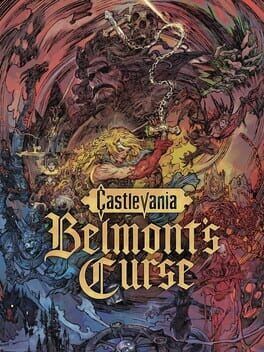

Famitsu’s first Castlevania Belmont's Curse review score, Konami’s ASADI composer reveal, and hidden demo discoveries are giving the new Castlevania game a stronger pre-launch read.
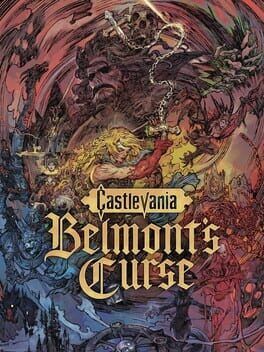
Image: IGDB
Store links: Castlevania: Belmont's Curse on Steam
Famitsu’s early score gives Belmont’s Curse a real first signal
The first published Castlevania Belmont's Curse review has landed before the broader review wave, and the number is solid rather than sensational: Famitsu awarded Konami’s next Castlevania a 32 out of 40, with all four of the Japanese magazine’s reviewers giving it an 8. Nintendo Everything reported the score from this week’s Famitsu issue, while Nintendo Life separately noted the same 8/8/8/8 breakdown via Famitsu and Genki_JPN.
That matters because Castlevania Belmont's Curse is arriving with a specific kind of pressure. Nintendo Everything describes it as the first brand-new Castlevania entry in years, developed by Evil Empire, a studio associated with Dead Cells, in partnership with Konami. Early enthusiasm for a new Castlevania game can run hot on name recognition alone, but Famitsu’s verdict gives players one concrete review datapoint before most outlets publish their impressions closer to launch.
The immediate tension is that 32/40 is encouraging without closing the case. Famitsu’s format, four critics scoring out of 10, gives a useful spread here because there is no outlier dragging the conversation toward either hype or alarm. Every reviewer arrived at the same score. Still, this is one publication, and Nintendo Everything notes that most reviews are expected toward the start of next week. For anyone already sold on a new Konami-backed Castlevania, Famitsu is a confidence boost. For anyone waiting on performance, platform comparisons, or the full game’s structure, it is an early signal rather than a verdict.
The praise is aimed at craft, but the challenge sounds deliberate
The details quoted by Nintendo Everything are more useful than the number. Famitsu’s reviewers describe Belmont’s Curse as a traditional exploration-type game without equipment collection or enemy-drop money systems. That detail frames the project less as a loot-driven action RPG and more as a traversal-and-combat-first Castlevania, where the map, movement tools, bosses, and player execution do the heavy lifting.
Famitsu’s comments also point to a tougher balance than some modern players may expect. One reviewer says aerial movement using whips and other weapons is crucial and calls the athletic difficulty high. Another says regular enemies take more time to defeat than in previous entries, damage is taken more often, and boss battles can have a “death-game” feel until players identify the right weapons and tactics. That same reviewer says the hook-and-swing whip action may feel a little sluggish for some players.
That combination is actually the most interesting part of the Castlevania Belmont's Curse review buzz. The early critique is not hiding the game’s rougher edges. It is naming the friction: heavier enemies, punishing bosses, demanding traversal, and a swing mechanic that may divide players. But those complaints sit alongside praise for puzzles tied to acquired cards, the Belmont family story, traditional bosses, and the way strategy can make deadly encounters manageable. From a platforming lens, that reads like a game trying to make difficulty legible rather than merely harsh.
ASADI’s composer reveal adds a second pillar of trust, with one caveat
Konami has also now confirmed the Castlevania Belmont's Curse composer. As reported by Nintendo Life, Konami announced that the soundtrack was created by ASADI, also known as Danny Asadi. Konami’s announcement specifically referenced a new composition of “Bloody Tears” and said ASADI’s skills were a match for Castlevania’s musical heritage. Evil Empire, according to Nintendo Life, added that ASADI was the only “sound crusader” it could trust, after previously working with him on The Rogue Prince of Persia.
That reveal is bigger than a credit line because Castlevania music carries unusually high expectations. For many players, the series is inseparable from the snap of its drums, gothic melodies, and recurring themes. Bringing in a composer associated with a recent Evil Empire project gives Belmont’s Curse continuity with the studio’s current creative network, while the “Bloody Tears” reference signals that Konami knows the score is being judged against decades of memory.
The caveat is that the soundtrack is still being judged from partial exposure. Nintendo Life notes that players can hear the music directly through the eShop demo, and its own comment section includes mixed reactions, including some readers who felt the demo tracks did not yet capture the classic Castlevania mood. Nerdvana’s demo impressions similarly said the music had not excited the writer yet, while leaving room for the fact that the demo takes place in a sewer level. The confirmed fact is ASADI’s involvement. The open question is whether the full score sustains the weight of the name once players leave the opening area.
The demo’s secrets are doing valuable work before reviews arrive
The Castlevania Belmont's Curse demo is quietly becoming the strongest argument for cautious optimism because players can test the game’s priorities themselves. IGN reports that the free demo released on October 1, 2026, and follows Rose Belmont through ruined 1500s Paris with a sword and her mother’s magical tarot cards. That framing matches the mechanical details emerging elsewhere: J1 Studios describes Rose’s sword as upgradeable through special means, with spells that grow stronger when conditions are met, while a demo guide from DQ7 Reimagined lays out an opening route built around Tarot clues, Arcana, Blessings, The Fallen boss, and the Arcane Whip.
The best discovery so far is the Cestus, a secret brass-knuckle-style weapon IGN says is hidden in the demo. According to IGN, the Cestus rewards aggression by stacking damage the more Rose hits enemies. After attacks, Rose can settle into poses that fans identified as references to classic fighting game characters. IGN cites a video from Twitter/X user StockeTepes showing apparent callbacks to Ryu, Chun-Li, Oro, Sagat, Mai Shiranui, Akuma or Oni, and Spider-Man’s Marvel vs. Capcom 2 pose. Other fans, IGN reports, noticed an air-to-air Cestus combo resembling Akuma’s Zanku Hadouken, while IGN’s writer offered M. Bison’s Hell Attack as another read.
That is fan-service with mechanical texture. The secret is not a static nod hidden in a background. It is a weapon with its own tempo, its own damage incentive, and animations that invite close reading. IGN also places the gag inside a longer series tradition, citing Symphony of the Night’s fighting-game-style spell inputs, the Fist of Tulkas weapon, Portrait of Ruin’s Martial Arts moves, and Konami’s 2008 Castlevania Judgment. For a demo, that is a healthy sign: the developers are rewarding curiosity before the full castle doors open.
Rose Belmont’s opening hours sound compact, readable, and a little mean
The available demo reporting paints a consistent picture of the opening. DQ7 Reimagined estimates a straightforward clear at roughly 30 to 45 minutes, with extra time likely for players who experiment, learn The Fallen, or backtrack for pickups. The guide says the playable route covers the opening Paris area, one major guardian fight, a guardian key, Arcana and Blessing systems, the Arcane Whip tutorial, and a transition toward the next part of Paris. It also says players can reach the Cestus by backtracking to the room just after the first Mirror and using the whip on the top-middle part of the room to reveal the secret area.
That short structure appears to be doing exactly what a good action-platformer demo should do: teach, withhold, then reward. The same guide says early players may lose time by trying to reach platforms before Rose has the correct tool, overlooking a Tarot clue that points toward a hidden lever near barrels, or assuming her slide is a fully invincible dodge during The Fallen. Those are small lessons, but they tell us plenty about the design language. Belmont’s Curse seems willing to show unreachable spaces early, ask players to mark suspicions, and then turn a new traversal ability into a reason to re-read the map.
J1 Studios’ first impressions align with that hands-on shape, calling the controls quick and responsive, the animation smooth, and The Fallen demanding until its pattern is learned. Nerdvana also describes the first boss as difficult at first but fun once the pattern clicks. Those are not final reviews, and they should not be treated as such. They do suggest that the demo’s difficulty is landing as a learnable challenge for at least some early players rather than as simple punishment.
Platform and performance questions remain, especially around Switch 2
The cleanest confirmed date in the provided reporting is October 15, 2026. Nintendo Life says Castlevania Belmont's Curse launches for Switch on that date, and IGN also lists October 15 as the official release date. J1 Studios lists PlayStation 5, Nintendo Switch, Windows, and Xbox Series X/S, while Nerdvana refers to Switch, PS5, Xboxes, and PC. Because the official platform list is not included in the provided Konami text, the safest read is that multiple outlets are reporting a multiplatform launch, with Switch coverage currently taking center stage.
Performance is the practical wrinkle. Nintendo Life says the game has been discovered to run at a “smooth 60fps” on Switch 2, but its article is still framed around the Switch release rather than a native Switch 2 version. The same Nintendo Life page includes a reader comment expressing disappointment that there is no native Switch 2 version, which reflects a concern some buyers may share, but that comment is not an official platform statement. Based on the supplied sources, the confirmed point is that Nintendo-focused outlets are covering a Switch launch and that 60fps on Switch 2 has been reported. A dedicated Switch 2 edition or upgrade path is not established here.
There is one buyer-friendly detail that does appear in hands-on coverage: demo progress. J1 Studios says save information from the demo transfers to the main game, and Nerdvana attributes demo save carryover to Konami. If you are planning to buy at launch, that makes the demo less disposable. You can learn Rose’s movement, level or prepare within the demo as allowed, practice The Fallen, and carry that start forward if the transfer works as described.
The pre-launch read is stronger because the signals point in the same direction
The confidence around Castlevania Belmont's Curse is building because three separate kinds of evidence are now overlapping. Famitsu’s first review says the full game is solid and challenging. Konami’s composer reveal confirms ASADI is handling a soundtrack that is already being sampled in the demo. The demo itself is showing players a compact slice with readable combat, hidden tools, backtracking, fighting game flourishes, and a boss that early impressions describe as demanding but learnable.
There are still reasons to wait. We do not yet have the wider Castlevania Belmont's Curse review spread. We do not have a complete technical comparison across platforms in the supplied sources. The soundtrack reaction is not settled from the demo alone. The reported difficulty may delight players who miss stricter action-platforming, while frustrating anyone expecting a gentler power curve. The whip swing being called potentially sluggish by Famitsu is also worth watching, because traversal feel can make or break this kind of game.
For now, the smartest move is simple. If the phrase new Castlevania game already has your attention, play the demo before launch rather than relying on nostalgia. If the Cestus secret, Tarot clues, and The Fallen fight click for you, the early signs are encouraging. If the movement weight or music leaves you cold, wait for the full review wave and platform-specific performance checks. Belmont’s Curse is not coasting into launch on the logo alone. The better news is that its first public signals are about craft, secrets, and difficulty, which are exactly where a Castlevania revival needs to prove itself.