
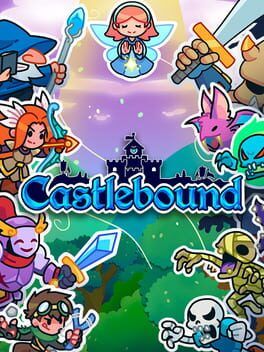

Ogre Pixel's Castlebound now has a November 11, 2026 release date for Nintendo Switch, Switch 2, and Steam. Here is what is confirmed, what the new trailer is selling, and what cozy adventure fans should still watch for.
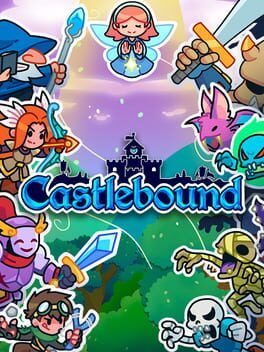
Image: IGDB
Store links: Castlebound on Steam
Castlebound lands on both Nintendo generations in November
Castlebound will launch on November 11, 2026 for Nintendo Switch, Nintendo Switch 2, and PC via Steam, according to developer Ogre Pixel's announcement shared through Games Press and covered by Nintendo Everything. That gives the papercraft-style action platformer a clean cross-generation Nintendo release rather than leaving Switch 2 owners waiting for a later version or Switch owners wondering whether the new hardware would take priority.
The immediate tension is practical: the date is now firm, but the platform details are still broad. The sources confirm Nintendo Switch 1|2 and Steam availability, yet they do not list a price, file size, physical edition, eShop preorder timing, upgrade path between Switch and Switch 2, or Switch 2-specific performance targets. For players trying to decide whether Castlebound is a day-one cozy adventure game for the living room or a wait-and-see purchase, those missing details matter.
Nintendo Everything describes the new Castlebound trailer as a release date announcement trailer, while the press release frames the game as a colorful co-op arts-and-crafts 2D action platformer with roguelike progression. In other words, the Castlebound release date is the confirmed news, and the trailer's job is to show how Ogre Pixel is positioning the game: cute at a glance, cooperative by design, and built around repeated defensive runs rather than a simple stroll through a storybook world.
The trailer pitch: a walking castle that needs defending
Castlebound's central idea is easy to grasp and visually distinctive. Ogre Pixel says players lead Lenora, a skilled archer, and her grandfather Vargus as they awaken a bewitched castle that has become a walking fortress. From there, the party defends it against forest creatures, ghosts, giant trolls, dragons, and other threats across fantasy locations.
That premise gives the Castlebound trailer a strong hook for Nintendo audiences. A castle with legs is instantly readable as toybox fantasy, but the game around it is closer to a defense-action hybrid than a pure cozy sim. The press materials describe fast-paced combat built around jumping, dodging, and attacking while protecting the moving fortress. Nintendo Everything similarly labels it a roguelike action game about leading heroes aboard a walking castle against endless enemy hordes.
For cozy adventure fans, the appeal is in that contrast. Castlebound has the soft edges of a handcrafted diorama, with Ogre Pixel citing pop-up books, classic cartoons, and storybook adventures as visual influences. The play structure, however, appears to ask for timing, positioning, and resilience. Based on the confirmed description, this is the kind of cozy-looking indie that may welcome families and couch co-op groups visually, while still pushing players through escalating waves and repeated runs.
Co-op is the clearest reason to watch the Switch versions
The Nintendo Switch has always been a natural home for compact co-op games, and Castlebound's confirmed multiplayer support is central to its case. Games Press says the game can be played solo or in up to four-player co-op. Nintendo Everything's provided feature list mentions solo or co-op action and teaming up with a friend, while the fuller press release specifies up to four players. That is a small discrepancy in emphasis rather than a contradiction: the official press release supports four-player co-op, while the Nintendo Everything excerpt highlights the two-player-friendly pitch.
Ogre Pixel has also outlined four playable heroes. Lenora fights with arrows, Vargus uses magic, Garrik brings knightly attacks, and Quinn uses a slingshot. Those roles suggest a readable party setup where ranged pressure, magic, melee control, and lighter projectile play can coexist. The sources do not confirm how character progression differs in depth, whether every hero is available immediately, or how local and online co-op are divided, so buyers should wait for storefront specifics before assuming a preferred multiplayer setup.
Still, the confirmed design points toward a game that could fit especially well on Castlebound Nintendo Switch and Castlebound Switch 2 nights where the goal is shared action without the grim tone of many roguelikes. The art invites a broad audience, while the class-like heroes give experienced players something to optimize. That balance is where small co-op indies often stand out: not by overwhelming players with systems, but by making each role legible enough that a new player can contribute quickly.
Roguelike progression keeps the cute exterior from feeling disposable
Castlebound is not being pitched as a one-and-done platforming campaign. Ogre Pixel's announcement says players grow stronger through roguelike progression, earning upgrades across each run. If the party falls, players spend Soul Coins inside the castle to upgrade heroes, unlock new abilities, and improve future odds of survival.
That detail changes the read on the game. A walking castle defense premise could have become a simple wave-survival novelty, but persistent upgrades give failure a purpose. It also puts Castlebound closer to the roguelite side of the indie aisle, where repetition is expected and losses feed the next attempt. Steve Durán, Ogre Pixel's director and designer, said in the press release that the team blended tower-defense and roguelite combat into a colorful adventure reminiscent of pop-up books, with challenge across various skill levels.
For players who prefer cozy games because they are low pressure, that is the caveat to watch. Castlebound may look gentle, but its confirmed structure includes enemy hordes, fallen parties, upgrades, and survival odds. For players who like the comfort of handcrafted worlds but still want dodges, build decisions, and co-op chaos, that same structure is the reason to keep it on the calendar.
Ogre Pixel's craft-first identity fits the pitch
The studio behind Castlebound is Ogre Pixel, a developer based in Aguascalientes, Mexico, according to the Games Press announcement location and HappyGamer's reporting from the press materials. HappyGamer also notes that the studio was founded in 2014 by Steve Durán and that its earlier games include Lonesome Village and A Tiny Sticker Tale. That context helps explain why Castlebound is being marketed with such an emphasis on tactile charm and storybook presentation.
The newly announced game is described as fully funded on Kickstarter within four hours, a claim included in the official Games Press release and echoed by other coverage. The release does not provide the funding goal or final campaign total in the supplied material, so the safest reading is that Ogre Pixel is highlighting speed of community support rather than the campaign's scale. It is a useful signal of early audience interest, but not by itself proof of scope, budget, or launch readiness.
The environments named in the announcement are mythical forests, ghostly graveyards, bone-dry deserts, and scorching volcanoes. Those are familiar fantasy stops, but in a diorama-inspired 2D game, the craft is in how those scenes are layered, animated, and kept readable when four players and waves of enemies fill the screen. That is one of the technical questions still hanging over the Switch versions. The sources confirm the platforms, not frame rate, resolution, loading behavior, or performance differences between Switch and Switch 2.
What is confirmed, and what players should wait to learn
The confirmed Castlebound release date is November 11, 2026. The confirmed platforms are Nintendo Switch, Nintendo Switch 2, and PC via Steam. The official announcement also confirms language support for English, Spanish, French, Portuguese, Japanese, Korean, Simplified Chinese, Traditional Chinese, and German. For PC players, the Games Press post links to the Steam page, making Steam the only specific storefront named in the provided source material.
What remains unannounced in the supplied sources is just as important for buyers. There is no confirmed price, no listed Switch 2 enhancement breakdown, no confirmation of cross-buy or paid upgrade handling between Nintendo versions, no physical edition information, and no detailed co-op networking explanation. If local four-player support is essential to you, or if you need online co-op, wait for the Nintendo eShop listing or an Ogre Pixel FAQ to spell that out.
Even with those gaps, Castlebound is worth watching because its ingredients are unusually aligned for Nintendo players: a readable co-op structure, a family-friendly art direction, roguelike progression with permanent upgrades, and a release plan that includes both current Nintendo hardware lines on the same day. The best case is a cozy adventure game with enough bite to keep a group returning after each failed run. The cautious case is that Switch performance, multiplayer details, and pricing still need to be proven before launch day.