
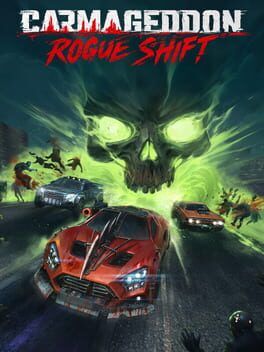
How Carmageddon: Rogue Shift reimagines ’90s vehicular slaughter as a roguelite and why its over-the-top chaos might carve out a surprising niche on Nintendo’s next console.
Carmageddon is not the kind of name you instinctively associate with a Nintendo platform. The original 1997 PC game built its cult reputation on tasteless gags, twisted metal, and an infamous scoring system that rewarded mowing down pedestrians as much as winning races. It was noisy, crude, and proudly irresponsible.
Yet in early 2026, Carmageddon: Rogue Shift is set to roar onto Nintendo’s next system, the Switch 2, alongside PS5, Xbox Series X|S, and PC. Developed by Redout studio 34BigThings, Rogue Shift pulls the series out of its ’90s time capsule and drops it into a modern roguelite structure that has more in common with Hades than with Carmageddon II.
The result looks like a strange hybrid: a nostalgic revival of one of gaming’s most notorious vehicular-combat series, turned into a repeatable, progression-heavy campaign aimed at short, intense sessions. That mix could be exactly what Carmageddon needs to work on a handheld hybrid that thrives on “one more run” loops.
From fixed cups to roguelite runs
Classic Carmageddon was structured like a warped interpretation of traditional racing championships. You picked a car, entered a cup, and tackled a predefined ladder of events that mixed checkpoint races with wide, open maps filled with traffic, power-ups, and fragile human (or later, zombie) obstacles.
Rogue Shift restructures that formula into a full roguelite campaign. Runs are built from branching event maps, where each completed event lets you choose your next node on a path across a wasteland map. One route might emphasize combat-heavy arenas, another may lean into time-limited races or survival challenges with escalating waves of enemies.
Failing a run does not simply kick you back to a menu with nothing to show for it. Between runs, permanent progression lets you unlock new vehicle bodies, weapon classes, and perks that slightly tilt the odds in your favor next time. Where old Carmageddon was a largely linear grind for credits to buy a better car, Rogue Shift frames every failure as a resource-generating step, closer to the structure that made Hades or Dead Cells so moreish.
It is still Carmageddon at its core. Each event is about weaponizing speed, weight, and momentum to inflict maximum damage on anything unfortunate enough to share tarmac with you. The difference now is that those events sit inside a meta-run where route choice, risk versus reward, and long-term unlocks matter as much as your ability to sideswipe a rival into a wall.
Progression: from scrapheap to apocalypse monster
The campaign loop starts with a rusted heap and ends, ideally, with a rolling death machine.
34BigThings is packing Rogue Shift with 15 upgradeable vehicles, each defined by stats like drivetrain, weight, and suspension. In classic Carmageddon fashion, these are not polite racing silhouettes. Expect spiked plows, muscle cars wearing improvised armor, and hulking trucks meant to smash through chokepoints rather than gracefully slide around them.
During runs, you pick up temporary upgrades, new weapon types, and powerful perks. These are run-bound, encouraging you to mold each attempt into a specific build. Want a heavyweight ram build that leans into frontal collisions and armor? Stack perks that boost impact damage, equip a forward-mounted spike or drill, and use suspension bonuses that keep you stable on rough terrain. Prefer a glass-cannon style? Grab lighter frames, nitrous-focused boosts, and chain-lightning weapons that fry dense zombie crowds from a distance.
Outside of runs, permanent progression comes through currencies such as Beatcoins and similar meta resources. These feed into a Black Market style system and garage upgrades where you unlock new vehicle shells, weapon archetypes, and broad account bonuses. Over time, your starting loadouts get richer, your vehicle pool expands, and new event variants and bosses enter the rotation, adding both power and variety.
The original games had progression, but it was comparatively flat: you bought a faster car and maybe tweaked some armor and engine values. Rogue Shift’s perks, classes, and meta-upgrades promise a broader range of viable playstyles. It shifts the focus from simply acquiring the “best car” to nurturing a garage of situational killers, all tuned for different route choices and event types.
Vehicular chaos, reimagined
If the structure is modern, the chaos is aggressively old-school.
Rogue Shift’s action is pure vehicular combat, drenched in metal riffs and filmed from the same third-person bumper-cam perspective that defined the originals. The series’ long-running fixation on environmental destruction returns with an extensive visual damage model. Your car is not a health bar with wheels; it is a crumpling sculpture of steel that visibly tracks every head-on collision, sideswipe, and rollover.
Weapons span 13 classes, ranging from crude melee fixtures to exotic sci-fi artillery. Mines and oil slicks share space with homing missiles, explosive rams, and chain lightning cannons that leap between clustered enemies. 80-plus perks then warp those tools further, sprinkling in things like lifesteal on impact, bonus rewards for stylish kills, or defensive tricks that let you shrug off that one lethal crash.
Enemy design leans heavily on post-apocalyptic zombie hordes. Swarms of undead replace the politically sensitive pedestrians of yesteryear, giving the game a steady stream of soft targets without inviting the same kind of controversy. At the same time, rival drivers remain central. They are the ones trading paint with you in chokepoints, ramming you into wall-mounted grinders, and contesting pickups on the track.
The original Carmageddon game gave you three ways to finish an event: win the race normally, annihilate all rival cars, or painstakingly run down every pedestrian. Rogue Shift channels that spirit not through identical win conditions, but by loading each event with multiple overlapping objectives and emergent opportunities. You might enter an arena intending to survive a timer, then realize that wiping out rivals could net you a crucial rarity upgrade drop. That flexibility is what should keep repeated runs from feeling rote.
How it stacks against the ’90s originals
Mechanically, Rogue Shift is less a direct sequel and more a reinterpretation of the Carmageddon fantasy for contemporary tastes.
The ’90s games were built around fixed content and progression that plateaued quickly. Once you learned track layouts and AI behaviors, the main thrill came from messing around in the sandbox, experimenting with physics, or hunting secret bonuses tucked into unlikely corners. They were more about chaos than about a finely tuned, repeatable loop.
Rogue Shift keeps the love of chaos but adds clear, measurable forward motion. Every run, even a disastrous one that ends in a fiery pile-up in the first arena, quietly feeds your long-term progression. There is a structured sense of mastery you can chase, not just familiarity with maps, but with builds, routes, and perk synergies.
Tonally, the new game has to walk a line. Early footage hints at the same grimly comedic energy and outrageous violence, but within a world that leans a little more into over-the-top fantasy. Zombies, spiked hot rods, and exaggerated physics make it clear you are not meant to take anything too seriously. Yet it stops short of the gleefully transgressive shock value that originally made headlines for all the wrong reasons.
That balance is crucial for a series that is about to park itself on a Nintendo system better known for Mario Kart and Animal Crossing.
Carmageddon on a family-friendly platform
The Switch brand is strongly associated with accessible, non-graphic fun, but the reality has always been more nuanced. Nintendo hardware has quietly hosted everything from Doom and Mortal Kombat to No More Heroes and Bayonetta. Mature, violent games are not new to the ecosystem, but they are rarely front-and-center in marketing or platform identity.
On Switch 2, Carmageddon: Rogue Shift likely occupies a similar role: a cult, high-intensity alternative to first-party racing and action titles, not a system seller. Its potential niche lies at the intersection of three groups.
First are nostalgic players who remember the original Carmageddon, now older, with less free time and more appreciation for portable play. A pick-up-and-play roguelite format fits their reality better than a traditional, sprawling campaign.
Second are roguelite fans who may never have touched Carmageddon, but who know the satisfaction of Hades-style progression. For them, vehicles and gore are window dressing; the hook is a well-paced loop that respects their time. If Rogue Shift can deliver short, self-contained runs that feel rewarding even in failure, it could slide into the same “commute game” space that Slay the Spire and Dead Cells have occupied on Switch.
Third are players drawn to action-heavy driving games who have found the Switch library slightly thin beyond Mario Kart, Hot Wheels, and a scattering of arcade racers. Twisted Metal has yet to make a portable comeback, and most serious sim-style racers are absent from Nintendo hardware. A polished vehicular-combat roguelite fills a gap rather than competing directly with Mario Kart’s broad appeal.
The main risk is perception. Carmageddon still carries a reputation as the game that got banned or censored in the ’90s. Even with zombies standing in for pedestrians, the marketing will have to lean hard into the over-the-top, comic-book nature of its violence instead of shock value. On a platform where many parents casually hand off the console to kids, clear ratings and content messaging will matter.
Why the roguelite shift makes sense for Switch 2
Roguelites thrive on portability. Short runs, quick restarts, and constant unlocks map perfectly onto on-the-go play sessions. The Switch has already proven this with countless success stories, and the Switch 2’s stronger hardware should only improve performance and visual fidelity for something as frantic as Carmageddon.
Rogue Shift’s systems seem tailor-made for that loop. Runs can be tuned to last a bus ride or lunch break. New cars and weapons drip-feed into your garage at a rate that encourages “just one more.” Randomized routes and dynamic challenges reduce repetition, which is critical when you might be grinding through dozens of runs over the life of the game.
Technical details of the Switch 2 version are not yet locked in publicly, but the game’s cross-platform launch, day-night cycle, weather effects, and detailed damage model will be a good early stress test of the new hardware’s ability to handle fast-moving, debris-heavy scenes at stable frame rates. If 34BigThings can strike the right balance between fidelity and responsiveness, Carmageddon could become one of the more visually striking early third-party showcases for the system.
A cult comeback with something to prove
Carmageddon: Rogue Shift is not trying to compete directly with mainstream racers or family-friendly kart games. It is targeting a narrower but potentially passionate audience that wants driving games with teeth and a structure that fits adult schedules.
By reframing Carmageddon’s core fantasy around a modern roguelite spine, 34BigThings has given the series its best shot at relevance in decades. The upgrade-driven progression, branching runs, and emphasis on replayability are smart concessions to the reality of contemporary play patterns, particularly on a portable console.
The unknowns now are in execution. Handling needs to feel weighty but responsive, enemy AI must walk the line between aggressive and unfair, and the meta-unlock pacing has to avoid both stinginess and early burnout. If those pieces land, Carmageddon: Rogue Shift could become exactly what its title suggests: a sharp gear change that keeps the spirit of ’90s carnage alive while finally giving Nintendo players a reason to weld spikes to their fenders.