
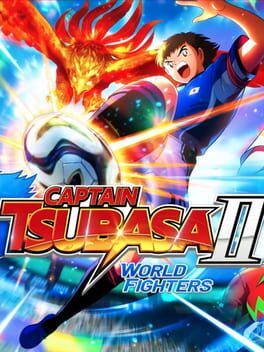
A hands-on style preview of Captain Tsubasa 2: World Fighters, digging into its arcade football systems, anime-style presentation, competitive hooks, and how Bandai Namco is turning classic sports manga into global multiplayer events.
Captain Tsubasa has always been about football as a contact sport for destiny. With Captain Tsubasa 2: World Fighters, Bandai Namco and Tamsoft are trying to bottle that feeling in a sequel that doubles down on arcade spectacle, anime drama, and long‑tail competitive play.
Set to launch on Nintendo Switch, Switch 2, PS5, Xbox Series X|S, and PC in late August 2026, World Fighters is designed as both a continuation of 2020’s Rise of New Champions and a new starting point. It pushes the series’ “football as a fighting game” concept further, while framing it in a story that follows Tsubasa’s rise through the World Youth Championship.
Super‑charged arcade football
World Fighters is not chasing realism. The pitch is a stage for special moves, resource management and one‑on‑one clashes that feel closer to an arena brawler than a strict sports sim.
At the core is an evolved “football battle system.” Players jockey for position using sprints, feints and tackles, but every major interaction is about building and spending energy. Dribbles and tackles chew through stamina, aerial duels become timing tests, and the best moments come from committing to a risky special at just the right second. Shots like the Drive Shot or Tiger Shot return as screen‑filling finishers, while defenders answer back with cinematic blocks and last‑ditch saves that slow time and tilt the momentum of a match.
Compared with Rise of New Champions, Bandai Namco is emphasizing faster transitions and more readable clashes. Visual tells make it easier to see when an opponent is about to unleash a super, while UI flourishes and hit sparks sell the impact of collisions. It is still chaotic, but there is a clearer rhythm to matches and a bigger focus on mind games, baiting out specials and forcing mistakes in midfield.
The sequel is also scaling up its roster. With over 110 playable characters drawn from across the anime’s junior youth arc and wider international cast, every team has its own blend of stats and supers. Learning how Brazil’s flair players or Europe’s powerhouses approach the field is where World Fighters starts to feel like a full‑blown competitive action game, rather than just a one‑note anime tie‑in.
A world tour story built like an anime season
The main campaign follows Tsubasa Ozora and the Japanese youth squad as they push through qualifiers and into a global tournament. The story trailer focuses on clashes with teams from Thailand, Uzbekistan, Saudi Arabia and China before the stakes rise against heavy hitters like Brazil, Argentina, Mexico, Uruguay, Cameroon, Sweden and the Netherlands.
Bandai Namco is framing this like a full anime season. Key matches are punctuated by cutscenes that mirror classic shots from the manga, with close‑ups on determined faces, lingering views of the ball spinning in slow motion, and long tracking shots down the length of the pitch. In play, stylish camera cuts follow the action when supers trigger, snapping from touchline views to low angles behind the ball or dramatic reaction shots from keepers staring down impossible drives.
Crucially, the sequel carves out space for players to step into that world with an original avatar. You can create your own youth player, train alongside iconic characters and slot into Japan’s squad as the story unfolds. This custom hero system is the connective tissue between narrative and progression, letting you unlock new techniques, form bonds with existing stars and slowly build a move set that suits your style.
For returning fans, the appeal is seeing famous scenes reimagined with the current engine and watching Tsubasa’s journey continue. For newcomers, it is a straightforward sports anime arc wrapped around approachable arcade football, with enough context about rivalries and friendships that you can treat it as your first Captain Tsubasa season.
Built for rivals: online and local competition
Where World Fighters really aims higher than its predecessor is on the competitive side. The pitch is explicitly being set up as a global battleground, with modes that cater to both couch competition and online rivalries.
Local multiplayer returns for quick, explosive matches with friends, where the exaggerated supers and wild comebacks shine brightest. These skirmishes are still the best way to learn the roster, experiment with tactical formations and mess around with over‑the‑top team builds.
Online, Bandai Namco is pitching a broader suite of options. Traditional ranked and casual matches sit alongside co‑op play and events that encourage experimentation with different teams and custom characters. The create‑a‑player system is central here. Your avatar can be taken online, complete with learned techniques and special shots, turning your story journey into a competitive identity.
If the netcode and matchmaking hold up, World Fighters has the ingredients to support a niche but passionate competitive scene. Its matchups are readable enough to reward practice, while the unpredictability of supers and momentum swings keeps games watchable as a spectator sport. For an anime football title, that balance is key: it needs depth for grinders, without losing the instant spectacle that pulls in casual viewers on streams.
Anime spectacle as a global playbook
World Fighters is more than a one‑off sequel. It is another step in Bandai Namco’s broader push to turn long‑running anime sports properties into modern, globally viable games.
The first Captain Tsubasa game on modern consoles proved there is an audience outside Japan for high‑octane, stylized football. With the sequel, Bandai Namco is leaning harder into that identity with more licensed national teams, more recognizable faces from across the anime’s history and a story that tours multiple continents. It is very clearly designed to resonate in regions where both football and Captain Tsubasa have dedicated fanbases, from Europe and South America to parts of Asia and the Middle East.
That strategy mirrors the publisher’s approach with series like Dragon Ball and Naruto, where faithful presentation, big rosters and accessible mechanics have made their games staples at events and on streaming platforms worldwide. By treating Captain Tsubasa’s matches as anime‑grade showdowns instead of trying to compete with hyper‑realistic sims, World Fighters carves out a distinct space where spectacle and nostalgia are as important as tactics.
It also taps into the current wave of anime sports fandom. Newer series and fresh seasons of classics are driving renewed interest in stories about youth teams, tournaments and personal growth through competition. World Fighters positions Captain Tsubasa as a flagship of that movement, inviting players not just to rewatch famous moments, but to actively play them out, remix them with their own characters and take them online against global rivals.
The pitch before kick‑off
As launch approaches, Captain Tsubasa 2: World Fighters looks like a confident refinement rather than a radical reinvention. The football battle system is sharper, the roster is wider, the story is framed like a full anime season and the competitive focus is clearer.
If Bandai Namco can deliver stable online play and meaningful long‑term support, this could be the game that pushes Captain Tsubasa from cult favorite adaptation into a regular fixture for anime sports fans worldwide. For players looking for something louder and more dramatic than a traditional football sim, World Fighters is shaping up to be one of 2026’s most intriguing pitches.