

Capcom is doubling down on legacy franchises like Devil May Cry, Ace Attorney, Mega Man, Okami, and Dragon’s Dogma with sequels, remakes, and ports. Here is why archival IP has become one of the lowest risk strategies in modern game publishing.
Capcom’s latest financial reports and public statements make something very clear: the company sees its archive as its future. After years of success with Resident Evil remakes and legacy collections, Capcom is now openly targeting older brands like Devil May Cry, Ace Attorney, Mega Man, Okami, and Dragon’s Dogma for sequels, remakes, remasters, and ports.
This is not nostalgia as a side hustle. It is a core pillar of the publisher’s roadmap, and it reflects a wider industry trend where archival IP is increasingly treated as a lower risk, higher margin investment than brand new concepts.
From back catalog to growth engine
In recent earnings material, Capcom repeatedly highlights its intention to “leverage” its large catalog of IP. The language is pointed: the publisher does not just want to preserve its back catalog, it wants to actively “nurture” old series with new content and modern releases.
The model has already been proven. Resident Evil 2, 3, and 4 remakes delivered strong sales and long tails, while ports like Okami HD and Mega Man Legacy collections found new audiences on every new platform cycle. Each project validated the idea that a recognizable name combined with modern polish can perform close to, or sometimes better than, brand new mid tier IP.
Capcom’s financial success puts it in a position where it can afford risk, yet its strategy is surprisingly conservative. That is the key point. In a market where AAA budgets keep climbing and audience acquisition costs rise across every channel, known brands provide insulation. Marketing spend goes further. Platform holders are more eager to feature them. Fans are already emotionally invested before a trailer even drops.
Why legacy franchises have fresh demand
The renewed attention to series like Ace Attorney, Devil May Cry, Mega Man, Okami, and Dragon’s Dogma is not just publisher led. Each of these properties sits at the intersection of nostalgia and unmet market demand.
Ace Attorney has quietly evolved from a cult handheld series to a global visual novel flagship. The success of The Great Ace Attorney Chronicles on modern platforms revealed a sizeable audience that had either missed earlier games or wanted them on current hardware with quality of life improvements. For Capcom, more ports and possible remakes are an inexpensive way to keep that audience active while testing demand for new story arcs.
Devil May Cry, meanwhile, represents the prestige action pillar in Capcom’s portfolio. Devil May Cry 5 reminded players there is still a large market for high skill, character action games when they are executed at a high technical standard. It also laid the groundwork for remasters, potential spin offs, and enhanced editions that can be scoped far below the cost of a ground up new IP action title.
Mega Man is one of the oldest names in Capcom’s stable and also one of the most modular. Collections, curated bundles, and retro style new entries like Mega Man 11 show that pixel art and moderate scope can co exist with premium pricing when the underlying brand is strong. This is exactly the type of product that fits in the gaps between massive tentpoles, keeping pipelines active without requiring multi year, multi hundred million dollar bets.
Okami is perhaps the clearest example of a prestige cult classic that gains more traction with every reissue. The original underperformed relative to its critical acclaim, but repeated HD releases, especially on Switch and PC, have lifted it into the pantheon of evergreen catalog titles. For Capcom, Okami now represents more than just a one off success. It is a test case that shows how careful, repeated reintroductions can build a long term audience for what was once a commercial underdog.
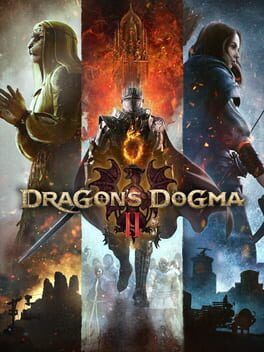
Dragon’s Dogma closes the loop by demonstrating what happens when a once niche idea finally receives a proper modern sequel. The original Dragon’s Dogma and its Dark Arisen expansion became word of mouth favorites over a decade through ports and PC releases. Dragon’s Dogma 2 leveraged that accumulated goodwill at launch, proving that slow burn legacy cultivation can eventually support a full scale series revival.
The economic logic behind archival IP
At an industry level, Capcom’s pivot toward legacy support reflects a practical reality: new AAA IP is more expensive and more volatile than ever. Development cycles stretch to five or six years. Marketing budgets have to fight for attention against live service giants and free to play ecosystems. A new concept can fail for reasons that have nothing to do with quality.
By contrast, archival IP offers several structural advantages.
First, there is brand equity. Even lapsed fans will click on a trailer for a new Mega Man or Devil May Cry in a way they might not for an unknown title. That familiarity reduces the amount of paid reach needed to make a launch visible. It also helps drive platform holder support, from storefront featuring to inclusion in subscription lineups.
Second, there are predictable production parameters. A remake or remaster has a defined content scope. Level layouts, narrative structure, and core systems already exist. Modernization still requires significant engineering and art resources, but the upfront design and pre production risk is lower. In an environment where delays can push a publisher’s entire slate out of alignment, predictability has real dollar value.
Third, archival projects can scale up or down more flexibly. A low cost port to a new platform, a digital only remaster, or a partial remake focused on quality of life and visual upgrades can all coexist under the same IP umbrella. Capcom can match investment level to perceived demand while still extracting value from the brand.
The result is a portfolio strategy where classic series act as “stabilizers” around bigger, more experimental launches. Resident Evil and Monster Hunter may remain the headline acts, but legacy IP lets Capcom keep its release calendar full and revenue smoother between those spikes.
Fan demand as a measurable signal
Capcom is also making it clear that it is listening. Fan surveys focused on which classic series players want to see revived are more than just goodwill exercises. They are cheap, direct demand testing. When thousands of players surface franchises like Dino Crisis, Onimusha, or Viewtiful Joe, that is useful input for greenlight conversations.
Even for active brands like Ace Attorney or Mega Man, social media response to ports and collections helps Capcom understand where the most engaged communities live. Strong PC adoption might nudge a future remaster toward technical features that matter to that audience, while Switch performance could encourage more handheld friendly releases.
This feedback loop is part of why legacy projects are safer. Publishers are no longer making decisions based solely on decade old sales data. They have up to the minute sentiment, wishlist activity, and engagement metrics across digital platforms. When Capcom says it wants to “nurture” old IP, it is not just a creative statement. It describes an iterative, data informed process that can stretch a franchise lifecycle across multiple hardware generations.
Risk, reward, and creative balance
The recurring concern with any archival heavy strategy is that it may crowd out original ideas. In Capcom’s case, the current trajectory instead looks like a balancing act. Dragon’s Dogma 2 is technically a sequel, but it also pushes systemic open world design in ways that feel unconventional in the current AAA landscape. Resident Evil remakes experiment with pacing and structure rather than duplicating their source material beat for beat. Even compilations like the Ace Attorney and Mega Man collections often include new localizations, optional modes, or archival features that border on museum work.
From an industry perspective, this hybrid approach is likely the blueprint. Legacy IP lowers financial volatility, which in theory creates room for carefully chosen new bets. As long as players continue to reward high quality remakes and well handled sequels, the economic incentive for publishers is to keep deepening their archives while allowing a handful of new concepts through each cycle.
Capcom’s statements about future plans for Devil May Cry, Ace Attorney, Mega Man, Okami, and the continued momentum behind Dragon’s Dogma suggest that this is not a short term experiment. It is a deliberate repositioning of the company as a steward of its own history.
What it means for the next few years
Looking ahead, Capcom’s legacy focus likely translates into a steady feed of projects across its classic brands. Some will probably be straightforward ports to new hardware like the anticipated successor to the Nintendo Switch. Others might be ambitious remakes that reimagine pacing or mechanics for modern tastes.
For fans, that means familiar names returning on a predictable cadence rather than vanishing for console generations at a time. For the broader industry, it reinforces the pattern that archival IP is one of the few relatively dependable growth levers left in AAA publishing.
In this context, Capcom’s older series are no longer just nostalgic side projects. Devil May Cry, Ace Attorney, Mega Man, Okami, and Dragon’s Dogma have become strategic assets that anchor the company’s long term roadmap. The back catalog is now center stage, and other publishers are paying attention.